



The latest trends for acetate aviator sunglasses | KARUSON Ultimate Insights
Acetate aviator sunglasses are evolving from a familiar metal-frame alternative into a design platform for differentiated color, stronger visual presence, and more adaptable fit. For eyewear brands, retailers, and sourcing teams, the most consequential trends are not simply oversized shapes or seasonal hues: they are more disciplined material claims, better component and lens specification, inclusive sizing, and closer control of manufacturing consistency. Because no target country or regional market was specified, this analysis takes a global B2B perspective and identifies the local compliance, channel, and supplier checks buyers should complete before committing to volume. It also distinguishes observable product-direction signals from market forecasts, since public data does not support a reliable, universal 2026 sales projection specifically for acetate aviators.
Why the Eyewear Landscape Is Shifting
From lightweight metal icon to material-led differentiation
The aviator silhouette has a long history in eyewear, but acetate changes its commercial expression. A substantial acetate brow, sculpted temples, and visible color variation can make the familiar teardrop lens shape feel fashion-forward without requiring a completely new frame architecture. That balance matters to buyers: a recognizable silhouette can reduce consumer education needs, while material, color, lens, and fit choices create room for brand distinction. The current opportunity is therefore less about treating acetate aviator sunglasses as a short-lived novelty and more about building a controlled assortment around a recognizable shape.
Acetate also enables design details that are difficult to reproduce in thin, uniform metal: layered color effects, translucent finishes, polished edges, and greater freedom in temple volume. Those characteristics can support High Quality positioning, but they do not guarantee High Quality quality. Buyers should examine the consistency of sheet color, hinge alignment, finishing, dimensional stability, and the fit of the frame after adjustment. A visually compelling prototype is not proof that a production run will maintain the same appearance and performance.
Demand is shifting toward choice, comfort, and credible claims
Product assortments are increasingly expected to do more than follow a runway reference. Retailers need styles that work across face shapes, prescription requirements, price points, and climate conditions. Acetate aviator sunglasses can meet several of those needs when brands offer measured size options, adjustable fit strategies, and lens choices suited to the intended market. The commercial challenge is balancing variety against inventory complexity: too many colors and sizes can fragment demand, while a narrow assortment may miss customers who find conventional aviators too large, too angular, or too heavy.
Consumers and wholesale buyers are also more attentive to sustainability language. That raises the value of traceable material specifications and careful claims, rather than broad labels such as “eco-friendly.” Acetate is a material family, not a complete sustainability credential. Its composition, additives, manufacturing, transport, durability, repairability, and end-of-life route all affect its environmental profile. Buyers should request documentation that explains exactly what a supplier means by bio-based, recycled, or lower-impact acetate and should verify that the claim applies to the offered frame components, not just a promotional sample.
Design and Product Trends Buyers Should Evaluate
Proportion, color, and hybrid construction
One clear product direction is a wider range of aviator proportions. Alongside oversized lenses, buyers are evaluating compact and medium-sized versions, softer lens corners, flatter or more pronounced brows, and bridge treatments that alter the frame’s visual balance. This gives brands ways to serve different fit preferences without abandoning the aviator cue. For acetate aviator sunglasses, proportions must be assessed on a real wearer rather than from a front-facing product image: lens width, bridge placement, temple length, frame thickness, and total weight jointly determine whether a style feels balanced.
Color remains a major differentiator because acetate can show depth and pattern across the front and temples. Neutral tortoiseshell, black, transparent tones, and muted colors can support longer selling windows, while brighter or more distinctive patterns may serve limited collections. A practical buying strategy is to use a smaller core palette for replenishment and test seasonal shades in controlled quantities. Hybrid construction is another option: acetate fronts paired with metal temples or bridge elements can preserve a bold front while reducing visual mass elsewhere. However, every transition between materials adds engineering and quality-control requirements, including secure attachment, corrosion resistance where relevant, and consistent finishing.
Lens performance and fit are commercial fundamentals
Frame styling can attract attention, but lens quality and fit determine whether the product delivers on its promise. Buyers should specify the intended lens category, visible-light transmission where applicable, UV protection, optical quality, impact-related requirements, and product labeling for each destination market. A dark tint by itself should not be treated as evidence of UV protection. The World Health Organization explains the relationship between ultraviolet radiation and health; its UV radiation guidance is a useful starting point for understanding why UV protection is a functional requirement, not a styling detail.
For the frame, fit trials should include a range of face widths, bridge shapes, and head sizes. Acetate can generally be adjusted by trained optical professionals using appropriate methods, but the feasible adjustment depends on the frame construction and supplier instructions. A buyer should test for slipping, pressure at the temples, cheek contact, and instability during ordinary movement. If a product is positioned for prescription use, confirm that the frame geometry and lens dimensions are compatible with the intended prescription range and that any optical finishing requirements are clear to the manufacturing partner.
Material stories need evidence, not shorthand
Marketing teams often use terms such as plant-based, bio-acetate, or recycled acetate as if they were interchangeable. They are not. Definitions, formulations, certification scope, and the proportion of material used can differ between suppliers. A specification sheet should identify the material and relevant standard or certification, describe which components are covered, and provide evidence that can be retained for audits and claims review. Avoid assuming that a material’s feedstock alone establishes that a finished pair of acetate aviator sunglasses is biodegradable in ordinary conditions or has a lower total environmental impact.
Durability and serviceability belong in the sustainability conversation too. A frame that maintains its finish, holds alignment, and can be repaired or adjusted may provide a longer useful life than a product selected only for a favorable material description. Buyers can ask for information about spare parts, hinge repair, warranty terms, packaging, production scrap, and supplier take-back programs where available. These questions make sustainability evaluation more specific and reduce the risk of making claims that cannot be substantiated in a particular jurisdiction.
Manufacturing, Compliance, and Sourcing Priorities
Supplier selection should test repeatability
Supplier approval should include more than a review of catalog images and a single sample. A robust process checks material documentation, production capacity, tooling ownership, quality controls, lead-time assumptions, and the factory’s ability to reproduce color and dimensions across batches. For acetate aviator sunglasses, buyers should request pre-production samples in the intended colors, approve measurable tolerances for critical dimensions, and define how cosmetic defects, hinge looseness, and lens alignment will be assessed. The approved sample should be retained as a reference for bulk inspection.
Supply-chain resilience is best managed through visibility rather than unsupported assumptions about where shortages will occur. Ask suppliers to identify the origin and lead time of key materials and components, the availability of alternate sources, and the consequences of changing a material or coating. Qualify backup capacity where commercial risk warrants it, but do not assume that a second supplier can reproduce the same acetate pattern or finish without a fresh approval process. A small, documented set of approved alternatives is often more useful than a long list of nominal options.
Standards and local rules must be checked by destination
Sunglasses requirements are not identical worldwide, and a global product launch can involve different technical, labeling, and market-surveillance obligations. Buyers should verify the current rules for each destination with qualified compliance specialists and competent authorities. ISO’s ISO 12312-1:2022 standard for sunglasses and related eyewear is an important reference for general-use sunglasses, but citing a standard does not by itself establish that a particular product is compliant in every market. Confirm the applicable edition, testing scope, conformity route, labeling, and documentation for the product and jurisdiction.
For the United States, the Food and Drug Administration provides information on sunglasses and applicable FDA requirements. For European Union sales, buyers should also assess relevant product-safety, chemical, and consumer-information obligations, using the European Commission’s REACH regulation overview as an entry point for chemicals requirements. These references are not substitutes for legal advice or product testing. A supplier declaration should be checked against test reports and the exact frame, lens, coating, and labeling configuration being purchased.
Use a staged buying process to manage risk
A disciplined launch can begin with a small range of frame sizes and colors, followed by sell-through and return analysis before replenishment. Measure product returns by fit complaint, lens concern, finish issue, and other reason rather than treating returns as one number. Those records can reveal whether a style needs a different bridge, a lighter temple, clearer product photography, or improved staff guidance. Wholesale buyers should align minimum order quantities and reorder windows with realistic demand signals, rather than allowing a broad color assortment to create stock exposure.
The following comparison summarizes the direction of change without presenting unsupported category sales forecasts. “Historical” describes conventional product and buying patterns, not a measured market-size series; “current direction” identifies practical trends buyers can test against their own sales and supplier data.
| Decision area | Historical pattern | Current and forward-looking direction | Buyer action |
|---|---|---|---|
| Frame design | Metal aviators dominated the familiar, lightweight interpretation of the shape. | Acetate fronts, bolder proportions, color depth, and hybrid construction broaden the style range. | Test proportions on different face shapes and compare wear comfort, weight, and finish. |
| Assortment planning | Buyers often relied on a small number of standard sizes and seasonal color bets. | More attention is going to inclusive fit, core colors, and smaller tests of distinctive shades. | Use fit and sell-through data to set size curves and control color exposure. |
| Material communication | Material descriptions were frequently treated as broad marketing shorthand. | Buyers increasingly need specific, verifiable claims about composition, scope, and evidence. | Request documentation and review claims for each component and target market. |
| Quality assurance | Sample approval could receive more attention than batch-to-batch repeatability. | Color consistency, tolerances, traceability, and defect criteria are central to supplier control. | Approve production references, define inspection standards, and retain batch records. |
| Compliance | One product specification was sometimes assumed to travel easily across markets. | Destination-specific standards, labels, and chemical obligations require deliberate review. | Map obligations by country and confirm testing against the final product configuration. |
Building a Competitive Strategy for the Next Buying Cycle
Connect product design to measurable customer feedback
Brands can turn the popularity of the aviator outline into a more defensible product strategy by connecting design choices with customer evidence. Track which dimensions generate exchanges, which lens colors prompt questions, and whether heavier frames lead to lower wear satisfaction. Store teams and customer-service teams can capture this information in consistent categories. For e-commerce, accurate front, side, and on-face imagery, plus clear measurements, can help customers assess acetate aviator sunglasses before purchase and reduce avoidable fit-related returns.
Assortment decisions should reflect channel economics. A specialty optical retailer may value frame adjustability, replacement support, and prescription compatibility, while a fashion-led online channel may prioritize visual differentiation and detailed digital fit information. Neither channel should assume that a single hero color or oversize shape is universally preferred. Use a core range for continuity, then make limited introductions that generate measurable evidence before expanding purchase commitments.
Build a resilient product brief and supplier scorecard
A high-quality product brief should specify frame dimensions, target wearer, acetate composition, finish, hinge and temple details, lens requirements, packaging, test expectations, labeling, and acceptable tolerances. It should also identify which attributes are non-negotiable and which can vary within an approved range. For example, natural variation may be acceptable in a patterned material, but not if it changes the approved color story or produces inconsistent appearance within a paired frame. Clear acceptance criteria reduce disputes and make it easier to compare supplier bids on equivalent terms.
A supplier scorecard can combine product quality, delivery reliability, documentation completeness, responsiveness, and corrective-action performance. Review it after each production cycle. When problems arise, require root-cause analysis and a documented remedy rather than a temporary sorting exercise alone. These practices are particularly important when launching acetate aviator sunglasses in multiple markets, where a quality issue can intersect with different labeling rules, customer expectations, and return processes.
Forecast responsibly instead of relying on headline projections
Publicly available industry reports commonly group eyewear categories together, while brand-level and style-level sales are often confidential. As a result, a precise global growth rate for acetate aviator sunglasses should not be presented as established fact without a transparent, independently verifiable dataset. Buyers can still make forward-looking decisions by combining their own sell-through, search and engagement signals, retailer feedback, competitor assortment changes, and supplier lead-time data. Treat these as indicators to test, not as proof of guaranteed demand.
The most dependable strategic outlook is that material-led design, fit inclusivity, substantiated claims, and stronger quality documentation are relevant competitive levers. They help buyers reduce product and compliance risk regardless of whether a particular color or silhouette grows quickly. An effective plan keeps commitments flexible, validates consumer response in stages, and invests in repeatable manufacturing rather than relying on a single trend forecast. In that framework, acetate aviator sunglasses can provide a recognizable foundation for product differentiation while buyers retain the evidence needed to scale responsibly.
Contact our team to discuss acetate aviator sunglasses sourcing, product specifications, and a market-ready buying strategy tailored to your business.
Frequently Asked Questions
Are acetate aviator sunglasses a lasting trend or a short-term fashion style?
The aviator silhouette is recognizable, while acetate creates opportunities for fresh proportions, color, and construction. Buyers can reduce trend risk by building a core assortment around versatile designs and testing distinctive styles in controlled quantities.
What should buyers check when sourcing acetate aviator sunglasses?
Check material documentation, production capacity, tooling ownership, lead times, color and dimensional consistency, hinge alignment, lens specifications, testing records, labeling, and the supplier’s quality-control process. Approve pre-production samples and define measurable acceptance criteria for bulk orders.
Does acetate automatically mean a frame is sustainable or biodegradable?
No. Acetate is a material family, and its composition, additives, manufacturing, durability, and end-of-life route affect its environmental profile. Buyers should request evidence for specific claims and confirm which components and material proportions the documentation covers.
What lens requirements should buyers specify for acetate aviator sunglasses?
Specify the intended lens category, UV protection, optical quality, applicable impact requirements, labeling, and destination-market requirements. A dark tint alone does not demonstrate UV protection, and requirements should be verified for the final product and target jurisdiction.
How can a buyer reduce fit-related returns for acetate aviator frames?
Test the frames on wearers with varied face widths and bridge shapes, assess slipping and pressure, and record returns by reason. Provide accurate frame measurements and clear front, side, and on-face imagery, and consider multiple sizes where sales evidence supports them.
Is there a reliable 2026 market-size forecast specifically for acetate aviator sunglasses?
A precise global forecast for this specific style should not be treated as established without a transparent, independently verifiable dataset. Buyers can make more grounded decisions using their own sell-through, retailer feedback, consumer engagement, competitor assortment, and supplier lead-time data.
- Why the Eyewear Landscape Is Shifting
- From lightweight metal icon to material-led differentiation
- Demand is shifting toward choice, comfort, and credible claims
- Design and Product Trends Buyers Should Evaluate
- Proportion, color, and hybrid construction
- Lens performance and fit are commercial fundamentals
- Material stories need evidence, not shorthand
- Manufacturing, Compliance, and Sourcing Priorities
- Supplier selection should test repeatability
- Standards and local rules must be checked by destination
- Use a staged buying process to manage risk
- Building a Competitive Strategy for the Next Buying Cycle
- Connect product design to measurable customer feedback
- Build a resilient product brief and supplier scorecard
- Forecast responsibly instead of relying on headline projections
- Frequently Asked Questions
Creating a signature frame shape: moodboards, sketches, and tech packs
Step-by-Step Guide to Ordering Prototypes from Custom Eyewear Manufacturers
How to Build a Wholesale Product Specification for Wraparound Polarized Sports Sunglasses
Polarized Sunglasses for Outdoor and Sports Brands: Design, Performance, and Compliance Needs
You May Also Like
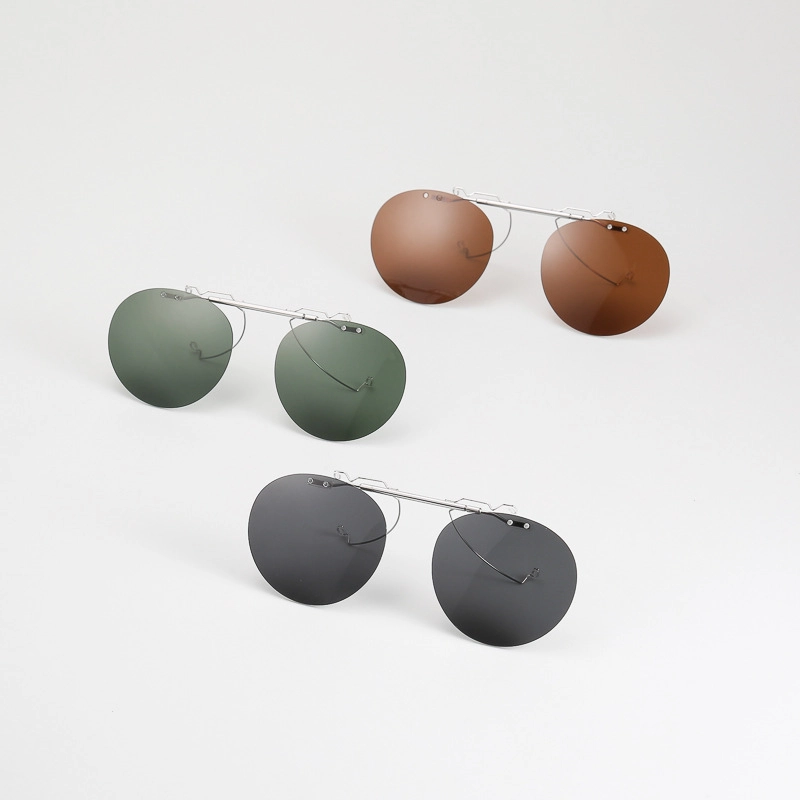
Round Polarized Flip-Up Clip-On Sunglasses for Prescription Glasses
Turn everyday prescription glasses into a retro-inspired sunwear look with these round flip-up clip-on sunglasses. The clean, rimless circular lenses sit in front of an existing optical frame, while the slim metal attachment can be lifted upward when the wearer wants to move between tinted and untinted vision without removing the clip-on.
Small silicone-padded contact points and an understated metal structure keep the focus on the frame already being worn. The range is presented in grey, brown, green and yellow tint options, making it a versatile add-on for optical boutiques and eyewear accessories collections. Actual lens performance and compatibility vary by configuration and should be confirmed with samples.
For wholesale and private label sourcing, discuss available tint combinations, lens specifications, logo or packaging options, and clip fit with KARUSON before confirming your assortment.
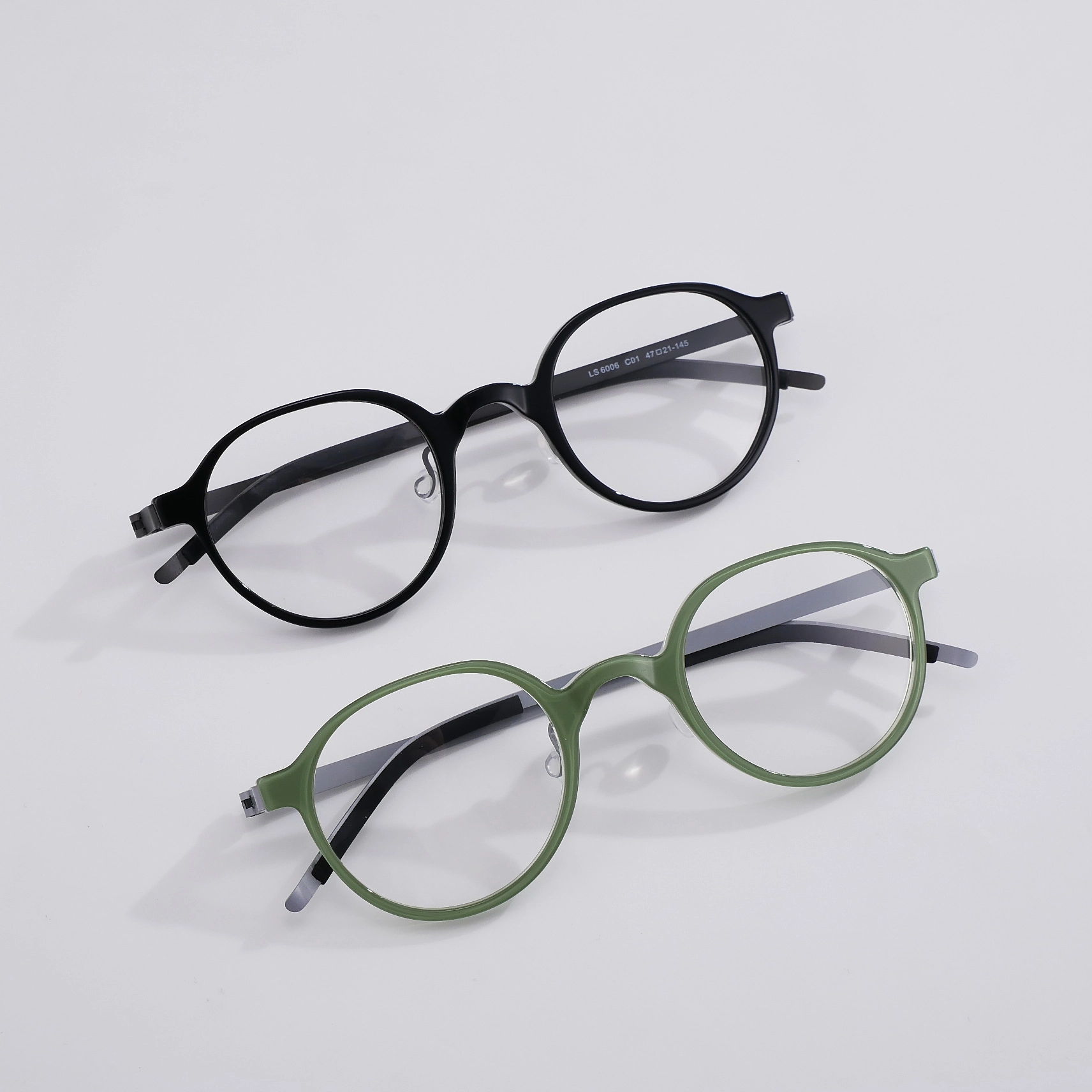
Screwless Round Acetate Optical Frames with Slim Alloy Temples
Understated from the front, refined from every angle. These round acetate optical frames combine a softly rounded silhouette with slim alloy temples for an effortless, modern-retro look. The polished front lends definition to the shape, while delicate metal sides keep the profile visually light.
Adjustable silicone nose pads offer room for fit adjustments, and the listed frame weight is just 11 g without lenses. A versatile choice for optical boutiques, everyday prescription eyewear ranges and brands building minimalist unisex collections.
Available color finishes and prescription lens compatibility can be discussed for each order, along with custom logos and branded packaging for wholesale or private label programs.
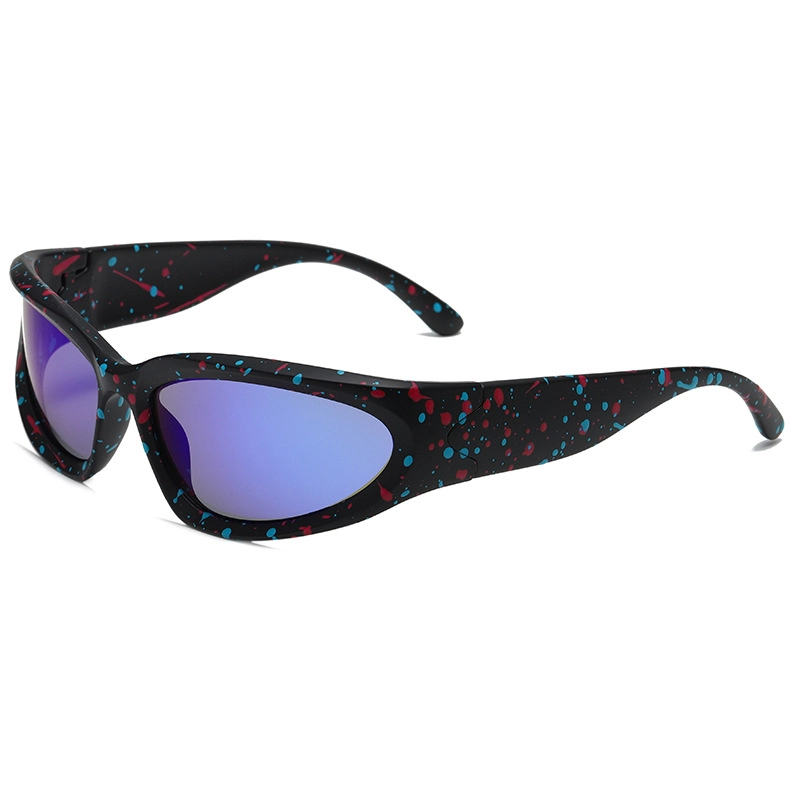
Futuristic Oval Shield Sunglasses with Sculpted Wave Temples
Bring the energy of Y2K eyewear into a modern collection with these futuristic oval shield sunglasses. The closely curved front and elongated oval lenses create a bold, streamlined silhouette, while wide sculpted temples flow into the frame through a distinctive wave-shaped junction.
From sharp black finishes to expressive metallic and mirror-inspired color combinations, the design makes a striking addition to fashion-forward sunglasses ranges, festival collections and sport-inspired streetwear assortments. Buyers can discuss available polarized and Revo-style mirror lens configurations, as well as frame color, logo and packaging options, with KARUSON.
For wholesale and private label programs, choose the preferred colorways and lens specifications before requesting samples and a production quotation. Frame material, lens performance and available customizations should be confirmed for the selected version.
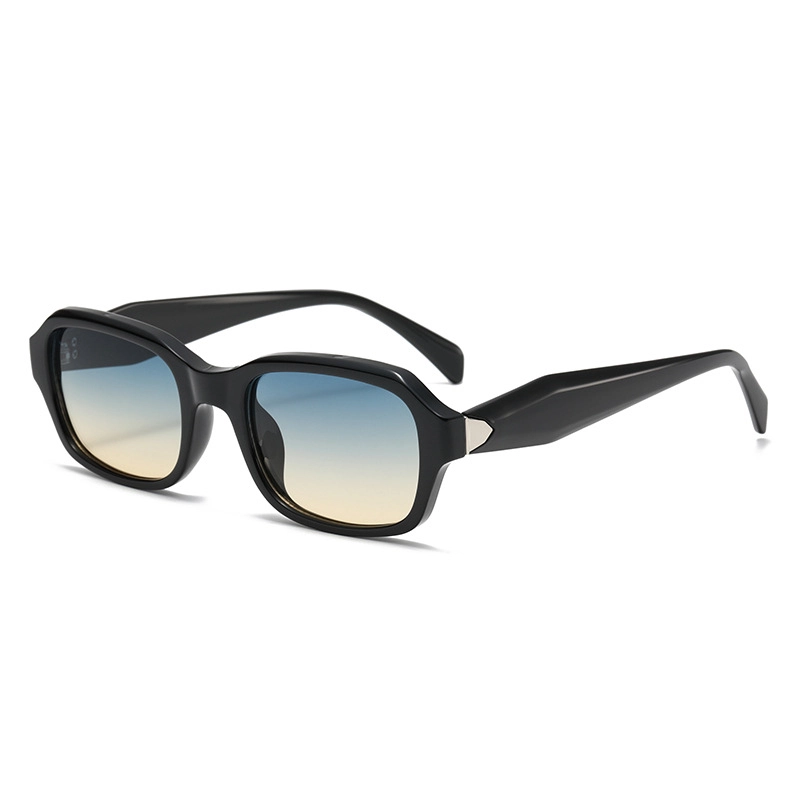
Retro Rectangle Blue Light Glasses with Faceted Temples
Bring a bold retro touch to your eyewear collection with these statement rectangle glasses. Inspired by the distinctive shapes of the 1990s, the frame features a softly squared front, beveled edges, and wide geometric temples that create a striking profile from every angle.
Polished chevron-shaped accents at the hinges add a refined detail, while classic and translucent colorways offer versatile styling options for modern optical and blue light eyewear collections.
Designed for fashion eyewear brands, optical boutiques, and wholesale retailers, these frames offer a distinctive silhouette for private label collections. Explore available frame colors, compatible lens options, custom logos, and branded packaging to create an assortment that reflects your brand identity.
Get a Free Quote
If you have any comments or good suggestions, please leave us a message; later our professional staff will contact you as soon as possible.
NEW DIMENSIONS IN EYEWEAR
Contact KARUSON
Email:
WhatsApp/Phone:
Address:
331 Section B, WanJia Creative Park , No. 1 BUXIA Road ,Tianhe District, Guangzhou City, Guangdong Province, China.

© 2026 KARUSON. All Rights Reserved.
Facebook
Instagram
YouTube
TikTok
Linkedin