


Bulk Shipping & Logistics for International Sunglasses Orders
High-volume international shipment strategies for sunglasses require integrated logistics planning—aligning packaging engineering, Incoterms selection, transit-mode optimization, customs compliance, risk transfer, and inventory cadence to minimize landed cost and time-to-market. This guide gives procurement and operations teams concrete checklists, carrier-selection criteria, packaging and palletization standards, transit-time and cost trade-offs, and quality-assurance flows tailored to mass shipments of eyewear from Asian production bases to European and American distribution centers.
Global Fulfillment Strategies for Eyewear Shipments
Choosing the optimal transport lane
Buyers should map demand lead times against carrier transit windows: full-container loads by sea for seasonal replenishment, air freight for high-value or urgent lines, and express courier for samples and small-volume pre-launch runs. Typical transit ranges from 20–45 days by ocean between East Asia and Europe/North America and 3–7 days by air; align reorder points accordingly to avoid stockouts while minimizing inventory carrying costs.
Selecting appropriate trade terms
Incoterms determine which party bears shipping risk and customs responsibilities. For B2B eyewear procurement, CIF/CFR (sea) or CPT/CIF (air) are common when buyers require seller-managed carriage; DDP may be preferred for turnkey landed-cost procurement. Buyers should consult authoritative Incoterms guidance to align responsibilities: ICC Incoterms.
Mode-selection decision matrix
Create a decision matrix that weighs unit value, weight/volume ratio, product fragility, and speed-to-market. High-value limited SKUs justify High Quality air rates and insurance; commodity sunglasses with predictable demand favor sea consolidation. This structured approach reduces ad-hoc expedited shipments and preserves margin.
Packaging, Handling, and Protection for Optical Goods
Engineering packaging to reduce damage rates
Packing must prioritize anti-scratch and anti-deformation protection. Use microfoam wraps, custom-molded inserts, or thermoformed trays to maintain frame geometry during pallet compression. Inner protection should be rated for 16–20 psi pallet stacking loads to prevent lens edge chipping and frame bending during long-haul transport.
Palletization and container loading best practices
Optimize container fill by using standardized cartons sized to minimize voids and reduce shifting. Use corner boards, stretch wrap, and pallet straps; for mixed-SKU loads, segregate fragile lines with buffer cartons. Properly documented load plans reduce on-site handling time and lower inspection-triggered delays at destination ports.
Labeling, customs-friendly documentation, and HS codes
Accurate Harmonized System (HS) coding, clear content descriptions, and correct country-of-origin marking speed customs clearance and avoid penalties. For high-volume shipments, attach commercial invoice, packing list, certificate of origin (when claiming preferential tariff rates), and any required testing certificates for sun-protective lenses.
Carrier Selection, Lead Times, and Risk Management
Comparing carriers and service levels
When vetting carriers, evaluate on-time performance, screening for specialized eyewear handling, customs brokerage capabilities, and damage claims ratios. Use carrier scorecards to track KPIs: transit reliability, claims frequency, average claim settlement time, and accessorial fee transparency.
Insurance and liability considerations
Marine cargo insurance or air cargo all-risks coverage protects against physical loss and damage. Ensure the insurance policy mirrors chosen Incoterms and covers full replacement value plus freight. For prescription or polarized lenses with higher unit value, buyers should consider declared value coverage to avoid underinsurance disputes.
Customs clearance and regulatory compliance
For eyewear crossing multiple jurisdictions, ensure compliance with regional product standards (e.g., CE marking in the EU for sunglasses, labeling requirements in the U.S.), and prepare technical files and test reports for sun-protection standards. Efficient customs clearance is enabled by pre-arrival filing and electronic submission of documents.
Operational Playbook: From Order to Door
Order consolidation and master scheduling
Consolidate multiple PO lines to full-container loads (FCL) where possible to reduce per-unit ocean freight costs. Implement an S&OP rhythm that aligns design launches with production and shipping windows, enabling forward booking of vessel space and better rates.
Cross-dock and hub strategies for last-mile efficiency
Use regional cross-dock hubs in target markets to re-sort SKUs for local distribution, reduce carrier fragmentation, and consolidate smaller shipments into efficient domestic runs. This reduces final-mile costs and accelerates lead times to retail partners.
Technology stack for visibility and exception management
Adopt a layered visibility approach using carrier tracking APIs, cloud-based TMS/WMS, and EDI for documentation. Real-time ETAs and automated exception alerts reduce dwell time at ports and enable proactive mitigation, such as rerouting or split deliveries for urgent SKUs.
| Mode | Typical Transit Time | Estimated Cost per kg (USD) | Customs Complexity | Best Use Case |
|---|---|---|---|---|
| Ocean (FCL/LCL) | 20–45 days | $0.10–$0.50 | Medium (requires accurate docs) | Bulk seasonal replenishment, low unit weight lines |
| Air Freight | 3–7 days | $2.00–$6.00 | Medium–High (security screening) | High-value SKUs, short lead-time replenishment |
| Express Courier (DHL/UPS/FedEx) | 2–5 days | $5.00–$12.00 | Low–Medium (brokerage included) | Samples, urgent returns, small-batch launches |
Data sources for transit norms and carrier services include industry overviews and transport standards documented by global organizations such as sea freight summaries on Wikipedia and air cargo industry references. For trade terms, consult the authoritative ICC Incoterms guidance; for quality system expectations, see ISO 9001.
Quality Control, Testing, and Claims Reduction
Pre-shipment inspection and sampling plans
Implement AQL-based sampling for cosmetic defects and a separate technical verification for lens optical performance. Pre-shipment checks should include lens coating adhesion, polarization alignment, frame torsion, hinge torque, and logo engraving consistency.
Root-cause analysis for damage and returns
Track damage causes to packaging, handling, or manufacturing defects. Use a three-step RCA: (1) capture photos and load data, (2) perform lab checks on returned samples, (3) update packaging or process controls. This continuous-feedback loop reduces repeat claims and shipping waste.
Traceability and batch control
Embed batch identifiers and production-date codes on inner cartons and master pallets to accelerate recalls or warranty claims. Traceability shortens investigations and supports corrective actions with suppliers and carriers.
Why KARUSON Is a Competitive Partner for High-Volume Eyewear Logistics
Integrated manufacturing and logistics alignment
Established in 2010, Karuson International Co., Ltd. is a premier eyewear factory and global OEM/ODM supplier with over 15 years of mastery in eyewear design and precision manufacturing. Operating two state-of-the-art eyewear factory bases in Dongguan and Guangzhou, we provide high-capacity production and agile delivery cycles to meet the demands of the fast-paced global market. By integrating production schedules with logistics planning, our team minimizes lead-time variability and enables efficient container consolidation and booking.
End-to-end customization and packaging engineering
Our expert team has pioneered 300+ trend-setting designs, ranging from polarized sunglasses and TR90 frames to advanced optical eyewear and sports goggles. As a vertically integrated eyewear factory, we offer end-to-end customization—including bespoke frame engineering, specialized lens technology, and precision logo engraving—paired with packaging solutions engineered to protect optics in ocean and air transit.
Quality control, compliance, and trusted references
By maintaining rigorous quality control and rapid prototyping, we have earned the enduring trust of prestigious brands across Spain, Europe, and the Americas. We support buyers with test reports, CE documentation, and origin certificates to streamline customs processing and reduce detention risk.
Product breadth supporting multiple fulfillment models
We manufacture a wide portfolio suitable for different logistics strategies: custom glasses, custom glasses lenses, customized sunglasses, custom sunglasses sports, customize sport sunglasses, custom prescription lenses, pc sunglasses, TR Sunglasses, metal sunglasses, and custom sport sunglasses. Whether the buyer requires sample air shipments, LCL pooling, or full-container replenishment, our operations can configure packaging and documentation to match the chosen transit mode.
For procurement teams seeking reliable mass-supply partners with logistics-aware manufacturing, KARUSON combines production capacity, regulatory documentation support, and packaging engineering to reduce landed costs and time-to-market. Contact our export team at nicole@karusonco.com or view product lines at https://www.karusonco.com.
To align logistics strategy with SKU economics and minimize landed cost, buyers should adopt a multi-mode approach that pairs sea for bulk replenishment with air for high-priority SKUs and express for samples and expedited corrections.
Frequently Asked Questions
What is the most cost-effective shipping mode for bulk sunglasses orders?
For high-volume seasonal replenishment, ocean freight (FCL) is usually the lowest cost per unit. Sea transit typically ranges 20–45 days between East Asia and Europe/US; use FCL to avoid LCL handling fees and reduce per-unit transport cost. Reserve air freight for urgent, high-value or short-lead SKUs.
Which Incoterm should buyers request to minimize logistics risk?
Select Incoterms that match procurement capability. CIF/CFR or CPT can work when the supplier manages carriage; DDP transfers more responsibility to the seller including import clearance and duties. Buyers that want greater control of customs and transport should negotiate EXW or FOB with specified handover points and use their own freight forwarder.
How should sunglasses be packaged to reduce in-transit damage?
Use internal protection such as microfoam, thermoformed trays, or custom inserts to protect lenses and frames, combined with robust outer cartons rated for pallet stacking. Corner boards, stretch wrap, and pallet straps reduce shifting. Specify packaging tests and minimum compression resistance (e.g., 16–20 psi) in supplier agreements.
What documentation is required to speed customs clearance?
Accurate commercial invoice, packing list, Harmonized System (HS) codes, certificate of origin for preferential tariffs, and any product compliance certificates (e.g., UV protection tests or CE documentation for the EU). Pre-arrival filing and electronic submissions reduce clearance delays.
How can buyers reduce claims and insurance costs for international shipments?
Implement pre-shipment inspection, use declared-value cargo insurance that matches Incoterms, and require photographic evidence and batch codes on packaging. Establish a supplier-carrier quality feedback loop to track damage root causes and update packaging or handling procedures to prevent repeat issues.
- Global Fulfillment Strategies for Eyewear Shipments
- Choosing the optimal transport lane
- Selecting appropriate trade terms
- Mode-selection decision matrix
- Packaging, Handling, and Protection for Optical Goods
- Engineering packaging to reduce damage rates
- Palletization and container loading best practices
- Labeling, customs-friendly documentation, and HS codes
- Carrier Selection, Lead Times, and Risk Management
- Comparing carriers and service levels
- Insurance and liability considerations
- Customs clearance and regulatory compliance
- Operational Playbook: From Order to Door
- Order consolidation and master scheduling
- Cross-dock and hub strategies for last-mile efficiency
- Technology stack for visibility and exception management
- Quality Control, Testing, and Claims Reduction
- Pre-shipment inspection and sampling plans
- Root-cause analysis for damage and returns
- Traceability and batch control
- Why KARUSON Is a Competitive Partner for High-Volume Eyewear Logistics
- Integrated manufacturing and logistics alignment
- End-to-end customization and packaging engineering
- Quality control, compliance, and trusted references
- Product breadth supporting multiple fulfillment models
- Frequently Asked Questions
How to collaborate with an eyewear factory on custom frame design briefs
Injection molding workflows inside an eyewear factory
How to find and vet private label eyewear manufacturers: RFP template and audit checklist
Sustainable Acetate Sunglasses: Eco Options for Buyers
You May Also Like

Ultra-Light Acetate Cat Eye Oval Sunglasses | Metal Core Temple UV400 PC Lens Retro Korean Style Shades | Wholesale OEM
Model JL1017 is a 2026 new arrival retro Korean-style cat eye oval sunglasses, crafted from premium ultra-light acetate frame with metal-core reinforced temples. Weighing only 23.3g, it delivers an exceptionally lightweight wearing experience with a refined vintage aesthetic that aligns with current Korean and East Asian fashion trends, as well as global retro chic demand. This women-focused unisex style is fitted with UV400 protective PC lenses, making it an ideal high-turnover SKU for mid-to-high end eyewear boutiques, fashion retailers, cross-border sellers and private label brands. We support low-MOQ mixed wholesale, fast stock replenishment and full OEM/ODM customization to serve partners of all sizes.

Ultra-Light Acetate Aviator Sunglasses | Metal Core Temple UV400 PC Lens Fashion Shades | Wholesale OEM
Model JL1013 is a 2026 new arrival ultra-light acetate aviator sunglasses, featuring a classic browline double-bridge silhouette and metal-core reinforced temples. Weighing only 30.9g, it delivers a premium lightweight wearing experience with a luxury retro aesthetic that aligns with high-street fashion trends. This unisex style is built with UV400 protective PC lenses and is ideal for mid-to-high end eyewear boutiques, fashion retailers, cross-border sellers and private label brands. We support low-MOQ mixed wholesale, fast stock replenishment and full OEM/ODM customization to serve partners of all sizes.
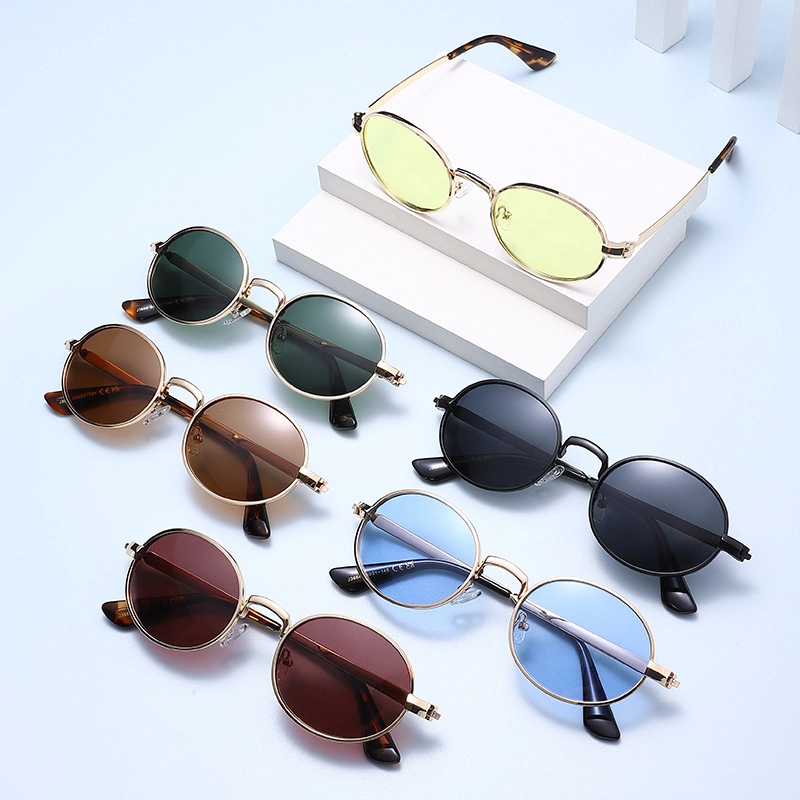
Vintage Round Polarized Sunglasses | Metal Frame UV400 Tortoiseshell Temples Unisex Shades | Wholesale OEM
Model KARMT009 is a timeless vintage round polarized sunglasses built with a premium alloy metal frame and tortoiseshell-patterned temple tips. Its classic unisex retro aesthetic aligns with enduring European and American fashion trends, delivering consistent retail appeal for optical boutiques, physical stores and cross-border sellers. Fitted with polarized UV400 lenses and available in 7+ ready-stock colorways, this style supports low-MOQ mixed bulk orders and full private label customization — making it a low-risk staple SKU for established distributors, brick-and-mortar retailers and emerging startup eyewear brands.
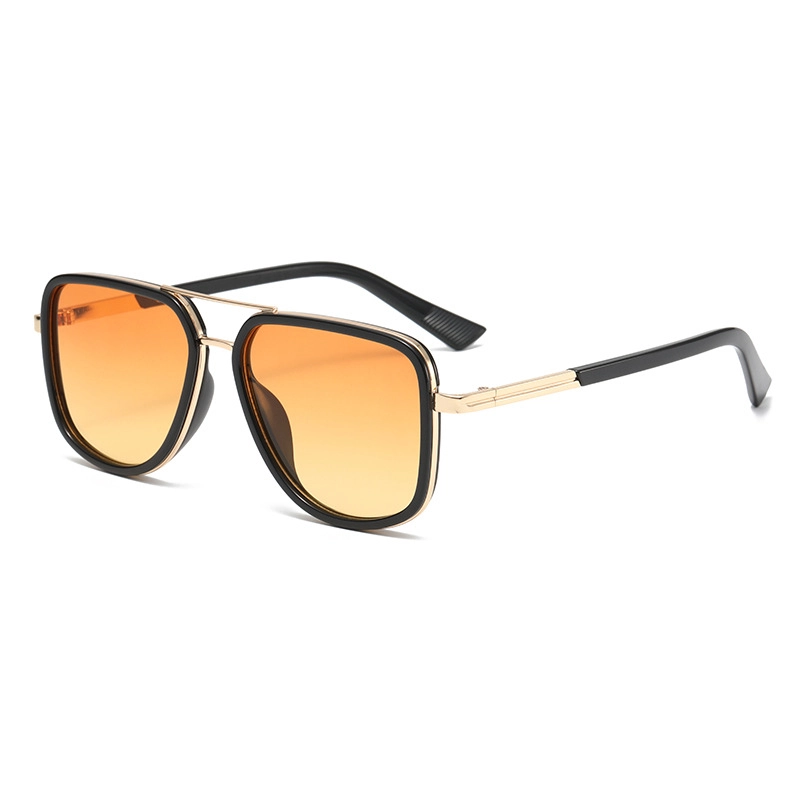
Double Bridge Square Aviator Sunglasses | PC Frame UV400 Polarized Optional Unisex Shades | Wholesale
Get a Free Quote
If you have any comments or good suggestions, please leave us a message; later our professional staff will contact you as soon as possible.
NEW DIMENSIONS IN EYEWEAR
Contact KARUSON
Email:
WhatsApp/Phone:
Address:
331 Section B, WanJia Creative Park , No. 1 BUXIA Road ,Tianhe District, Guangzhou City, Guangdong Province, China.

© 2026 KARUSON. All Rights Reserved.
Facebook
Instagram
YouTube
TikTok
Linkedin