


How to Match Coated Lens Types with Prescription, Safety, Sports, and Fashion Eyewear
Matching the right coated lenses to the correct eyewear category is one of the most consequential decisions any eyewear brand owner, optical buyer, or OEM sourcing manager will make. After 15 years working directly on the production floor and in product development meetings with global brands, I can tell you with absolute certainty: the wrong coating on the right frame—or the right coating on the wrong substrate—will cost you returns, complaints, and brand equity. The good news is that once you understand the logic behind lens coating selection, the matching process becomes systematic, repeatable, and even competitive. In this guide, I will walk you through exactly how I approach coating-to-application matching across four major eyewear categories: prescription optical, safety and industrial, sports performance, and fashion or lifestyle eyewear.
Understanding the Core Science Behind Lens Coatings
What Lens Coatings Actually Do at a Molecular Level
A lens coating is not simply a surface treatment applied for aesthetics. According to the ISO 14889 standard for ophthalmic optics, coatings are functional layers that modify the optical, mechanical, and chemical properties of a lens substrate. When I visit our production facilities in Dongguan, I always remind new engineers that every coating layer—whether it is an anti-reflective stack, a hydrophobic topcoat, or a UV-absorbing primer—is solving a specific physical problem. Anti-reflective (AR) coatings, for instance, use destructive interference to cancel reflected light waves. Mirror coatings use metallic oxide layers to reflect a defined spectrum. Photochromic coatings embed silver halide or organic photochromic molecules that react to UV radiation. Understanding what each coating does at this level prevents the most common sourcing mistake I see: treating coatings as interchangeable add-ons rather than engineered solutions.
The Four Primary Coating Categories You Must Know
In my experience, every coating used in commercial eyewear production falls into one of four functional families. First, there are anti-reflective coatings, which reduce surface glare and improve light transmission—critical for prescription and computer-use lenses. Second, there are protective hardcoatings, which increase scratch resistance on softer substrates like CR-39 or polycarbonate. Third, there are tint and mirror coatings, which manage light transmission percentages and spectral filtering for sun and sports applications. Fourth, there are specialty functional coatings, including blue-light blocking, photochromic, anti-fog, and oleophobic layers. The American Optometric Association has documented the growing clinical demand for blue-light filtering in prescription eyewear, which is a trend I have watched reshape our custom prescription lenses orders significantly over the past four years.
Substrate Compatibility: Why the Lens Material Comes First
Before selecting a coating, I always ask: what is the lens substrate? Polycarbonate (PC), CR-39, Trivex, high-index 1.67 or 1.74, and glass all have different surface energies, thermal expansion coefficients, and chemical compatibilities. A hardcoat formulated for CR-39 will delaminate on polycarbonate under thermal stress. An AR coating optimized for high-index lenses may produce color fringe on standard 1.50 index material. This is not theoretical—I have seen entire production batches rejected because a coating vendor changed their primer chemistry without notification. The substrate-coating compatibility matrix is the foundation of everything else I will discuss in this article.
Matching Coated Lenses to Prescription Eyewear Requirements
The Non-Negotiables for Optical Prescription Lenses
Prescription eyewear operates under the strictest optical standards of any eyewear category. When I work with optical brand clients, I always emphasize three coating requirements that are non-negotiable. First, the AR coating must achieve a minimum of 99% light transmission to avoid visual distortion that would compromise the wearer's corrected vision. Second, the hardcoat must meet or exceed FDA impact resistance standards for ophthalmic lenses, particularly when the substrate is CR-39. Third, a UV400 blocking layer must be integrated—either within the lens material itself or as a dedicated coating layer—to protect against ultraviolet radiation below 400 nanometers. For high-index custom prescription lenses, I recommend a multi-layer AR stack with a minimum of seven layers, including a hydrophobic and oleophobic topcoat, because the higher refractive index creates more pronounced reflections that a basic two-layer AR cannot adequately suppress.
Blue-Light and Photochromic Options for Modern Prescription Needs
The modern prescription lens buyer increasingly demands blue-light filtering and photochromic functionality. From a coating perspective, these are not mutually exclusive, but they require careful sequencing. Blue-light filtering can be achieved either through a selective AR coating that reflects the 415–455 nm range or through a blue-light absorbing monomer integrated into the lens substrate. I prefer the substrate-integrated approach for prescription applications because it does not introduce the slight yellow tint that reflective blue-light AR coatings sometimes produce. Photochromic lenses, on the other hand, require that the AR coating be applied after the photochromic treatment is complete and that the hardcoat chemistry does not interfere with the photochromic molecule's activation cycle. This is a sequencing detail that many smaller coating labs get wrong, resulting in photochromic lenses that darken unevenly or fade prematurely.
Quality Control Checkpoints Specific to Prescription Coated Lenses
In my quality control protocols for prescription coated lenses, I run five mandatory checks before any batch ships: adhesion testing via cross-cut tape test per ISO 9211-4, abrasion resistance via steel wool test under defined load, chemical resistance via saline and isopropanol immersion, thermal cycling between -10°C and 55°C for 10 cycles, and optical clarity verification using a lensometer and spectrophotometer. Any coating that fails even one of these tests goes back to the vendor for reformulation. This level of rigor is what separates a reliable eyewear factory from a commodity supplier.
Coating Selection for Safety, Sports, and Fashion Eyewear
Safety and Industrial Eyewear: Protection Over Everything
Safety eyewear operates in environments that would destroy a standard optical lens coating within weeks. Industrial settings expose lenses to chemical splashes, UV radiation from welding arcs, airborne particulates, and extreme temperature fluctuations. For safety applications, I always specify polycarbonate or Trivex substrates—both of which have inherent impact resistance—combined with a High Quality hardcoat rated for industrial abrasion. The hardcoat must comply with ANSI Z87.1 standards for occupational eye and face protection, which specifies minimum thickness, impact resistance, and optical clarity requirements. Anti-fog coatings are equally critical in safety eyewear, particularly for workers who move between temperature-controlled and ambient environments. I have seen anti-fog coatings fail in the field because they were hydrophilic coatings applied over a hydrophobic base layer—a fundamental incompatibility that causes delamination within 60 days of use. The correct approach is to use a hydrophilic anti-fog coating on a primer that is specifically formulated for hydrophilic topcoats.
Sports Eyewear: Performance Coatings Under Dynamic Conditions
Sports eyewear presents a unique coating challenge because the lens must perform optically under high-contrast, rapidly changing light conditions while surviving physical impacts, sweat exposure, and UV radiation at altitude. For custom sport sunglasses, I consistently recommend a polarized lens with a gradient mirror coating and a hydrophobic/oleophobic topcoat. The polarization eliminates horizontal glare from water, snow, and road surfaces—a critical performance advantage documented by the National Institutes of Health in studies on visual performance in athletes. The gradient mirror coating manages light transmission across the visual field, providing darker protection at the top of the lens where overhead sun is most intense and lighter transmission at the bottom for ground-level visibility. The hydrophobic topcoat ensures that sweat and rain bead off the lens surface rather than spreading into a vision-obscuring film. For PC sunglasses used in high-impact sports like cycling or skiing, I add a secondary impact-resistant hardcoat beneath the mirror layer to prevent the mirror coating from shattering and creating sharp fragments on impact.
Fashion Eyewear: When Aesthetics and Function Must Coexist
Fashion eyewear is where coating selection becomes an art form as much as an engineering exercise. My fashion brand clients want mirror coatings in rose gold, blue chrome, and gradient sunset finishes, but they also need those coatings to survive daily handling, cosmetic exposure, and the inevitable lens cleaning with whatever fabric is nearest. For TR sunglasses and metal sunglasses in the fashion category, I specify a vacuum-deposited metallic oxide mirror coating over a hardcoat base, followed by an oleophobic topcoat with a contact angle of at least 105 degrees. This combination delivers the vivid mirror aesthetics that fashion buyers demand while providing practical durability. Tint coatings for fashion lenses should be applied via immersion dyeing of the base lens rather than as a surface coating, because immersion dyeing produces more uniform color distribution and is significantly more resistant to UV fading than surface-applied tints.
Coated Lens Matching Reference Table
| Eyewear Category | Recommended Lens Substrate | Primary Coating | Secondary Coating | Topcoat | Key Standard |
|---|---|---|---|---|---|
| Prescription Optical | CR-39 / High-Index 1.67 | Multi-layer AR (7+ layers) | UV400 + Blue-Light Filter | Hydrophobic + Oleophobic | ISO 14889 / FDA Impact |
| Safety / Industrial | Polycarbonate / Trivex | High Quality Industrial Hardcoat | Anti-Fog (Hydrophilic) | Chemical Resistance Layer | ANSI Z87.1 |
| Sports Performance | Polycarbonate (PC) | Polarized Film + Mirror | Gradient Tint | Hydrophobic + Oleophobic | EN ISO 12312-1 |
| Fashion / Lifestyle | CR-39 / TR90 / Acetate | Immersion Tint + Mirror | UV400 Hardcoat | Oleophobic (105°+ contact angle) | EN ISO 8980-3 |
| Photochromic Prescription | CR-39 / Trivex | Photochromic Treatment | Multi-layer AR | Hydrophobic Topcoat | ISO 8980-3 Clause 5.3 |
How KARUSON Delivers Precision Coated Lens Solutions for Global Brands
After walking through the technical depth required to match coated lenses correctly across these four eyewear categories, I want to be direct about why sourcing this expertise from the right eyewear factory partner matters enormously. I have spent years at KARUSON—Karuson International Co., Ltd.—building exactly the kind of vertically integrated manufacturing capability that makes precision coating matching not just possible, but scalable.
Established in 2010, KARUSON operates two state-of-the-art eyewear factory bases in Dongguan and Guangzhou, giving us the production capacity and regional flexibility to handle both high-volume OEM runs and agile small-batch ODM projects. Our in-house lens coating laboratory allows us to validate substrate-coating compatibility before any production run begins—eliminating the delamination and adhesion failures I described earlier. Over 15 years, our expert team has developed and refined 300+ original designs spanning polarized sunglasses, TR sunglasses, metal sunglasses, PC sunglasses, and advanced optical frames, each with coating specifications tailored to the end-use environment.
What distinguishes KARUSON in the global market is our end-to-end customization capability. When a brand comes to us needing custom glasses lenses for a new prescription line, we do not simply apply a standard AR coating from a catalog. We analyze the target market's climate, the wearer's use-case profile, the frame material's thermal properties, and the brand's durability warranty commitments—then we engineer a coating stack that meets all of those requirements simultaneously. The same rigorous approach applies to our customized sunglasses programs, where fashion clients need mirror coatings that photograph beautifully for e-commerce while surviving the physical demands of daily use.
Our custom sport sunglasses and customize sport sunglasses programs are particularly well-developed. We work with sports brands across Europe and the Americas who require polarized PC lenses with gradient mirror coatings, anti-fog treatments, and hydrophobic topcoats—all on TR90 frames engineered for lightweight performance and impact resistance. Our rapid prototyping capability means that a brand can receive a validated sample with full coating specification within 15 business days, dramatically compressing the product development timeline compared to working with separate frame and lens suppliers.
For brands requiring custom prescription lenses integrated into their optical frame lines, KARUSON's quality control infrastructure—including spectrophotometric verification, adhesion testing, and thermal cycling—ensures that every lens leaving our Dongguan or Guangzhou facilities meets the optical and durability standards that prescription eyewear demands. Our clients in Spain and across the EU have consistently cited our QC documentation and traceability as a key reason for their long-term partnership with us.
Whether you are developing a new line of custom glasses, scaling a safety eyewear program, or launching a fashion-forward customized sunglasses collection, the coating decisions you make at the sourcing stage will define your product's performance and KARUSON's reputation. KARUSON exists to make those decisions correctly, efficiently, and at scale. You can explore our full capabilities at www.karusonco.com or reach our team directly at nicole@karusonco.com.
Frequently Asked Questions
What is the difference between an AR coating and a mirror coating on sunglasses?
An anti-reflective (AR) coating uses destructive interference to reduce surface reflections and increase light transmission—it is primarily used on prescription and indoor lenses to improve visual clarity. A mirror coating, by contrast, uses metallic oxide layers deposited on the front surface of a lens to reflect a defined spectrum of light, reducing the amount of light that reaches the eye. Mirror coatings are used on sunglasses and sports eyewear for glare reduction and aesthetic effect. The two coatings serve opposite optical functions: AR coatings let more light through, while mirror coatings reflect more light away.
Can you apply a blue-light filter coating to prescription lenses without affecting optical clarity?
Yes, but the method matters significantly. A substrate-integrated blue-light absorbing monomer is the preferred approach for prescription lenses because it filters the 415–455 nm blue-light range without introducing the slight yellow tint that reflective blue-light AR coatings can produce. When a reflective blue-light AR coating is used, it must be precisely calibrated to avoid color fringe or optical distortion that would compromise the corrected vision the prescription is designed to provide. A qualified eyewear factory with in-house coating validation can confirm which approach is appropriate for a given lens substrate and prescription range.
What coatings are required for safety eyewear to meet ANSI Z87.1 standards?
Safety eyewear compliant with ANSI Z87.1 requires a lens substrate with inherent impact resistance—typically polycarbonate or Trivex—combined with a premium industrial hardcoat that meets the standard's minimum abrasion resistance and optical clarity requirements. Anti-fog coatings are strongly recommended for occupational environments with temperature transitions. The anti-fog coating must be a hydrophilic formulation applied over a compatible primer; applying a hydrophilic anti-fog coat over a hydrophobic base layer causes delamination in the field. UV protection to 400 nm is also required under ANSI Z87.1 for outdoor occupational use.
Why do polarized lenses for sports eyewear need a hydrophobic topcoat?
Polarized lenses for sports use are exposed to sweat, rain, and humidity at a much higher rate than standard eyewear. Without a hydrophobic topcoat—which creates a contact angle of 100 degrees or more on the lens surface—water and sweat spread across the lens in a thin film that significantly distorts vision. A hydrophobic topcoat causes water to bead and roll off the lens surface instead, maintaining optical clarity during athletic activity. The topcoat also provides oleophobic properties that resist fingerprint smearing and cosmetic contamination, which extends the functional life of the polarized coating beneath it.
What lens substrate works best for fashion mirror coatings on TR sunglasses?
For fashion mirror coatings on TR sunglasses frames, CR-39 is the preferred lens substrate because its surface energy and chemical compatibility are well-suited to vacuum-deposited metallic oxide mirror coatings. The mirror coating is applied over a hardcoat base layer, followed by an oleophobic topcoat with a contact angle of at least 105 degrees to resist fingerprints and cosmetic residue. Tint coatings for fashion lenses should be applied via immersion dyeing of the CR-39 base lens rather than as a surface coating, because immersion dyeing produces more uniform color distribution and is significantly more resistant to UV fading than surface-applied tints.
How do I verify that a coated lens batch meets quality standards before accepting delivery?
A reliable quality control protocol for coated lenses should include five core tests: an adhesion test via cross-cut tape per ISO 9211-4, an abrasion resistance test via steel wool under defined load, a chemical resistance test via saline and isopropanol immersion, a thermal cycling test between -10°C and 55°C for a minimum of 10 cycles, and optical clarity verification using a lensometer and spectrophotometer. Any batch that fails one or more of these tests should be rejected and returned for reformulation. When sourcing from an eyewear factory, request documentation of these test results as part of the standard quality assurance package for every production run.
- Understanding the Core Science Behind Lens Coatings
- What Lens Coatings Actually Do at a Molecular Level
- The Four Primary Coating Categories You Must Know
- Substrate Compatibility: Why the Lens Material Comes First
- Matching Coated Lenses to Prescription Eyewear Requirements
- The Non-Negotiables for Optical Prescription Lenses
- Blue-Light and Photochromic Options for Modern Prescription Needs
- Quality Control Checkpoints Specific to Prescription Coated Lenses
- Coating Selection for Safety, Sports, and Fashion Eyewear
- Safety and Industrial Eyewear: Protection Over Everything
- Sports Eyewear: Performance Coatings Under Dynamic Conditions
- Fashion Eyewear: When Aesthetics and Function Must Coexist
- Coated Lens Matching Reference Table
- How KARUSON Delivers Precision Coated Lens Solutions for Global Brands
- Frequently Asked Questions
How Small Brands Can Compete Through Niche Private Label Sunglasses Collections
How to Set Up a Private Label Eyewear Line Using Custom Eyewear Manufacturers
Polarized Sunglasses for Outdoor and Sports Brands: Design, Performance, and Compliance Needs
Positioning strategies: luxury, affordable fashion, performance, and eco private label eyewear
You May Also Like

Ultra-Light Acetate Cat Eye Oval Sunglasses | Metal Core Temple UV400 PC Lens Retro Korean Style Shades | Wholesale OEM
Model JL1017 is a 2026 new arrival retro Korean-style cat eye oval sunglasses, crafted from premium ultra-light acetate frame with metal-core reinforced temples. Weighing only 23.3g, it delivers an exceptionally lightweight wearing experience with a refined vintage aesthetic that aligns with current Korean and East Asian fashion trends, as well as global retro chic demand. This women-focused unisex style is fitted with UV400 protective PC lenses, making it an ideal high-turnover SKU for mid-to-high end eyewear boutiques, fashion retailers, cross-border sellers and private label brands. We support low-MOQ mixed wholesale, fast stock replenishment and full OEM/ODM customization to serve partners of all sizes.
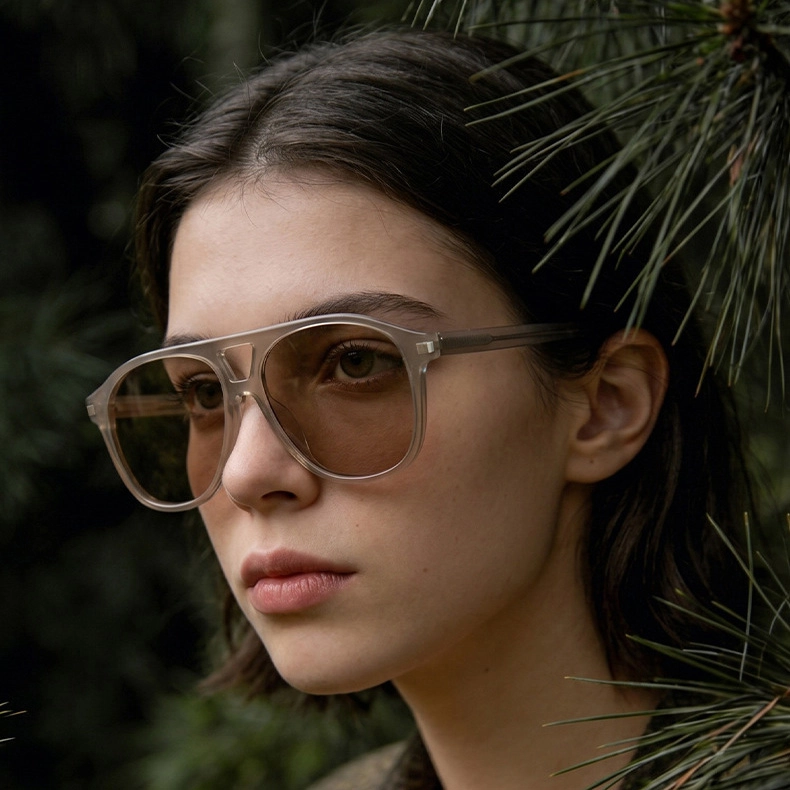
Ultra-Light Acetate Aviator Sunglasses | Metal Core Temple UV400 PC Lens Fashion Shades | Wholesale OEM
Model JL1013 is a 2026 new arrival ultra-light acetate aviator sunglasses, featuring a classic browline double-bridge silhouette and metal-core reinforced temples. Weighing only 30.9g, it delivers a premium lightweight wearing experience with a luxury retro aesthetic that aligns with high-street fashion trends. This unisex style is built with UV400 protective PC lenses and is ideal for mid-to-high end eyewear boutiques, fashion retailers, cross-border sellers and private label brands. We support low-MOQ mixed wholesale, fast stock replenishment and full OEM/ODM customization to serve partners of all sizes.
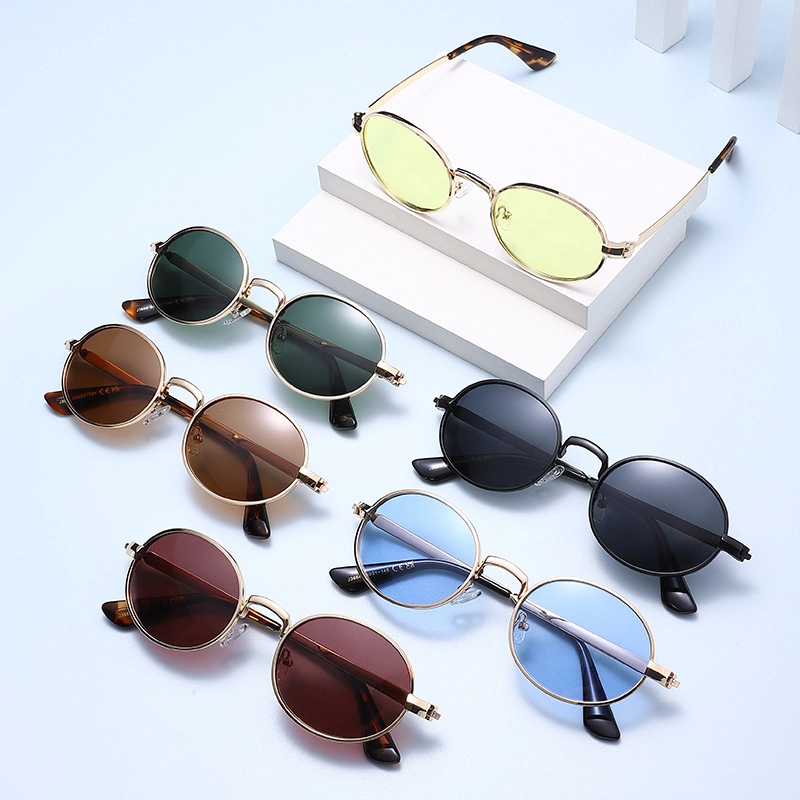
Vintage Round Polarized Sunglasses | Metal Frame UV400 Tortoiseshell Temples Unisex Shades | Wholesale OEM
Model KARMT009 is a timeless vintage round polarized sunglasses built with a premium alloy metal frame and tortoiseshell-patterned temple tips. Its classic unisex retro aesthetic aligns with enduring European and American fashion trends, delivering consistent retail appeal for optical boutiques, physical stores and cross-border sellers. Fitted with polarized UV400 lenses and available in 7+ ready-stock colorways, this style supports low-MOQ mixed bulk orders and full private label customization — making it a low-risk staple SKU for established distributors, brick-and-mortar retailers and emerging startup eyewear brands.
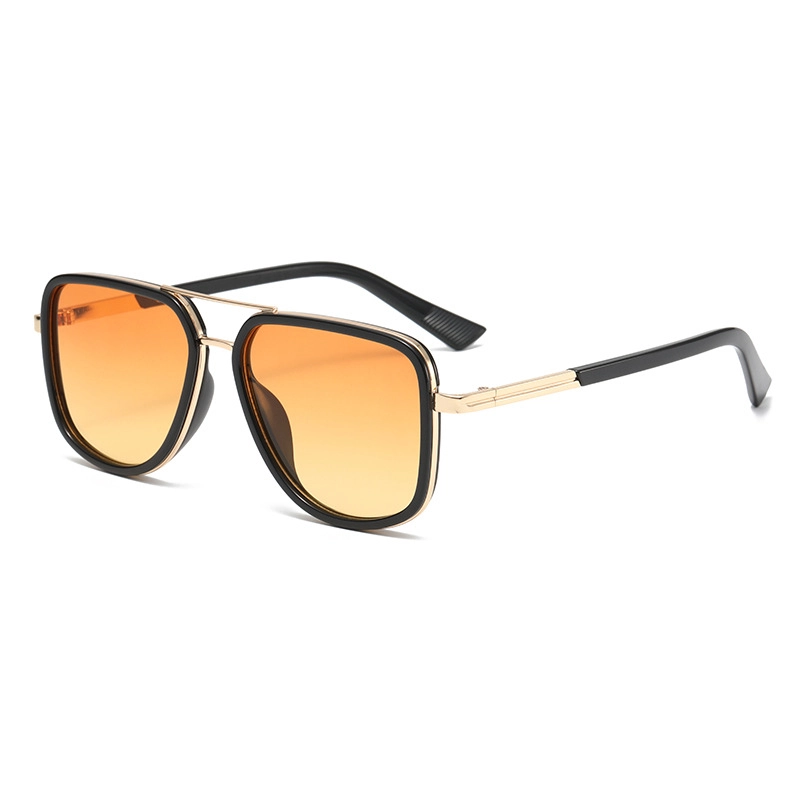
Double Bridge Square Aviator Sunglasses | PC Frame UV400 Polarized Optional Unisex Shades | Wholesale
Get a Free Quote
If you have any comments or good suggestions, please leave us a message; later our professional staff will contact you as soon as possible.
NEW DIMENSIONS IN EYEWEAR
Contact KARUSON
Email:
WhatsApp/Phone:
Address:
331 Section B, WanJia Creative Park , No. 1 BUXIA Road ,Tianhe District, Guangzhou City, Guangdong Province, China.

© 2026 KARUSON. All Rights Reserved.
Facebook
Instagram
YouTube
TikTok
Linkedin