



Custom acetate aviator sunglasses Manufacturers and Suppliers
For buyers developing custom acetate aviator sunglasses, the right manufacturing partner should support more than frame production: it should help translate a design brief into manufacturable specifications, provide reviewable prototypes, document material and inspection requirements, and plan packaging and delivery for the destination market. Since no target region was specified, this guide does not assume a particular manufacturing hub, tariff rate, lead time, or trade advantage. Instead, it sets out a practical method for assessing suppliers in any region, including how to verify engineering capability, protect design information, evaluate quality controls, and confirm applicable import and product rules before committing to production.
Build a Sourcing Strategy Around Product and Market Requirements
Turn the concept into a clear manufacturing brief
Aviator styling is familiar, but a bespoke frame still involves numerous design decisions. Before requesting a quotation, define the intended wearer, retail position, target price, order quantity, launch date, and sales markets. Include front-view and side-view drawings where available, lens shape and dimensions, bridge configuration, temple length, frame thickness, color references, logo locations, packaging needs, and any preferred materials. If the project is still at concept stage, provide sketches, reference samples, or three-dimensional files and ask the supplier to identify missing information rather than treating an early estimate as a final specification.
For acetate aviator sunglasses, agree on what “acetate” means for the project. Ask the manufacturer to identify the proposed sheet or block material, its supplier or grade where disclosure is possible, color construction, finish, and any relevant documentation. Material names alone do not establish performance or origin. Buyers should also clarify whether components such as hinges, screws, nose pads, and lenses are supplied by the frame factory or sourced separately. That distinction affects responsibility for fit, incoming inspection, and corrective action if a component fails.
Compare custom development with ready-made options
Customization can improve brand differentiation and product fit, but it usually adds design, sampling, tooling, and approval steps. A stock frame with private-label decoration may be sufficient when speed and low development cost matter most. A fully bespoke design gives the buyer more control over geometry, material appearance, color, dimensions, and details, while requiring more engineering decisions and a defined approval process. The comparison below is a starting point; actual minimum order quantities, costs, and schedules vary by factory, design complexity, and order terms.
| Decision area | Off-the-shelf or private label | Custom bespoke development |
|---|---|---|
| Frame geometry | Choose from existing designs and available sizes | Develop or revise dimensions and shape to an approved brief |
| Material and color | Limited to existing stock options | Specify material, color, finish, and approved appearance references |
| Development work | Usually focused on branding and packaging | May require engineering review, samples, and tooling or process setup |
| Commercial planning | Can suit smaller or time-sensitive launches, subject to supplier terms | Needs agreement on development charges, minimums, approvals, and schedule |
| Buyer control | Lower control over core construction | Greater control, with more responsibility for clear specifications and sign-off |
Vet the supplier before sharing sensitive files
Request evidence that the proposed factory can make the product category and processes in your brief. Ask who performs design engineering, sample production, frame finishing, assembly, lens installation, and final inspection, and which operations are subcontracted. A supplier’s sales office may not be the production site, so identify the legal contracting entity and the location of each relevant facility. Review a recent product sample, discuss how the supplier handles nonconforming units, and ask for a sample inspection report or anonymized process documentation where available.
Protect intellectual property with a written agreement before sending production-ready drawings, artwork, or three-dimensional files. Define ownership of buyer-provided designs, restrictions on use, confidentiality, tooling ownership, access to tooling, and what happens to files and unused materials when the relationship ends. The contract should also specify the approved product version and prohibit unapproved substitutions. A confidentiality clause can help establish expectations, but buyers should obtain legal advice on enforceability in the relevant jurisdictions and ensure the contracting entity is correctly identified.
Engineer, Prototype, and Approve the Frame Before Production
Review fit, construction, and manufacturability together
Good development balances the intended visual effect with wearability and repeatable production. For acetate aviator sunglasses, review frame width, lens opening, bridge fit, temple length, hinge placement, edge thickness, and the relationship between front and temple components. Request feedback on whether the specified geometry can be produced consistently with the proposed material and finish. A supplier should explain design constraints in practical terms, identify decisions that may affect cost or yield, and record any agreed changes in a controlled drawing or specification rather than relying only on chat messages.
Confirm the lens specification separately from the frame specification. State the lens material, color, tint, optical or cosmetic intent, surface treatments, and required markings, as applicable to the markets in which the product will be sold. Ask who is accountable for lens sourcing and testing. Sunglasses rules vary by destination and product claims, so do not assume that a supplier’s general statement of compliance covers every country or every configuration. The European Union, for example, regulates personal protective equipment under its applicable framework; buyers should confirm whether and how that framework applies to their product and sales claims by consulting the EU Personal Protective Equipment Regulation and qualified compliance advisers.
Use a staged sample and approval process
Set approval gates before ordering production. Depending on the design, these may include an initial appearance sample, a fit or engineering sample, a revised sample incorporating comments, and a final pre-production sample made using the intended materials and processes. Label each sample with a version, date, and status. Provide consolidated feedback with measured changes, marked-up images, and an agreed response deadline. If the factory changes material, component source, dimensions, or finish after approval, require written authorization and a new sample where the change could affect fit, appearance, performance, or compliance.
Do not treat a photograph as a substitute for physical approval when color, fit, finish, or assembly is commercially important. Compare the sample against the specification under consistent lighting and record acceptable tolerances for critical dimensions and cosmetic characteristics. The approved reference should be retained by both parties or documented sufficiently for comparison. For acetate aviator sunglasses, buyers should inspect the frame front, temples, hinge action, alignment, surface finish, and lens seating, then establish which characteristics are critical, major, or minor for the agreed inspection plan.
Agree on measurable acceptance criteria
“High Quality quality” is not an effective inspection instruction unless it is translated into observable requirements. Specify dimensions and tolerances, color references, logo placement, acceptable surface marks, assembly alignment, hinge function, packaging condition, labeling, and the sampling or inspection method. State how defects will be recorded, who pays for rework or replacement, and whether the buyer may arrange an independent inspection before shipment. Sampling plans can help assess a lot, but they do not guarantee that every unit is defect-free; choose a plan appropriate to order risk and document the agreed method.
Use recognized standards and regulatory sources as references, while confirming the specific edition and scope relevant to the item. The ISO 12312-1 standard for sunglasses and related eyewear addresses requirements and test methods for general use sunglasses, subject to its scope and exclusions. A supplier’s certificate or test report should be checked for product identity, model, test method, issuing laboratory, date, and whether the tested configuration matches the goods being ordered. For United States imports, consult official U.S. Customs and Border Protection guidance on rulings or a qualified customs broker for classification and import questions rather than relying on a generic supplier estimate.
Control Production, Delivery, and Market Readiness
Make quality control traceable through the order
Define quality responsibilities at three practical points: incoming materials and components, in-process production, and finished-goods inspection. The factory should be able to explain how it identifies materials and production lots, checks dimensions and assembly, manages rejected components, and prevents unauthorized changes. For acetate aviator sunglasses, useful checks may include comparing material color to the approved reference, reviewing surface finish and edge treatment, checking hinge attachment and movement, confirming frame symmetry, inspecting lens seating, and verifying that logos and packaging match the approved artwork. The exact inspection plan should reflect the product specification and risk profile.
Ask for evidence that is relevant to the order, not merely a collection of generic certificates. Useful records may include the approved specification, sample sign-off, production batch identification, inspection results, corrective-action records, and shipping carton details. If a test report is required by the buyer or applicable law, define the tested model and configuration before production. A laboratory report for a visually similar but materially different model may not establish that the ordered goods meet the same requirements. For broad product-safety obligations in the European Union, buyers can consult the official European Commission product safety guidance and confirm their own legal responsibilities.
Evaluate regional logistics without assuming a regional advantage
Because the target region was not provided, no particular freight route, tariff benefit, transit time, or local manufacturing capability can be responsibly claimed here. Buyers should compare suppliers using the actual factory location, port or airport access, shipment mode, order size, delivery destination, and required arrival date. Obtain a written quotation that states the delivery term, named place, packaging assumptions, production lead time, estimated transport time, and which party arranges export clearance, freight, insurance, import clearance, and duties. Incoterms® rules can clarify cost and risk allocation when correctly incorporated into the sales contract; consult the International Chamber of Commerce Incoterms® rules overview and confirm the chosen term with your logistics adviser.
Request a landed-cost comparison rather than comparing factory prices alone. Include product cost, sample and tooling charges, packaging, inspection, freight, insurance, customs brokerage, import duties and taxes where applicable, and possible storage or handling fees. Confirm tariff classification and origin rules with a qualified customs professional for the destination market; neither the factory’s location nor the shipping route alone necessarily determines preferential origin treatment. For repeat orders, evaluate the supplier’s ability to maintain approved specifications and communicate capacity or material constraints early, while retaining a contingency plan for delayed components or transport disruption.
Close the loop on packaging, claims, and repeat orders
Packaging should protect the frame and lenses during handling and transport while meeting brand and market requirements. Specify the case or pouch, cleaning cloth, insert, outer carton, language, barcodes, warnings, and recycling or material claims where relevant. Ensure marketing statements such as UV protection, impact resistance, recycled content, or country of origin are supported by evidence appropriate to the market. In the United States, the Federal Trade Commission’s guidance on Made in USA claims explains that such claims are subject to specific standards; buyers should review the rules for every origin or performance claim they intend to use.
Before the first shipment, confirm the final purchase order references the approved specification, sample, inspection requirements, packaging artwork, delivery term, and remedies for defects or delay. For repeat production, establish a change-control process covering materials, component suppliers, tooling, dimensions, finish, and subcontracting. Retain approved samples and records so that incoming shipments can be compared against a consistent baseline. A supplier relationship becomes more reliable when both parties can trace decisions from initial brief through shipment and resolve deviations using documented evidence rather than assumptions.
Frequently Asked Questions
What information should I send when requesting a quotation for custom acetate aviator sunglasses?
Provide drawings or reference images, dimensions, material and color preferences, lens requirements, component details, branding and packaging needs, order quantity, target markets, and timing. Identify which details are fixed and which are open to the supplier’s engineering recommendation.
How can I confirm that a supplier can manufacture my custom frame?
Ask which production steps the supplier performs, what it subcontracts, and whether it can show relevant samples, engineering feedback, and order-specific quality records. Confirm the production facility and legal contracting entity rather than assuming a sales office is the factory.
What sample approvals should be completed before bulk production?
Agree on staged samples appropriate to the design, including a final pre-production sample made with intended materials and processes where feasible. Record sample version, approval date, dimensions, finish, and any changes, and require written approval for later substitutions or revisions.
How do I protect my design and tooling?
Use a written agreement defining confidentiality, ownership and permitted use of design files, tooling ownership and access, restrictions on unapproved production, and the return or handling of files and unused materials. Confirm the correct contracting entity and seek legal advice on enforceability in relevant jurisdictions.
Which quality checks should I specify for acetate aviator sunglasses?
Set measurable criteria for dimensions and tolerances, material color, surface finish, symmetry, hinge function, lens seating, branding, and packaging. Define the inspection method, defect categories, recordkeeping, and remedies for nonconforming goods, and verify any required test reports against the exact model and configuration.
Can I estimate tariffs and delivery times without naming a target region?
No reliable region-specific tariff, origin treatment, or delivery estimate can be given without the factory location, destination, product details, and shipping plan. Obtain a written logistics quotation and confirm classification, origin, duties, and import requirements with a qualified customs professional for the destination market.
Contact us with your design brief, target market, quantities, and delivery requirements to discuss a custom acetate aviator sunglasses project and identify the supplier checks needed for your sourcing region.
- Build a Sourcing Strategy Around Product and Market Requirements
- Turn the concept into a clear manufacturing brief
- Compare custom development with ready-made options
- Vet the supplier before sharing sensitive files
- Engineer, Prototype, and Approve the Frame Before Production
- Review fit, construction, and manufacturability together
- Use a staged sample and approval process
- Agree on measurable acceptance criteria
- Control Production, Delivery, and Market Readiness
- Make quality control traceable through the order
- Evaluate regional logistics without assuming a regional advantage
- Close the loop on packaging, claims, and repeat orders
- Frequently Asked Questions
- What information should I send when requesting a quotation for custom acetate aviator sunglasses?
- How can I confirm that a supplier can manufacture my custom frame?
- What sample approvals should be completed before bulk production?
- How do I protect my design and tooling?
- Which quality checks should I specify for acetate aviator sunglasses?
- Can I estimate tariffs and delivery times without naming a target region?
Manufacturer profiles: comparing leading manufacturers of eyeglass lenses by material, technology and delivery performance
Customization options offered by an eyewear factory: colors, logos, engraving and packaging
OEM vs. ODM Sports Sunglasses: Which Model Fits Your Brand’s Sourcing Strategy?
Private Label Strategies for Custom Eyewear Brands
You May Also Like
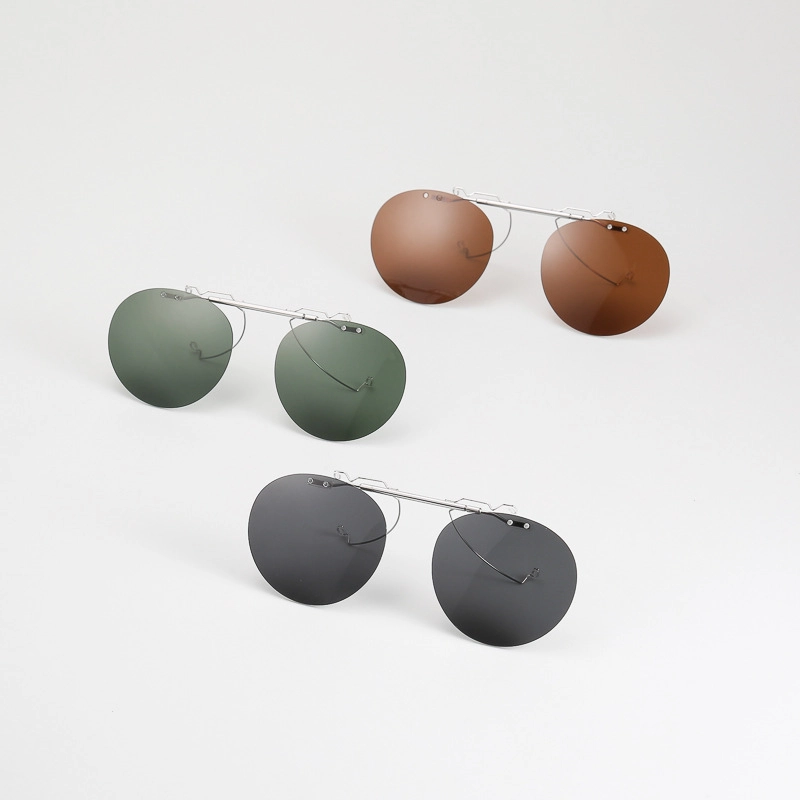
Round Polarized Flip-Up Clip-On Sunglasses for Prescription Glasses
Turn everyday prescription glasses into a retro-inspired sunwear look with these round flip-up clip-on sunglasses. The clean, rimless circular lenses sit in front of an existing optical frame, while the slim metal attachment can be lifted upward when the wearer wants to move between tinted and untinted vision without removing the clip-on.
Small silicone-padded contact points and an understated metal structure keep the focus on the frame already being worn. The range is presented in grey, brown, green and yellow tint options, making it a versatile add-on for optical boutiques and eyewear accessories collections. Actual lens performance and compatibility vary by configuration and should be confirmed with samples.
For wholesale and private label sourcing, discuss available tint combinations, lens specifications, logo or packaging options, and clip fit with KARUSON before confirming your assortment.
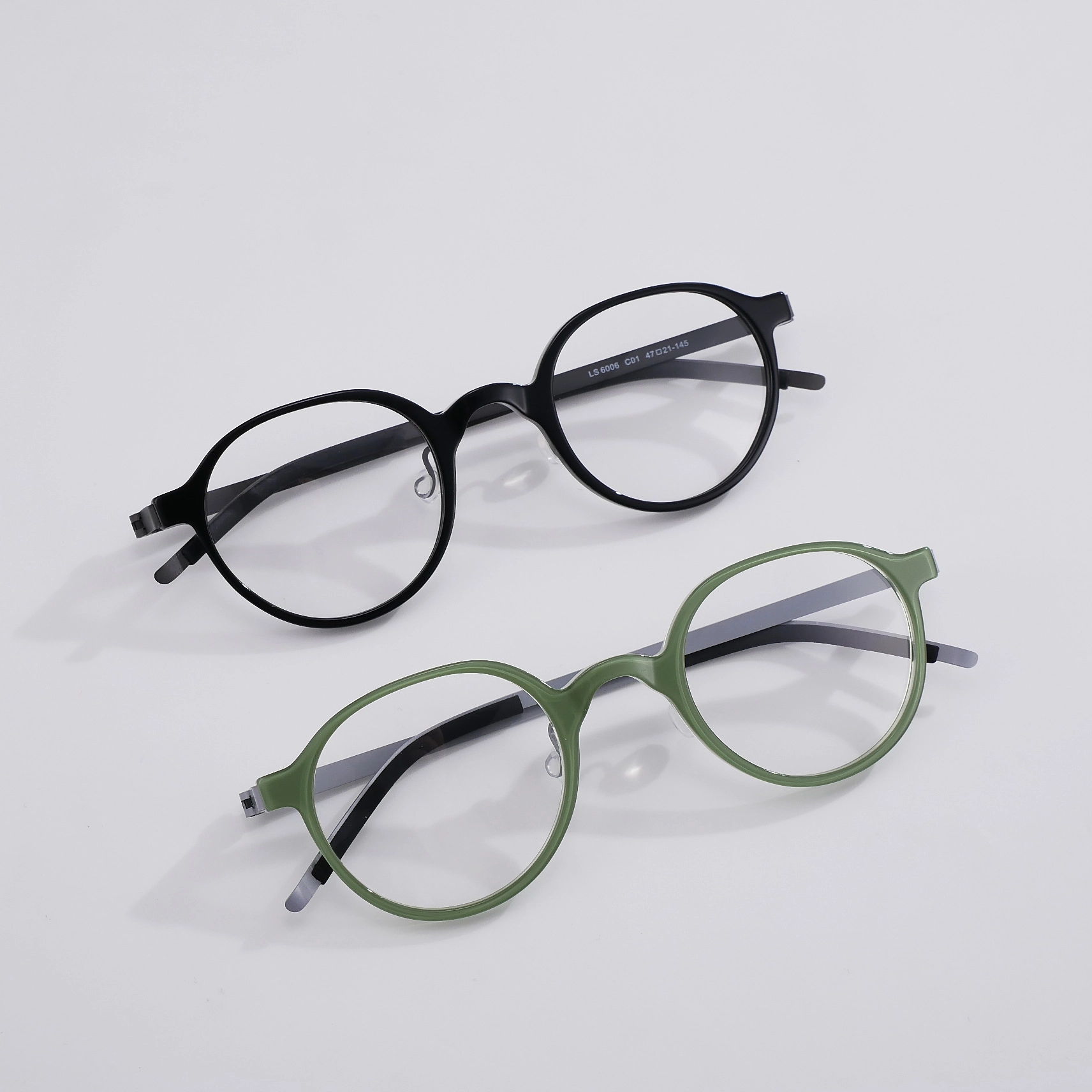
Screwless Round Acetate Optical Frames with Slim Alloy Temples
Understated from the front, refined from every angle. These round acetate optical frames combine a softly rounded silhouette with slim alloy temples for an effortless, modern-retro look. The polished front lends definition to the shape, while delicate metal sides keep the profile visually light.
Adjustable silicone nose pads offer room for fit adjustments, and the listed frame weight is just 11 g without lenses. A versatile choice for optical boutiques, everyday prescription eyewear ranges and brands building minimalist unisex collections.
Available color finishes and prescription lens compatibility can be discussed for each order, along with custom logos and branded packaging for wholesale or private label programs.
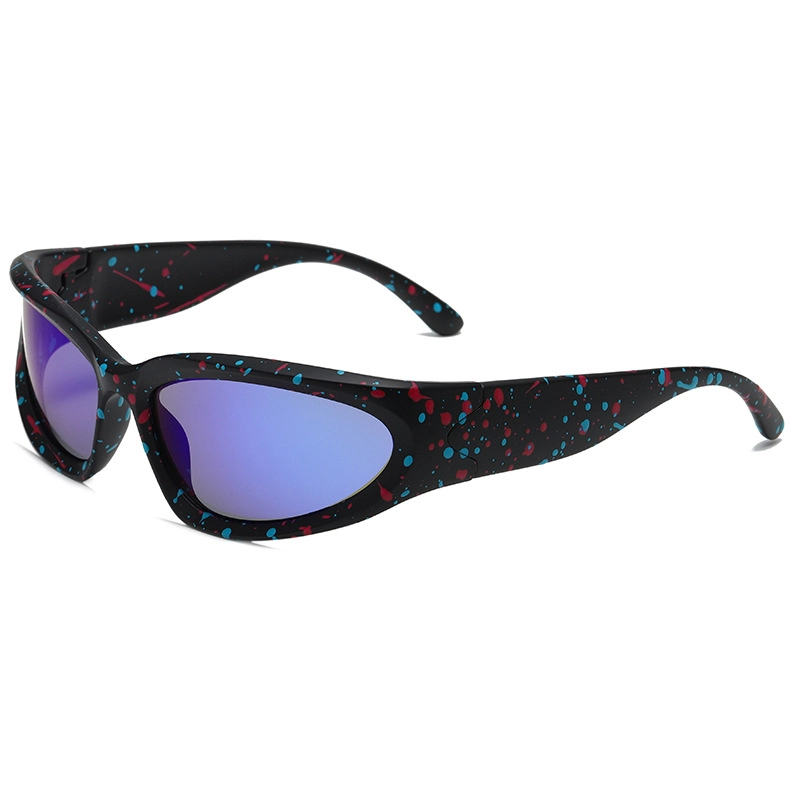
Futuristic Oval Shield Sunglasses with Sculpted Wave Temples
Bring the energy of Y2K eyewear into a modern collection with these futuristic oval shield sunglasses. The closely curved front and elongated oval lenses create a bold, streamlined silhouette, while wide sculpted temples flow into the frame through a distinctive wave-shaped junction.
From sharp black finishes to expressive metallic and mirror-inspired color combinations, the design makes a striking addition to fashion-forward sunglasses ranges, festival collections and sport-inspired streetwear assortments. Buyers can discuss available polarized and Revo-style mirror lens configurations, as well as frame color, logo and packaging options, with KARUSON.
For wholesale and private label programs, choose the preferred colorways and lens specifications before requesting samples and a production quotation. Frame material, lens performance and available customizations should be confirmed for the selected version.
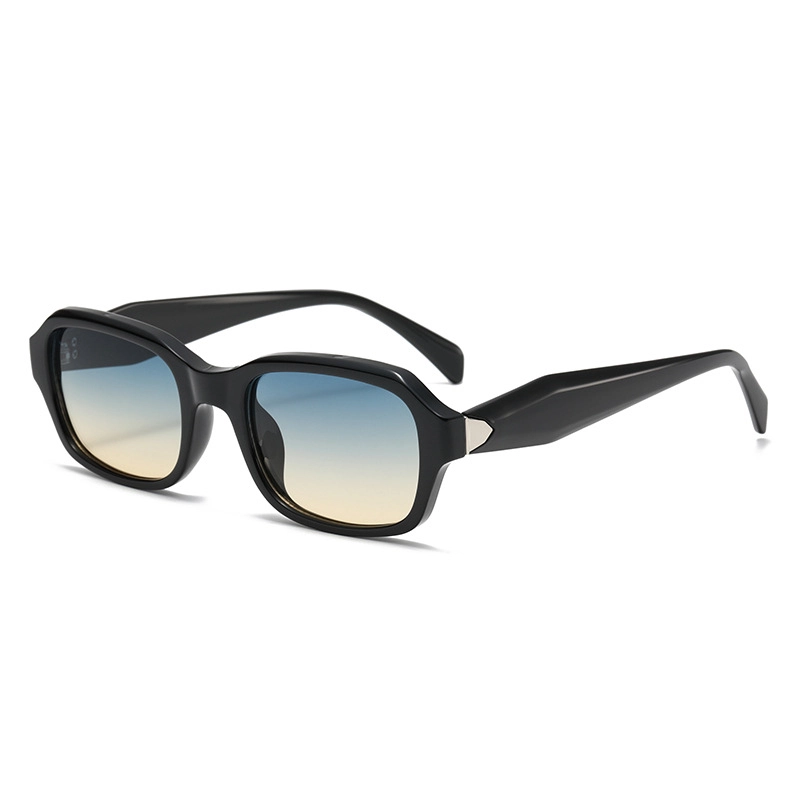
Retro Rectangle Blue Light Glasses with Faceted Temples
Bring a bold retro touch to your eyewear collection with these statement rectangle glasses. Inspired by the distinctive shapes of the 1990s, the frame features a softly squared front, beveled edges, and wide geometric temples that create a striking profile from every angle.
Polished chevron-shaped accents at the hinges add a refined detail, while classic and translucent colorways offer versatile styling options for modern optical and blue light eyewear collections.
Designed for fashion eyewear brands, optical boutiques, and wholesale retailers, these frames offer a distinctive silhouette for private label collections. Explore available frame colors, compatible lens options, custom logos, and branded packaging to create an assortment that reflects your brand identity.
Get a Free Quote
If you have any comments or good suggestions, please leave us a message; later our professional staff will contact you as soon as possible.
NEW DIMENSIONS IN EYEWEAR
Contact KARUSON
Email:
WhatsApp/Phone:
Address:
331 Section B, WanJia Creative Park , No. 1 BUXIA Road ,Tianhe District, Guangzhou City, Guangdong Province, China.

© 2026 KARUSON. All Rights Reserved.
Facebook
Instagram
YouTube
TikTok
Linkedin