


How Are Coated Lenses Manufactured? A Step-by-Step Production Overview
Coated lenses are produced through a multi-stage manufacturing process that begins with raw lens substrate selection and ends with rigorous optical quality inspection. The core coating stages include surface cleaning and activation, primer application, hard coating (anti-scratch), anti-reflective (AR) multilayer vacuum deposition, hydrophobic top-coat application, and UV or thermal curing. Each layer is measured in nanometers and must bond uniformly to the substrate—whether polycarbonate (PC), CR-39, Trivex, or high-index material—to achieve the optical clarity, durability, and functional performance demanded by global eyewear brands. Having spent over 15 years inside eyewear factories observing and optimizing these workflows, I can tell you that the difference between a mediocre coated lens and a High Quality one comes down entirely to process discipline, equipment calibration, and raw material traceability.
The Science and Sequence Behind Lens Coating Production
Stage 1 — Substrate Selection and Surface Preparation
Every coated lens starts with the substrate. In my experience auditing dozens of production lines, this is the stage most buyers underestimate. The substrate material determines which coating chemistry will adhere correctly and which curing parameters are safe to use. Polycarbonate substrates, for example, are impact-resistant but thermally sensitive, so hard-coat formulations must be low-temperature compatible. CR-39 plastic, the most widely used optical polymer according to Britannica's overview of optical lens technology, accepts a broader range of coating chemistries but requires precise surface energy measurement before any wet-coat application.
Surface preparation involves ultrasonic cleaning baths—typically a cascade of deionized water tanks with controlled temperature and megasonic agitation—to remove mold-release agents, fingerprint oils, and micro-particulates left from the lens casting or injection-molding process. Any contamination at this stage will cause coating delamination within weeks of use. I have personally rejected entire production batches because a single cleaning tank's conductivity reading drifted above specification. That kind of vigilance is non-negotiable in a serious eyewear factory environment.
Stage 2 — Primer and Hard Coat Application
Once the substrate passes surface cleanliness inspection, a primer layer is applied—usually by spin coating or dip coating—to improve adhesion between the plastic substrate and the harder silicone-based hard coat that follows. The hard coat itself is a sol-gel siloxane formulation that dramatically increases surface hardness, typically raising the Bayer abrasion resistance value from around 10 (bare polycarbonate) to above 300 after curing. This is the layer that protects your lens from everyday scratching caused by cleaning cloths, keys, and accidental drops.
Thermal curing in a convection oven at temperatures between 80°C and 130°C (depending on substrate) cross-links the siloxane network and locks in hardness. UV curing lines are increasingly popular for PC substrates because they eliminate heat-induced warpage. I always recommend buyers ask their supplier for Bayer abrasion test certificates on every coating batch—this single data point tells you more about real-world scratch resistance than any marketing claim.
Stage 3 — Anti-Reflective Multilayer Vacuum Deposition
This is the most technically demanding stage of coated lens manufacturing. Anti-reflective (AR) coating is applied inside a high-vacuum chamber—typically at pressures below 10⁻⁴ Pa—using physical vapor deposition (PVD) or ion-assisted deposition (IAD). Alternating layers of high-refractive-index materials (such as zirconium dioxide or titanium dioxide) and low-refractive-index materials (such as silicon dioxide) are deposited in precise nanometer thicknesses. The optical interference between these layers cancels out reflected light across the visible spectrum, reducing surface reflectance from approximately 8–10% on an uncoated lens to below 0.5% on a High Quality AR stack.
According to the ISO 8980-1 standard for finished uncut spectacle lenses, transmittance and reflectance specifications must be verified at multiple wavelengths. In practice, this means every production chamber run is validated with a spectrophotometer before lenses are released. I have seen factories skip this validation step to save time—the result is always inconsistent color tint across a batch, which is immediately visible when you hold two lenses side by side under fluorescent light.
Advanced Functional Coatings and Their Manufacturing Logic
Hydrophobic and Oleophobic Top Coats
The outermost layer applied to most High Quality coated lenses today is a hydrophobic (water-repelling) and oleophobic (oil-repelling) fluorine-based compound. It is deposited either by vacuum evaporation inside the same AR chamber immediately after the AR stack, or by a separate dip-coating process. The contact angle of water on the finished surface should exceed 100 degrees for a high-quality hydrophobic coat—a simple water-drop test on the production floor is a fast, visual quality gate that I use routinely.
This layer is critical for end-user experience. It prevents smudging, makes cleaning easier, and reduces the adhesion of cosmetic residues. For sport sunglasses and custom sport sunglasses used in outdoor environments, an oleophobic coat also resists sunscreen and sweat, which are highly corrosive to unprotected AR stacks. Brands that skip this layer to reduce cost almost always receive warranty complaints within six months of market launch.
Polarized and Mirror Coating Integration
Polarized lenses require a different manufacturing sequence. The polarizing filter—a stretched polyvinyl alcohol (PVA) film laminated between protective TAC layers—is incorporated into the lens blank before any surface coating begins. The polarizing efficiency of the finished lens is measured using a polarimeter and must meet standards such as those outlined by the American National Standards Institute (ANSI) Z80.3 for sunglass lenses, which specifies a minimum luminous transmittance and polarization efficiency threshold.
Mirror coatings, by contrast, are applied as a semi-reflective metallic or oxide layer during the vacuum deposition stage, before the hydrophobic top coat. The color and density of a mirror coat are controlled by layer thickness and material selection. Flash mirror coatings use very thin layers for a subtle effect, while full mirror coatings use thicker stacks for maximum reflectivity. Getting mirror color consistency across a production run of thousands of lenses requires extremely stable evaporation rates and rigorous chamber maintenance—something only well-capitalized eyewear factories can sustain reliably.
UV-Blocking and Blue-Light Filtering Coatings
UV-blocking capability can be built into the lens substrate itself (as with most polycarbonate materials, which inherently block UV up to 380 nm) or added as a coating layer. Blue-light filtering coatings work by either reflecting a portion of the high-energy visible (HEV) spectrum (400–455 nm) through a thin-film interference layer, or by incorporating a selective absorber into the hard coat formulation. The World Health Organization's guidance on ultraviolet radiation underscores the importance of verified UV protection in eyewear, making third-party UV transmittance testing a baseline requirement for any responsible manufacturer.
Comparing Coating Technologies: A Production Perspective
After years of evaluating supplier capabilities, I find that buyers are often confused by the terminology used to describe coating processes. The table below summarizes the key differences between the most common coating technologies used in modern eyewear factories, so you can ask the right questions when qualifying a new supplier.
| Coating Technology | Application Method | Primary Function | Typical Layer Thickness | Key Quality Metric |
|---|---|---|---|---|
| Hard Coat (Anti-Scratch) | Spin coat / Dip coat + Thermal or UV cure | Surface hardness, scratch resistance | 2–5 micrometers | Bayer abrasion resistance ≥ 300 |
| Anti-Reflective (AR) | PVD / IAD vacuum deposition | Reduce surface reflectance, enhance clarity | 100–300 nanometers (total stack) | Residual reflectance < 0.5% |
| Hydrophobic / Oleophobic | Vacuum evaporation or dip coat | Water and oil repellency, smudge resistance | 10–20 nanometers | Water contact angle > 100° |
| Mirror Coat | PVD vacuum deposition | Aesthetic reflectivity, glare reduction | 50–200 nanometers | Luminous reflectance consistency ±2% |
| Polarized Film Lamination | Pressure lamination before surface coating | Eliminate horizontal glare | 0.4–0.75 mm (film stack) | Polarization efficiency ≥ 99% |
| Blue-Light Filter | Thin-film interference or absorber in hard coat | Reduce HEV light transmission (400–455 nm) | Varies by method | HEV blocking rate per brand specification |
How KARUSON Delivers Precision Coated Lenses at Scale
Vertically Integrated Manufacturing Across Two Factory Bases
Understanding the complexity of coated lens production makes it clear why factory selection is one of the most consequential decisions a brand can make. I have seen brands lose entire seasonal collections to coating failures caused by outsourcing to facilities that lack in-house vacuum deposition equipment or proper cleanroom environments. This is precisely why I believe in the vertically integrated model that KARUSON has built since its founding in 2010.
KARUSON International Co., Ltd. operates two state-of-the-art eyewear factory bases in Dongguan and Guangzhou, giving the company the production capacity and process redundancy that global brands require. With over 15 years of mastery in eyewear design and precision manufacturing, KARUSON controls every stage of the lens and frame production chain in-house—from substrate procurement and coating chemistry qualification to final optical inspection and packaging. For brands sourcing custom glasses lenses or custom prescription lenses, this means a single accountable partner rather than a fragmented supply chain where coating failures get blamed on sub-suppliers.
300+ Designs Across Every Major Lens and Frame Category
KARUSON's engineering team has pioneered over 300 trend-setting designs spanning polarized sunglasses, TR90 frames, metal sunglasses, PC sunglasses, and advanced sport eyewear. Whether you are developing customized sunglasses for a lifestyle brand, custom sport sunglasses for an athletic performance label, or TR Sunglasses for a fashion-forward European retailer, KARUSON's design library and rapid prototyping capability compress your time-to-market significantly. I have worked with brands that reduced their development cycle from 16 weeks to under 8 weeks by partnering with a factory that could handle frame engineering, lens coating specification, and logo engraving under one roof—exactly what KARUSON offers.
The company's OEM and ODM capabilities extend to bespoke lens coating specifications. If KARUSON requires a proprietary mirror color, a custom blue-light filter transmittance curve, or a specific AR coating residual color (green, blue, or neutral), KARUSON's coating engineers can develop and lock in that specification as a brand-exclusive formula. This level of customization is what separates a genuine manufacturing partner from a catalog supplier.
Quality Standards That Satisfy European and American Market Requirements
KARUSON has earned the enduring trust of prestigious brands across Spain, Europe, and the Americas by maintaining rigorous quality control protocols at every production stage. For coated lenses, this includes incoming substrate inspection, in-process coating thickness monitoring via spectrophotometry, adhesion cross-hatch testing per ISO 9211, abrasion resistance verification, and final transmittance and reflectance measurement on every production lot. Brands selling into the EU market need CE-compliant eyewear; brands in the US market need ANSI Z80.3 compliance. KARUSON's quality team is fluent in both regulatory frameworks and can provide the documentation your compliance team needs without back-and-forth delays.
If you are ready to explore custom glasses, customize sport sunglasses, or develop a new line of coated lens products with a manufacturing partner that brings genuine technical depth to the table, I encourage you to reach out directly to the KARUSON team at nicole@karusonco.com or visit www.karusonco.com to review the full product and service portfolio.
Frequently Asked Questions
What is the difference between anti-reflective coating and anti-scratch coating on lenses?
Anti-scratch coating (hard coat) is a silicone-based layer applied by dip or spin coating that increases surface hardness and protects against abrasion. Anti-reflective (AR) coating is a multilayer thin-film stack deposited in a vacuum chamber that reduces surface reflectance from around 8–10% down to below 0.5%, improving optical clarity and reducing eye strain. They serve different functions and are both present on most premium coated lenses—the hard coat goes on first, followed by the AR stack, and then a hydrophobic top coat.
How long does a lens coating last before it needs to be replaced?
A properly applied, high-quality coating stack on a well-maintained lens should last the functional life of the frame—typically 2 to 3 years of daily use. Premature coating failure (peeling, crazing, or delamination) is almost always caused by manufacturing defects such as inadequate surface preparation, incorrect curing parameters, or incompatible coating chemistry for the substrate material. Using harsh chemical cleaners or exposing lenses to extreme heat (such as leaving them in a hot car) can also accelerate coating degradation.
Can coated lenses be re-coated if the coating wears off?
In theory, worn coatings can be stripped and reapplied, but in practice this is rarely cost-effective for finished prescription or sunglass lenses. Stripping the original hard coat requires chemical or mechanical processes that can alter the lens geometry and optical power. For most consumers and brands, replacing the lens is more practical than re-coating. For high-value custom prescription lenses or specialty sport lenses, some optical labs do offer re-coating services, but the substrate must be inspected carefully for surface damage before proceeding.
What makes polarized lenses different from standard coated lenses in manufacturing?
Polarized lenses incorporate a polyvinyl alcohol (PVA) polarizing film laminated between protective TAC layers directly into the lens blank before any surface coating is applied. This lamination step requires precise alignment of the polarizing axis and controlled pressure and temperature to avoid bubbles or delamination. After lamination, the lens blank goes through the same hard coat, AR, and hydrophobic coating stages as a standard lens. The additional lamination step and the cost of the polarizing film make polarized lenses more expensive to produce, but they provide significant glare reduction that standard tinted coatings cannot match.
How do I verify that a coated lens supplier meets quality standards?
Ask for documented test results for the following: Bayer abrasion resistance (hard coat), residual reflectance measured by spectrophotometer (AR coat), water contact angle (hydrophobic coat), adhesion cross-hatch test results per ISO 9211, and UV transmittance data. For sunglasses destined for the EU market, request CE certification documentation. For the US market, ask for ANSI Z80.3 compliance records. A credible eyewear factory will provide these without hesitation. If a supplier cannot produce batch-level test certificates, that is a significant red flag regardless of how competitive their pricing appears.
What substrate materials are best suited for high-performance coated lenses?
The choice of substrate depends on the intended application. Polycarbonate (PC) is the industry standard for impact-resistant sport and safety lenses—it inherently blocks UV up to 380 nm but requires low-temperature coating processes due to its thermal sensitivity. CR-39 plastic offers excellent optical clarity and accepts a wide range of coating chemistries, making it popular for prescription optical lenses. Trivex combines impact resistance with superior optical clarity (higher Abbe value than PC) and is preferred for high-end optical and sport applications. High-index materials (1.67, 1.74) are used for strong prescriptions where lens thickness must be minimized. Each substrate requires a specifically formulated coating system to ensure proper adhesion and long-term durability.
How does KARUSON support brands developing custom coated lens products?
KARUSON offers end-to-end customization for coated lens products, including bespoke coating specification development (proprietary mirror colors, custom AR residual tint, specific blue-light filter curves), substrate selection guidance, rapid prototyping, and full OEM/ODM manufacturing across their Dongguan and Guangzhou factory bases. Their quality team provides complete documentation for CE and ANSI compliance, and their engineering team has developed over 300 designs across polarized sunglasses, PC sunglasses, TR sunglasses, metal sunglasses, custom sport sunglasses, and custom prescription lenses. Brands can contact KARUSON at nicole@karusonco.com or visit www.karusonco.com to initiate a project.
- The Science and Sequence Behind Lens Coating Production
- Stage 1 — Substrate Selection and Surface Preparation
- Stage 2 — Primer and Hard Coat Application
- Stage 3 — Anti-Reflective Multilayer Vacuum Deposition
- Advanced Functional Coatings and Their Manufacturing Logic
- Hydrophobic and Oleophobic Top Coats
- Polarized and Mirror Coating Integration
- UV-Blocking and Blue-Light Filtering Coatings
- Comparing Coating Technologies: A Production Perspective
- How KARUSON Delivers Precision Coated Lenses at Scale
- Vertically Integrated Manufacturing Across Two Factory Bases
- 300+ Designs Across Every Major Lens and Frame Category
- Quality Standards That Satisfy European and American Market Requirements
- Frequently Asked Questions
How an eyewear factory selects and sources lens materials: CR39, polycarbonate, high-index
Protective Eyewear for Motorsport and Outdoor Adventure Brands: A B2B Sourcing Guide
Polarized Sunglasses for Outdoor and Sports Brands: Design, Performance, and Compliance Needs
Top 10 sunglasses for women manufacturers and suppliers
You May Also Like

Ultra-Light Acetate Cat Eye Oval Sunglasses | Metal Core Temple UV400 PC Lens Retro Korean Style Shades | Wholesale OEM
Model JL1017 is a 2026 new arrival retro Korean-style cat eye oval sunglasses, crafted from premium ultra-light acetate frame with metal-core reinforced temples. Weighing only 23.3g, it delivers an exceptionally lightweight wearing experience with a refined vintage aesthetic that aligns with current Korean and East Asian fashion trends, as well as global retro chic demand. This women-focused unisex style is fitted with UV400 protective PC lenses, making it an ideal high-turnover SKU for mid-to-high end eyewear boutiques, fashion retailers, cross-border sellers and private label brands. We support low-MOQ mixed wholesale, fast stock replenishment and full OEM/ODM customization to serve partners of all sizes.

Ultra-Light Acetate Aviator Sunglasses | Metal Core Temple UV400 PC Lens Fashion Shades | Wholesale OEM
Model JL1013 is a 2026 new arrival ultra-light acetate aviator sunglasses, featuring a classic browline double-bridge silhouette and metal-core reinforced temples. Weighing only 30.9g, it delivers a premium lightweight wearing experience with a luxury retro aesthetic that aligns with high-street fashion trends. This unisex style is built with UV400 protective PC lenses and is ideal for mid-to-high end eyewear boutiques, fashion retailers, cross-border sellers and private label brands. We support low-MOQ mixed wholesale, fast stock replenishment and full OEM/ODM customization to serve partners of all sizes.
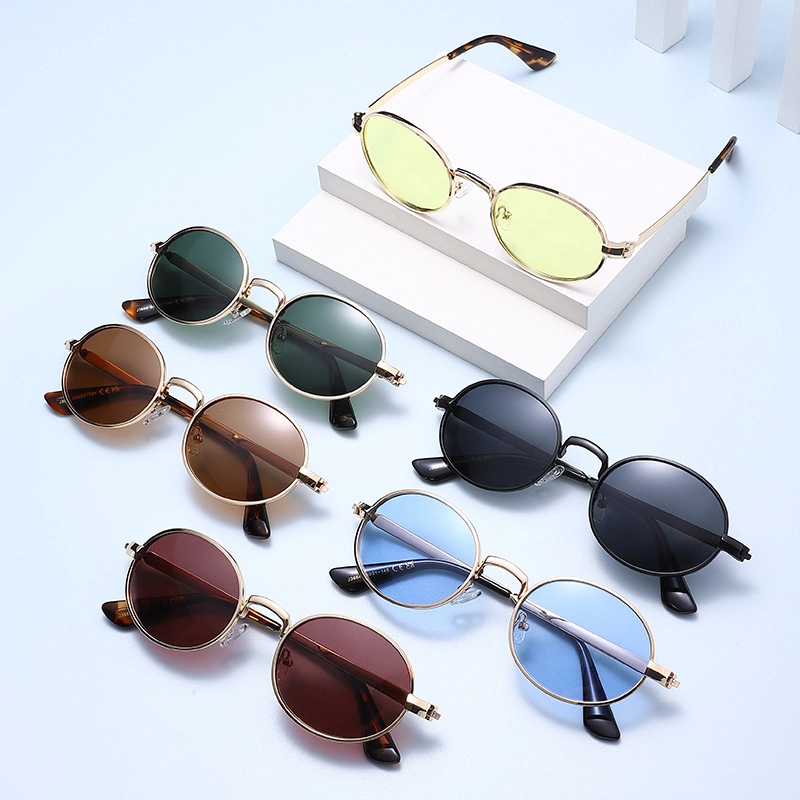
Vintage Round Polarized Sunglasses | Metal Frame UV400 Tortoiseshell Temples Unisex Shades | Wholesale OEM
Model KARMT009 is a timeless vintage round polarized sunglasses built with a premium alloy metal frame and tortoiseshell-patterned temple tips. Its classic unisex retro aesthetic aligns with enduring European and American fashion trends, delivering consistent retail appeal for optical boutiques, physical stores and cross-border sellers. Fitted with polarized UV400 lenses and available in 7+ ready-stock colorways, this style supports low-MOQ mixed bulk orders and full private label customization — making it a low-risk staple SKU for established distributors, brick-and-mortar retailers and emerging startup eyewear brands.
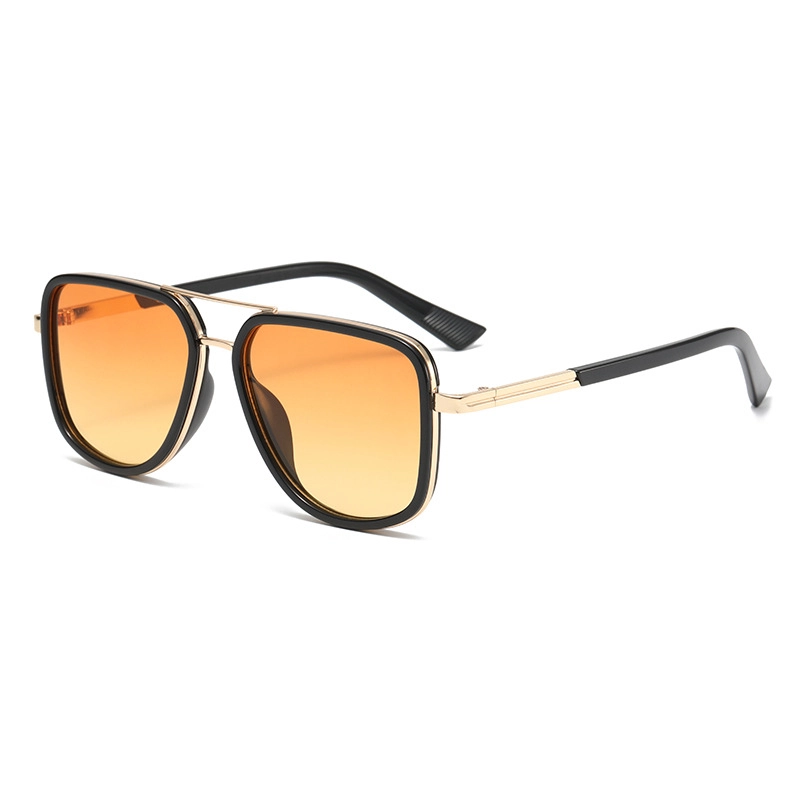
Double Bridge Square Aviator Sunglasses | PC Frame UV400 Polarized Optional Unisex Shades | Wholesale
Get a Free Quote
If you have any comments or good suggestions, please leave us a message; later our professional staff will contact you as soon as possible.
NEW DIMENSIONS IN EYEWEAR
Contact KARUSON
Email:
WhatsApp/Phone:
Address:
331 Section B, WanJia Creative Park , No. 1 BUXIA Road ,Tianhe District, Guangzhou City, Guangdong Province, China.

© 2026 KARUSON. All Rights Reserved.
Facebook
Instagram
YouTube
TikTok
Linkedin