


OEM vs. ODM Coated Lenses: Which Manufacturing Model Fits Your Business?
Choosing between OEM and ODM manufacturing for coated lenses is one of the most consequential decisions a brand owner, optical retailer, or sports eyewear buyer can make. In my 15 years working inside and alongside eyewear factories across Dongguan and Guangzhou, I have watched brands thrive or stall based almost entirely on this single strategic call. OEM gives you complete creative control over lens specifications, coatings, and frame engineering. ODM lets you move fast, reduce upfront investment, and leverage a factory's existing R&D. Neither model is universally superior. The right answer depends on your order volume, brand positioning, timeline, and how deeply you want to own the product. This article cuts through the confusion, gives you a practical framework, and shares the real-world trade-offs I have seen play out across hundreds of client projects.
Understanding the Core Difference Between OEM and ODM in Lens Manufacturing
What OEM Actually Means for Coated Lens Projects
OEM, or Original Equipment Manufacturing, means you bring the design, the specifications, and the intellectual property. The factory executes your vision. In the context of coated lenses, this means you define the substrate material—whether polycarbonate, CR-39, or Trivex—the coating stack, the tint gradient, the anti-reflective layer chemistry, and the UV protection rating. The factory's job is precision replication at scale. I have worked with European optical brands that supply their own coating formulas and demand that the factory match a specific light transmission percentage down to a single decimal point. That level of control is only possible under a true OEM arrangement. According to the ISO 8980-3 standard for ophthalmic optics, transmittance and coating durability requirements are highly specific, and OEM buyers who understand these standards can enforce them contractually with their manufacturing partners.
What ODM Means and Why It Appeals to Fast-Moving Brands
ODM, or Original Design Manufacturing, means the factory already has a finished or semi-finished design that you license, brand, and sell. In the coated lenses space, this typically means the factory has developed a lens-and-frame combination with a pre-applied coating—say, a polarized TAC lens with a hydrophobic outer layer and a mirrored flash coating—and you simply add your logo and packaging. The speed advantage is dramatic. Where an OEM project might require 90 to 120 days from concept to first production run, a well-executed ODM project can deliver samples in two to three weeks. For brands entering a new category or testing a market, this is invaluable. The World Eyewear Association has consistently noted that speed-to-market is one of the top three competitive factors in the mid-range sunglasses segment, and ODM directly addresses that pressure.
The Hybrid Model: Where Most Serious Brands Actually Land
Here is something I rarely see discussed openly: most successful mid-to-large eyewear brands do not operate in a pure OEM or pure ODM mode. They use a hybrid. They start with an ODM base—an existing frame silhouette and a proven coating system—and then customize specific elements under an OEM agreement. They might modify the lens geometry, upgrade the anti-reflective coating to a proprietary formula, or request a unique polarization axis angle for a sports application. This hybrid approach gives them speed without sacrificing differentiation. I have helped brands in Spain and the Americas structure exactly these kinds of agreements, and the results consistently outperform either pure model in terms of time-to-market combined with brand distinctiveness.
Coated Lenses: The Technical Variables That Change Everything
Coating Types and Their Impact on Manufacturing Complexity
Not all coated lenses are created equal, and the coating type you choose has a direct and significant impact on which manufacturing model makes sense. A basic UV400 coating applied to a polycarbonate lens is a commodity process. Nearly any competent eyewear factory can execute it reliably under either OEM or ODM terms. But when you move into multi-layer anti-reflective coatings, oleophobic and hydrophobic stacks, photochromic layers, or specialized polarized coatings with specific extinction ratios, the complexity increases exponentially. These advanced coatings require precise vacuum deposition equipment, controlled humidity environments, and rigorous adhesion testing. Under OEM, you bear the responsibility of specifying these parameters correctly. Under ODM, the factory's existing validated process handles it, but you have less ability to differentiate. The SPIE Optical Engineering Journal has published extensive research on thin-film coating adhesion failures in eyewear, and the data consistently shows that specification clarity at the manufacturing stage is the single biggest predictor of coating durability in the field.
Material Choices: PC, TR90, and Metal Frames in Relation to Lens Coatings
The frame material you choose interacts directly with your lens coating strategy, and this is a dimension that buyers frequently underestimate. Polycarbonate frames have a specific thermal expansion coefficient that affects how the lens sits in the frame over time, which in turn affects whether edge coatings remain intact. TR90 frames, which are a thermoplastic polyamide material, are far more flexible and create different stress patterns on the lens. Metal frames, particularly those using titanium or stainless steel, are dimensionally stable but require precise lens edging to prevent coating chipping at the bevel. Under OEM, you can specify the exact tolerances for lens-to-frame fit. Under ODM, the factory has already optimized these tolerances for their existing designs, which is efficient but constraining if your application is unusual—such as a high-wrap sport frame that requires a complex base curve on the lens.
Quality Control Protocols and Certification Requirements
One of the most practical differences between OEM and ODM that I communicate to every new client is the difference in quality control ownership. In an OEM arrangement, you define the inspection criteria, the acceptable quality level (AQL), and the testing protocols. You can require salt spray testing for coating adhesion, impact resistance testing per FDA impact resistance standards for lenses, and specific UV transmittance verification. In an ODM arrangement, the factory's existing quality system applies. This is not necessarily inferior—a well-run eyewear factory will have robust internal standards—but you have less visibility and less contractual leverage over the specific tests being run. For brands selling into regulated markets like the EU or the United States, this distinction matters enormously. CE marking for sunglasses under EN ISO 12312-1 requires specific lens transmittance and filter category documentation, and under OEM you can build this into your manufacturing agreement explicitly.
OEM vs. ODM Decision Framework: A Practical Comparison
After working through hundreds of client scenarios, I have distilled the decision into a structured comparison. The table below reflects real-world conditions I have observed across projects ranging from 500-unit boutique orders to 50,000-unit retail programs.
| Decision Factor | OEM Coated Lenses | ODM Coated Lenses |
|---|---|---|
| Minimum Order Quantity (MOQ) | Typically 1,000–3,000 units per SKU | Typically 300–1,000 units per SKU |
| Lead Time (Sample to Production) | 60–120 days | 15–35 days |
| Upfront Tooling Cost | High (mold, jig, coating formula development) | Low to none (existing tooling used) |
| Brand Differentiation Potential | Maximum (full IP ownership) | Limited (shared base design) |
| Coating Customization Depth | Full specification control | Pre-set coating options only |
| Regulatory Documentation Support | Customized per buyer's market | Factory's standard certifications |
| Risk Profile | Higher (design and spec risk on buyer) | Lower (proven design and process) |
| Best Suited For | Established brands, prescription lens programs, High Quality sport lines | New market entrants, private label, fast-fashion eyewear |
| Unit Cost at Scale | Lower (optimized for volume) | Moderate (shared tooling amortized) |
Why KARUSON Is the Manufacturing Partner That Bridges Both Worlds
15 Years of Vertically Integrated Expertise Across Both Models
When I think about what separates a truly capable eyewear factory from a transactional supplier, it comes down to whether they can execute both OEM and ODM with equal competence—and whether they have the engineering depth to guide you toward the right model for your specific situation. KARUSON, established in 2010 and operating dual manufacturing bases in Dongguan and Guangzhou, has spent 15 years building exactly that capability. With over 300 original designs developed in-house and a client roster spanning Spain, Europe, and the Americas, KARUSON has the reference points to tell you honestly whether your project is better served by a fully custom OEM approach or by adapting one of their proven ODM platforms. That kind of candid, experience-backed guidance is rare, and it is what I look for when recommending manufacturing partners to clients.
Custom Glasses Lenses and Frame Engineering Under One Roof
One of the structural advantages KARUSON offers is vertical integration. For buyers pursuing OEM custom glasses lenses, this means lens specification, coating application, frame engineering, and final assembly happen within a controlled, coordinated environment rather than being split across multiple subcontractors. This matters enormously for coated lens quality. When the entity applying the coating is also the entity edging the lens and fitting it into the frame, the tolerances are managed holistically. KARUSON's product range reflects this integrated capability: from customized sunglasses with polarized TAC lenses to custom sport sunglasses built on TR90 frames with impact-resistant PC lenses, every product line has been engineered as a system rather than as a collection of separately sourced components. Their custom prescription lenses capability further extends this into the optical channel, where coating precision and dimensional accuracy are non-negotiable.
Specialized Lines for Sport, Fashion, and Optical Applications
The breadth of KARUSON's manufacturing capability is directly relevant to the OEM versus ODM decision because it means you are not forced into a model based on what the factory can or cannot do—you choose based on what is right for your business. Their TR Sunglasses line, built on flexible thermoplastic polyamide frames, is a strong ODM starting point for brands entering the active lifestyle segment. Their metal sunglasses program, using precision-machined stainless steel and titanium components, is ideally suited for OEM buyers who need tight dimensional tolerances for High Quality optical frames. Their custom sunglasses sports and customize sport sunglasses programs combine high-wrap frame geometries with advanced lens coatings—polarized, photochromic, or mirrored—and are available under either manufacturing model depending on volume and customization requirements. For buyers who need PC sunglasses with specific tint and coating combinations, KARUSON's in-house coating line can execute multi-layer stacks to specification. You can explore the full range and initiate a project inquiry at karusonco.com or reach their team directly at nicole@karusonco.com.
Frequently Asked Questions
What is the main difference between OEM and ODM for coated lenses?
OEM means you provide the design and specifications and the factory manufactures to your exact requirements, giving you full IP ownership and maximum customization over coating types, materials, and tolerances. ODM means the factory provides an existing validated design that you brand and sell, offering faster lead times and lower upfront costs but less differentiation. For coated lenses specifically, OEM allows you to define the exact coating stack, UV transmittance, and adhesion standards, while ODM gives you access to the factory's pre-developed and proven coating systems.
What minimum order quantity should I expect for OEM coated lenses versus ODM?
In my experience, OEM coated lens projects typically require a minimum order quantity of 1,000 to 3,000 units per SKU because the tooling, mold development, and coating formula validation costs need to be amortized across a meaningful production run. ODM projects generally have much lower MOQs, often starting at 300 to 1,000 units per SKU, because the factory's existing tooling and validated processes are already in place. If you are a new market entrant or testing a product category, ODM's lower MOQ is a significant financial advantage.
How do coating types affect the choice between OEM and ODM manufacturing?
Basic coatings like UV400 on polycarbonate lenses are commodity processes that work well under either model. However, advanced coatings such as multi-layer anti-reflective stacks, oleophobic and hydrophobic layers, photochromic coatings, or specialized polarized coatings with specific extinction ratios are far more complex. Under OEM, you specify these parameters precisely and own the formula. Under ODM, you access the factory's existing validated coating system, which is efficient but limits your ability to differentiate. For premium or regulated markets, OEM gives you the documentation control needed for certifications like CE marking under EN ISO 12312-1.
Can I combine OEM and ODM elements in a single eyewear project?
Yes, and in practice this hybrid approach is what most successful mid-to-large eyewear brands use. You start with an ODM base—an existing frame silhouette and proven coating system—and then customize specific elements under an OEM agreement. For example, you might modify the lens geometry, upgrade the anti-reflective coating to a proprietary formula, or request a unique polarization axis for a sport application. This gives you speed-to-market without sacrificing brand differentiation, and a capable eyewear factory with both OEM and ODM experience can structure these hybrid agreements effectively.
What certifications and regulatory documentation should I require from my coated lens manufacturer?
For brands selling into the EU, you need CE marking compliance under EN ISO 12312-1 for sunglasses, which requires specific lens transmittance documentation and filter category verification. For the US market, FDA impact resistance standards for lenses apply, and you should require testing documentation. Under an OEM arrangement, you can build these specific testing requirements into your manufacturing agreement contractually. Under ODM, the factory's standard certifications apply, so you need to verify that their existing documentation covers the specific markets you are selling into before committing to a program.
How long does it take to develop custom coated lenses under OEM versus ODM?
OEM coated lens development typically takes 60 to 120 days from initial specification to first production run, because it involves mold development, coating formula validation, sample production, and iterative testing. ODM projects can deliver samples in 15 to 35 days because the factory's existing tooling and validated coating processes are already in place. If your business is time-sensitive—for example, responding to a seasonal trend or fulfilling a retail program with a fixed launch date—ODM's speed advantage is substantial. For long-term brand building where differentiation matters more than speed, OEM's longer development cycle is a worthwhile investment.
What frame materials work best with advanced coated lenses?
The frame material interacts directly with your lens coating strategy in ways that are easy to underestimate. TR90 thermoplastic polyamide frames are highly flexible and create specific stress patterns on the lens that affect coating integrity at the edges. Polycarbonate frames have a thermal expansion coefficient that can affect lens fit and edge coating durability over time. Metal frames, particularly titanium and stainless steel, are dimensionally stable but require precise lens edging to prevent coating chipping at the bevel. Under OEM, you can specify exact lens-to-frame fit tolerances to account for these material interactions. Under ODM, the factory has already optimized these tolerances for their existing designs.
- Understanding the Core Difference Between OEM and ODM in Lens Manufacturing
- What OEM Actually Means for Coated Lens Projects
- What ODM Means and Why It Appeals to Fast-Moving Brands
- The Hybrid Model: Where Most Serious Brands Actually Land
- Coated Lenses: The Technical Variables That Change Everything
- Coating Types and Their Impact on Manufacturing Complexity
- Material Choices: PC, TR90, and Metal Frames in Relation to Lens Coatings
- Quality Control Protocols and Certification Requirements
- OEM vs. ODM Decision Framework: A Practical Comparison
- Why KARUSON Is the Manufacturing Partner That Bridges Both Worlds
- 15 Years of Vertically Integrated Expertise Across Both Models
- Custom Glasses Lenses and Frame Engineering Under One Roof
- Specialized Lines for Sport, Fashion, and Optical Applications
- Frequently Asked Questions
Lens edging and fitting process at an eyewear factory
Top 10 sunglasses for women manufacturers and suppliers
Injection molding workflows inside an eyewear factory
Top 20 China sunglasses suppliers for dropshipping and wholesale (2026 edition)
You May Also Like

Ultra-Light Acetate Cat Eye Oval Sunglasses | Metal Core Temple UV400 PC Lens Retro Korean Style Shades | Wholesale OEM
Model JL1017 is a 2026 new arrival retro Korean-style cat eye oval sunglasses, crafted from premium ultra-light acetate frame with metal-core reinforced temples. Weighing only 23.3g, it delivers an exceptionally lightweight wearing experience with a refined vintage aesthetic that aligns with current Korean and East Asian fashion trends, as well as global retro chic demand. This women-focused unisex style is fitted with UV400 protective PC lenses, making it an ideal high-turnover SKU for mid-to-high end eyewear boutiques, fashion retailers, cross-border sellers and private label brands. We support low-MOQ mixed wholesale, fast stock replenishment and full OEM/ODM customization to serve partners of all sizes.

Ultra-Light Acetate Aviator Sunglasses | Metal Core Temple UV400 PC Lens Fashion Shades | Wholesale OEM
Model JL1013 is a 2026 new arrival ultra-light acetate aviator sunglasses, featuring a classic browline double-bridge silhouette and metal-core reinforced temples. Weighing only 30.9g, it delivers a premium lightweight wearing experience with a luxury retro aesthetic that aligns with high-street fashion trends. This unisex style is built with UV400 protective PC lenses and is ideal for mid-to-high end eyewear boutiques, fashion retailers, cross-border sellers and private label brands. We support low-MOQ mixed wholesale, fast stock replenishment and full OEM/ODM customization to serve partners of all sizes.
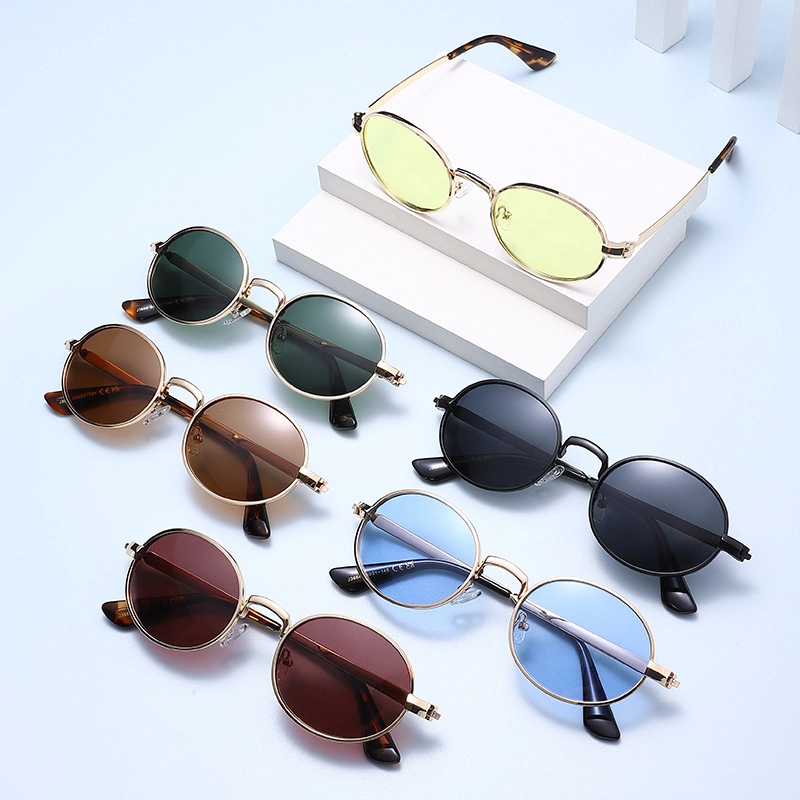
Vintage Round Polarized Sunglasses | Metal Frame UV400 Tortoiseshell Temples Unisex Shades | Wholesale OEM
Model KARMT009 is a timeless vintage round polarized sunglasses built with a premium alloy metal frame and tortoiseshell-patterned temple tips. Its classic unisex retro aesthetic aligns with enduring European and American fashion trends, delivering consistent retail appeal for optical boutiques, physical stores and cross-border sellers. Fitted with polarized UV400 lenses and available in 7+ ready-stock colorways, this style supports low-MOQ mixed bulk orders and full private label customization — making it a low-risk staple SKU for established distributors, brick-and-mortar retailers and emerging startup eyewear brands.
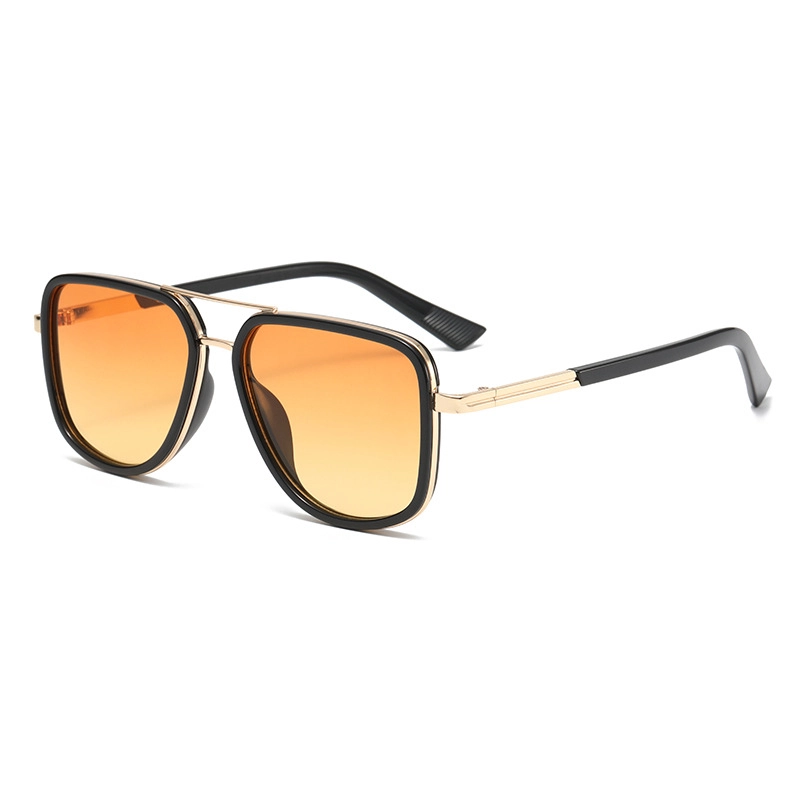
Double Bridge Square Aviator Sunglasses | PC Frame UV400 Polarized Optional Unisex Shades | Wholesale
Get a Free Quote
If you have any comments or good suggestions, please leave us a message; later our professional staff will contact you as soon as possible.
NEW DIMENSIONS IN EYEWEAR
Contact KARUSON
Email:
WhatsApp/Phone:
Address:
331 Section B, WanJia Creative Park , No. 1 BUXIA Road ,Tianhe District, Guangzhou City, Guangdong Province, China.

© 2026 KARUSON. All Rights Reserved.
Facebook
Instagram
YouTube
TikTok
Linkedin