


OEM vs. ODM Square-Frame Aviator Glasses for Private Labels
When a private-label brand approaches me asking how to launch a line of square-frame aviator glasses, the first question I always ask is deceptively simple: do you want to own the design, or do you want to own the brand? That single question separates an OEM strategy from an ODM strategy, and getting the answer wrong can cost a startup six figures and twelve months of wasted runway. After fifteen years of sourcing, auditing factories, and helping brands scale from prototype to retail shelf, I have seen both paths succeed brilliantly and fail spectacularly. This article gives you the unfiltered, practical framework I use with every client who wants to enter the eyewear market with a distinctive square-frame aviator silhouette.
Understanding the OEM and ODM Landscape for Square-Frame Aviator Eyewear
What OEM Actually Means in Eyewear Manufacturing
Original Equipment Manufacturing means you bring the intellectual property and the factory brings the production capability. In the context of square-frame aviator glasses, that means your design team — or a contracted industrial designer — produces technical drawings, specifies the exact bridge width, temple length, lens curvature, and hinge mechanism, and the factory executes those specs to your standard. The finished product carries KARUSON, your UPC, your packaging, and your liability. According to the ISO 12312-1 standard for eye and face protection, every finished pair must meet optical and mechanical requirements regardless of who designed the frame, so the compliance burden falls squarely on the brand owner in an OEM arrangement. I have audited factories in Wenzhou, Shenzhen, and Xiamen that run pure OEM lines, and the common thread is that their engineering teams are exceptional at translating CAD files into injection-moulded or CNC-machined reality, but they will not invest a single yuan in helping you refine a concept they do not own.
What ODM Actually Means and Why It Dominates Private-Label Launches
Original Design Manufacturing flips the equation. The factory owns a library of proven frame tooling — including dozens of square-frame aviator glasses silhouettes that have already passed drop tests, UV transmission tests, and hinge-cycle tests — and you license the right to brand them as your own. You typically choose a base frame, select materials such as TR-90, acetate, or stainless steel, specify lens tint and coating, and add your logo via laser engraving or pad printing. The Vision Council of America, which tracks wholesale eyewear data across North America, consistently reports that over 60 percent of new private-label eyewear entrants use ODM tooling for their first two product generations before investing in proprietary molds. I have seen why: a single injection mold for a complex square-frame aviator front can cost between $8,000 and $25,000 USD depending on complexity, and that investment only makes sense once you have validated demand.
The Hybrid Model Most Experts Never Talk About
In my experience, the most commercially successful private-label eyewear brands do not choose purely between OEM and ODM — they use a staged hybrid. They launch with ODM frames to generate cash flow and market data, then reinvest those profits into OEM tooling for hero SKUs that competitors cannot easily replicate. I helped one sport eyewear brand do exactly this with their square-frame aviator glasses line: ODM for the first season, proprietary OEM molds by season three, and by year four they had a defensible product that no white-label reseller could copy. This approach requires a manufacturing partner flexible enough to support both models, which is rarer than you might think.
Critical Decision Factors: Cost, MOQ, Lead Time, and Customization Depth
Breaking Down the Real Cost Structure
The sticker price per unit is almost never the number that matters. What matters is total landed cost, which includes tooling amortization, sampling fees, quality control inspection, freight, import duties, and the hidden cost of rework when a factory misinterprets a spec. For ODM square-frame aviator glasses, tooling cost is zero or near-zero because you are using existing molds, but you pay a slight High Quality per unit — typically 8 to 15 percent above OEM unit cost — because the factory needs to recover their original tooling investment. For OEM, you pay upfront tooling fees but achieve lower per-unit costs at scale. The crossover point in my models is usually around 3,000 to 5,000 units per SKU annually. Below that threshold, ODM almost always wins on total cost. The World Trade Organization's research on global value chains in manufacturing confirms that tooling cost amortization is the dominant variable in small-batch consumer goods economics, and eyewear is no exception.
Minimum Order Quantities and Their Strategic Implications
MOQ is where many private-label brands get trapped. A factory running OEM production needs to justify machine setup time, color mixing, and quality calibration across a minimum run. For metal sunglasses frames with a square-frame aviator profile, I typically see OEM MOQs of 500 to 1,200 units per colorway. For TR sunglasses — frames made from TR-90 thermoplastic rubber — the MOQ is often lower, around 300 to 600 units, because the material is easier to process in shorter runs. ODM MOQs are almost always lower, sometimes as few as 100 to 200 units, because the factory is simply pulling existing tooling off the shelf. For a brand testing three colorways of a new square-frame aviator glasses style, the difference between a 300-unit ODM MOQ and a 1,000-unit OEM MOQ is the difference between $15,000 and $50,000 in initial inventory risk.
Lead Times and the Supply Chain Reality
I tell every client to add 30 percent to whatever lead time a factory quotes them. ODM lead times for square-frame aviator glasses typically run 25 to 45 days from order confirmation to finished goods, because tooling is ready and the factory is simply scheduling a production run. OEM lead times for a new frame design start at 60 to 90 days for tooling fabrication alone, then add another 30 to 45 days for production. If you are launching for a seasonal retail window — say, a spring optical trade show or a summer sport sunglasses campaign — missing that window by six weeks can cost you an entire year of revenue. I have seen brands lose key retail accounts because their OEM tooling ran three weeks late. ODM is simply lower-risk for time-sensitive launches.
Material and Lens Customization Options for Square-Frame Aviator Glasses
Frame Materials: TR, Metal, and PC Compared
The square-frame aviator silhouette works across multiple material categories, and each has a distinct value proposition for private-label brands. TR sunglasses — frames built from TR-90 nylon — are lightweight, flexible, and hypoallergenic, making them ideal for sport and outdoor lifestyle positioning. Metal sunglasses, typically stainless steel or monel alloy, carry a High Quality aesthetic and are preferred for fashion-forward or professional optical lines. PC sunglasses — polycarbonate frames — offer the best impact resistance at the lowest material cost, which is why they dominate the entry-level sport sunglasses segment. According to Grand View Research's eyewear market analysis, the global eyewear market is projected to exceed $197 billion by 2030, with sport and outdoor categories growing at the fastest rate — a trend that directly rewards brands who invest in customized sport sunglasses with durable, performance-oriented materials.
Lens Customization: Where the Real Differentiation Lives
In my experience, brands that compete on frame design alone get commoditized within two seasons. The brands that build lasting loyalty invest in custom glasses lenses — proprietary tints, coatings, and optical grades that create a genuinely differentiated visual experience. For square-frame aviator glasses, the lens options include polarized PC lenses, photochromic lenses, mirror-coated lenses, and custom prescription lenses for the optical channel. Custom prescription lenses open up an entirely different revenue stream: the prescription eyewear market, which carries significantly higher margins than non-prescription sunglasses. If you are building a private-label line and ignoring the prescription opportunity, you are leaving money on the table. The technical requirements for custom prescription lenses — including base curve, optical center, and ANSI Z80.3 compliance — are well-documented by the American National Standards Institute, and any serious manufacturing partner should be able to produce lenses that meet these standards in-house.
Surface Treatments and Branding Elements
Beyond material and lens selection, surface treatment is where a private-label square-frame aviator glasses line becomes visually distinctive. Electroplating on metal frames, rubber-touch coating on TR frames, and UV printing on temples are all techniques I have used to help brands create a signature look without investing in new tooling. Logo placement — whether laser-engraved on the temple, embossed on the nose pad, or printed on the lens — is a detail that separates professional private-label execution from generic white-label product. I always advise clients to request physical samples of every surface treatment before approving production, because photographs consistently flatter finishes that look mediocre in person.
Choosing the Right Manufacturing Partner and Maximizing Your Private-Label Investment
What to Look for in a Full-Service Eyewear OEM/ODM Partner
After auditing dozens of factories across China, Italy, and South Korea, I have developed a short list of non-negotiable capabilities for any partner I recommend to private-label clients. First, in-house lens cutting and coating — a factory that outsources lens work introduces a quality control gap and a lead time variable you cannot control. Second, a documented quality management system aligned with ISO 9001 or equivalent. Third, a design team capable of supporting both ODM customization and OEM development from CAD to prototype. Fourth, experience across multiple frame materials — TR sunglasses, metal sunglasses, and PC sunglasses — so your line can evolve without switching factories. Fifth, the ability to produce custom prescription lenses alongside non-prescription styles, because the optical channel is too valuable to ignore.
How a Capable Partner Supports Your Entire Custom Glasses Portfolio
The brands I have seen scale most successfully treat their manufacturing partner as a strategic collaborator, not a commodity supplier. When you work with a partner who can handle the full spectrum — from customized sunglasses and custom sport sunglasses to custom prescription lenses and specialized lens coatings — you gain the ability to respond to market trends without the friction of qualifying new suppliers. For example, when the polarized sport sunglasses trend accelerated in the outdoor retail channel, my clients who had partners capable of producing customize sport sunglasses with polarized PC lenses were able to launch new SKUs in 35 days. Clients who had to source new suppliers took four to six months and missed the trend window entirely. The operational advantage of a full-service partner compounds over time in ways that are difficult to quantify on a per-unit cost basis but are very easy to see in annual revenue figures.
Private-Label Packaging and Brand Presentation
I want to address packaging because it is consistently underinvested by first-time private-label brands. Your square-frame aviator glasses might be flawlessly manufactured, but if they arrive at retail in a generic poly bag with a sticker label, the brand perception suffers immediately. A capable OEM/ODM partner should offer custom packaging — branded cases, microfiber pouches, hang tags, and retail-ready display solutions — as part of a turnkey private-label service. I have seen brands spend $0.40 per unit on custom packaging that increased their perceived retail value by $8 to $12 per unit. That is one of the highest-return investments in the entire private-label launch process.
Frequently Asked Questions
What is the minimum order quantity for ODM square-frame aviator glasses?
ODM minimum order quantities for square-frame aviator glasses are typically much lower than OEM, often ranging from 100 to 200 units per colorway, because the factory uses existing tooling. This makes ODM the preferred route for brands testing new styles or entering the market with limited initial capital.
How much does OEM tooling cost for a new square-frame aviator glasses design?
A single injection mold for a complex square-frame aviator front typically costs between $8,000 and $25,000 USD depending on design complexity, number of cavities, and material requirements. This cost is amortized across your production volume, so it only becomes economically viable at annual volumes of roughly 3,000 to 5,000 units per SKU.
What materials are available for private-label square-frame aviator glasses?
The three primary material categories are TR-90 nylon (TR sunglasses) for lightweight and flexible sport applications, stainless steel or monel alloy (metal sunglasses) for premium fashion and optical lines, and polycarbonate (PC sunglasses) for impact-resistant, entry-level sport sunglasses. Each material has distinct MOQ, cost, and customization implications.
Can I add custom prescription lenses to a private-label square-frame aviator glasses line?
Yes, and I strongly recommend it. Custom prescription lenses open access to the optical retail channel, which carries significantly higher margins than non-prescription sunglasses. Your manufacturing partner must be capable of producing lenses that meet ANSI Z80.3 standards and can handle base curve, optical center, and coating specifications in-house to maintain quality control.
What is the typical lead time difference between OEM and ODM for square-frame aviator glasses?
ODM lead times typically run 25 to 45 days from order confirmation because existing tooling is used. OEM lead times start at 60 to 90 days for tooling fabrication alone, plus another 30 to 45 days for production. For seasonal launches or time-sensitive retail windows, ODM carries significantly lower schedule risk.
How do I differentiate my private-label square-frame aviator glasses from competitors using the same ODM base frames?
Differentiation in ODM comes from lens customization (proprietary tints, coatings, polarization), surface treatments (electroplating, rubber-touch coating, UV printing), logo placement (laser engraving, embossing), and custom packaging. Brands that invest in custom glasses lenses and distinctive surface finishes consistently outperform those that compete on frame shape alone.
When should a private-label brand transition from ODM to OEM for square-frame aviator glasses?
The transition makes financial sense when you are selling 3,000 to 5,000 units or more per SKU annually and have validated strong market demand. At that volume, OEM tooling costs amortize favorably against the per-unit cost savings, and proprietary molds create a competitive barrier that ODM-based competitors cannot easily replicate.
- Understanding the OEM and ODM Landscape for Square-Frame Aviator Eyewear
- What OEM Actually Means in Eyewear Manufacturing
- What ODM Actually Means and Why It Dominates Private-Label Launches
- The Hybrid Model Most Experts Never Talk About
- Critical Decision Factors: Cost, MOQ, Lead Time, and Customization Depth
- Breaking Down the Real Cost Structure
- Minimum Order Quantities and Their Strategic Implications
- Lead Times and the Supply Chain Reality
- Material and Lens Customization Options for Square-Frame Aviator Glasses
- Frame Materials: TR, Metal, and PC Compared
- Lens Customization: Where the Real Differentiation Lives
- Surface Treatments and Branding Elements
- Choosing the Right Manufacturing Partner and Maximizing Your Private-Label Investment
- What to Look for in a Full-Service Eyewear OEM/ODM Partner
- How a Capable Partner Supports Your Entire Custom Glasses Portfolio
- Private-Label Packaging and Brand Presentation
- Frequently Asked Questions
3D printing prototyping and short-run production at an eyewear factory
How an eyewear factory performs acetate frame cutting and shaping
Sustainable Acetate Sunglasses: Eco Options for Buyers
Customization options offered by an eyewear factory: colors, logos, engraving and packaging
You May Also Like

Ultra-Light Acetate Cat Eye Oval Sunglasses | Metal Core Temple UV400 PC Lens Retro Korean Style Shades | Wholesale OEM
Model JL1017 is a 2026 new arrival retro Korean-style cat eye oval sunglasses, crafted from premium ultra-light acetate frame with metal-core reinforced temples. Weighing only 23.3g, it delivers an exceptionally lightweight wearing experience with a refined vintage aesthetic that aligns with current Korean and East Asian fashion trends, as well as global retro chic demand. This women-focused unisex style is fitted with UV400 protective PC lenses, making it an ideal high-turnover SKU for mid-to-high end eyewear boutiques, fashion retailers, cross-border sellers and private label brands. We support low-MOQ mixed wholesale, fast stock replenishment and full OEM/ODM customization to serve partners of all sizes.
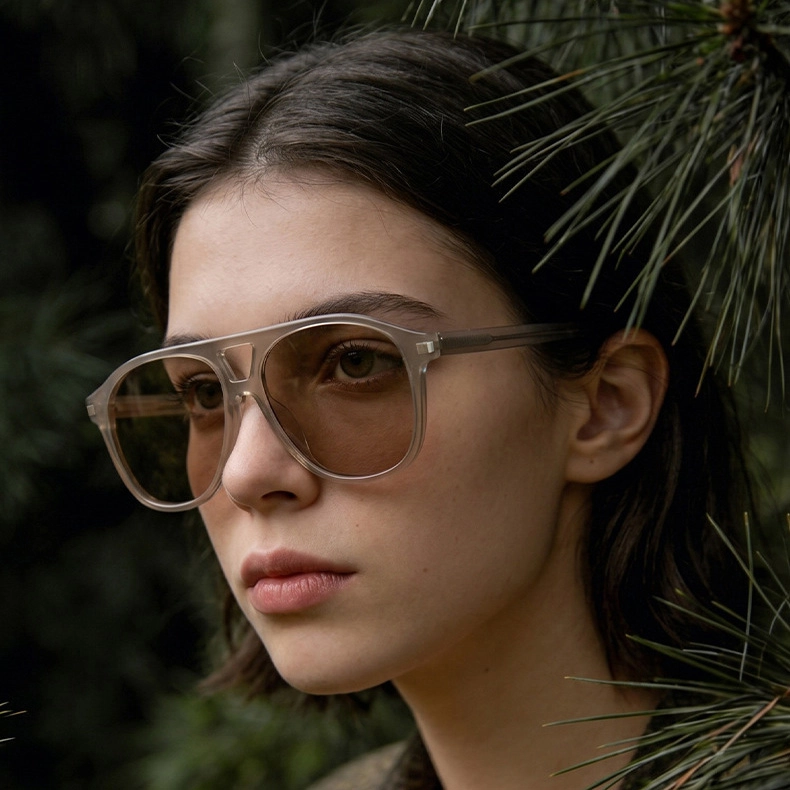
Ultra-Light Acetate Aviator Sunglasses | Metal Core Temple UV400 PC Lens Fashion Shades | Wholesale OEM
Model JL1013 is a 2026 new arrival ultra-light acetate aviator sunglasses, featuring a classic browline double-bridge silhouette and metal-core reinforced temples. Weighing only 30.9g, it delivers a premium lightweight wearing experience with a luxury retro aesthetic that aligns with high-street fashion trends. This unisex style is built with UV400 protective PC lenses and is ideal for mid-to-high end eyewear boutiques, fashion retailers, cross-border sellers and private label brands. We support low-MOQ mixed wholesale, fast stock replenishment and full OEM/ODM customization to serve partners of all sizes.
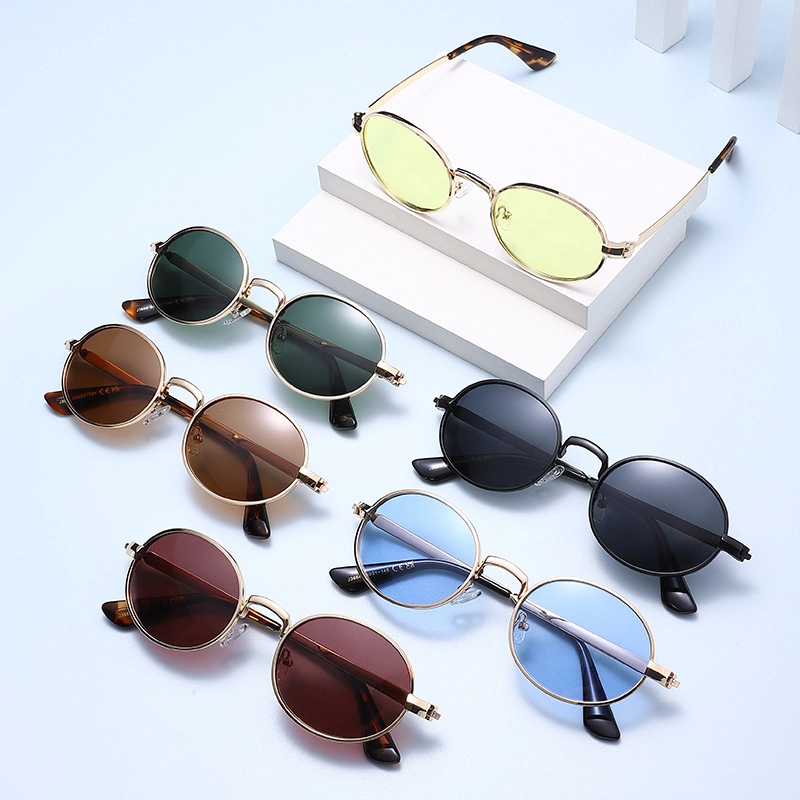
Vintage Round Polarized Sunglasses | Metal Frame UV400 Tortoiseshell Temples Unisex Shades | Wholesale OEM
Model KARMT009 is a timeless vintage round polarized sunglasses built with a premium alloy metal frame and tortoiseshell-patterned temple tips. Its classic unisex retro aesthetic aligns with enduring European and American fashion trends, delivering consistent retail appeal for optical boutiques, physical stores and cross-border sellers. Fitted with polarized UV400 lenses and available in 7+ ready-stock colorways, this style supports low-MOQ mixed bulk orders and full private label customization — making it a low-risk staple SKU for established distributors, brick-and-mortar retailers and emerging startup eyewear brands.
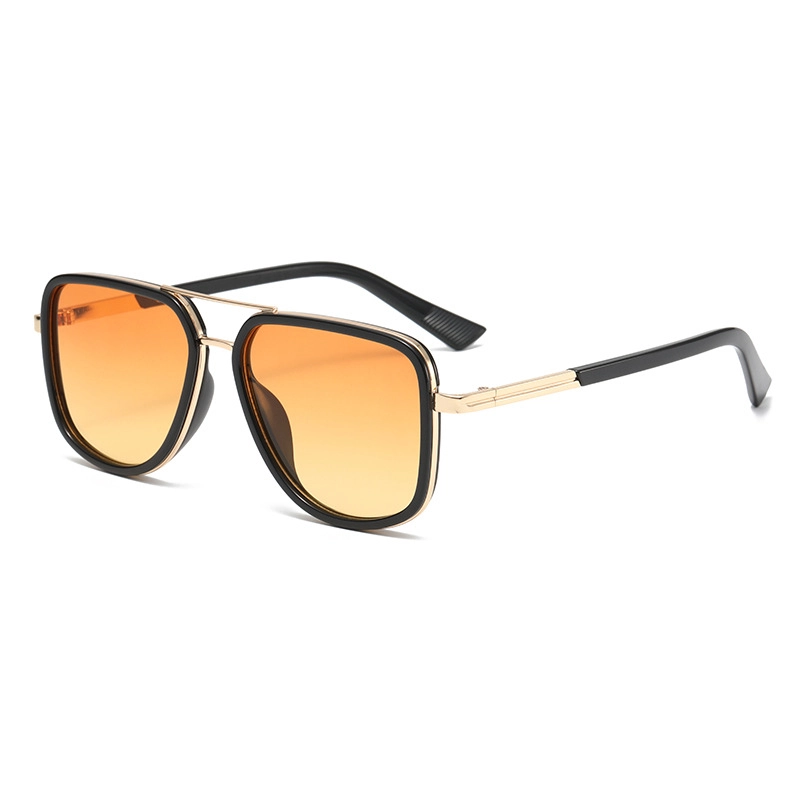
Double Bridge Square Aviator Sunglasses | PC Frame UV400 Polarized Optional Unisex Shades | Wholesale
Get a Free Quote
If you have any comments or good suggestions, please leave us a message; later our professional staff will contact you as soon as possible.
NEW DIMENSIONS IN EYEWEAR
Contact KARUSON
Email:
WhatsApp/Phone:
Address:
331 Section B, WanJia Creative Park , No. 1 BUXIA Road ,Tianhe District, Guangzhou City, Guangdong Province, China.

© 2026 KARUSON. All Rights Reserved.
Facebook
Instagram
YouTube
TikTok
Linkedin