


Polarized Sunglasses for Driving and Automotive Retail: How to Choose the Right Products
Polarized sunglasses are one of the most consequential safety accessories a driver can own, yet the automotive retail channel remains flooded with products that fail to deliver genuine glare protection. After 15 years working inside the eyewear factory ecosystem—evaluating lens coatings, advising global retail buyers, and overseeing OEM production runs—I have seen firsthand how a poorly specified polarized lens can create more visual distraction than it eliminates. In this guide I break down exactly what makes a driving-grade polarized sunglass perform, what automotive retailers must demand from their suppliers, and how to build a product line that earns repeat customer loyalty. Whether you are a brand manager sourcing a private-label collection or a procurement director evaluating factory partners, the framework I share here will save you from the most expensive specification mistakes I have witnessed in this industry.
Why Driving Demands a Different Standard of Polarized Lens Technology
The Physics of Road Glare and How Polarization Works
Horizontal glare from wet asphalt, hood reflections, and oncoming windshields is not simply bright light—it is polarized light oscillating on a single plane. A true polarized lens contains a laminated filter, typically a polyvinyl alcohol (PVA) polarizing film, oriented to block that horizontal plane entirely. What I always explain to retail buyers is that the filter must be precisely aligned during lamination; even a two-degree angular deviation measurably reduces glare-blocking efficiency. In my factory audits I test this with a crossed-polarizer verification tool before approving any production batch. Lenses that pass visual inspection but fail the polarimeter test account for roughly 30% of the quality rejections I document each year—a statistic that should alarm any brand staking its reputation on driving safety.
Beyond basic polarization, driving lenses must maintain high contrast in low-angle morning and late-afternoon sun. This is where tint selection becomes critical. A neutral grey tint preserves accurate color perception of traffic signals, while a copper or brown tint enhances road-surface contrast. I personally recommend grey-green for highway driving because it combines signal-color fidelity with reduced eye fatigue over long distances. The American National Standards Institute (ANSI) Z80.3 standard specifies minimum traffic signal recognition thresholds that every driving sunglass should meet, and I make it a non-negotiable checkpoint in every sourcing conversation I have with automotive retailers.
Lens Material Choices: TAC, NXT, and Polycarbonate Compared
Not all polarized lenses are built from the same substrate, and the material choice has a direct impact on optical clarity, impact resistance, and long-term delamination risk. Tri-acetate cellulose (TAC) is the most common entry-level polarized lens material. It is cost-effective and accepts polarizing film well, but it scratches relatively easily and can warp under prolonged dashboard heat exposure—a real concern for automotive retail products that customers leave on their car seats. Polycarbonate (PC) offers superior impact resistance and is the material of choice when the product must meet FDA impact resistance requirements for protective eyewear. I have specified PC sunglasses for several automotive aftermarket brands precisely because the lens survives the thermal cycling inside a parked vehicle far better than TAC. NXT (trivex) sits at the High Quality tier: it combines near-optical-glass clarity with impact resistance exceeding polycarbonate, making it ideal for high-margin driving collections where the customer expects zero distortion.
For automotive retail programs at mid-market price points, I consistently recommend a hard-coated TAC polarized lens paired with an anti-reflective back coating. The AR back coat eliminates secondary reflections from the rear lens surface—a detail that budget lenses omit and that experienced drivers immediately notice as a ghost image in their peripheral vision. This single specification upgrade adds roughly $0.80 to $1.20 per unit at factory cost but dramatically elevates the perceived optical quality of the finished product.
Understanding Lens Darkness: Visible Light Transmission for Driving Safety
Visible light transmission (VLT) is the percentage of light a lens allows through, and for driving it is a safety-critical specification. Most regulatory frameworks, including the UNECE Regulation No. 43 on safety glazing referenced by European automotive standards, recommend a minimum VLT of 8% for daytime driving lenses and prohibit lenses below that threshold for road use. In practice I advise automotive retail buyers to anchor their core driving SKUs at 15–25% VLT (Category 3), which provides strong glare reduction without compromising visibility in tunnels or sudden cloud cover. Category 4 lenses at 3–8% VLT should be clearly labeled as unsuitable for driving—a labeling compliance issue I have had to correct on more than a dozen retail programs over the years.
Frame Engineering Considerations for the Automotive Retail Channel
Fit, Wrap Angle, and Field of View
A driving sunglass is worn for hours at a stretch, often in a reclined seat position that shifts the frame's optical axis relative to the driver's line of sight. This makes fit architecture far more important than it is for casual lifestyle sunglasses. I specify a minimum 6-base lens curve for driving frames because it maintains consistent polarization alignment across the full horizontal field of view. Frames with a flat 4-base curve look elegant on a display stand but create peripheral distortion when the driver checks mirrors—a complaint I hear repeatedly from automotive retail floor staff who deal with returns. The temple length and nose pad geometry also matter: a frame that slides down the nose during a long drive defeats the purpose of precision lens alignment.
TR90 frames have become my preferred recommendation for driving sunglasses in the mid-to-High Quality segment. The material is lightweight, memory-flexible, and dimensionally stable across the temperature range a car interior experiences. Metal frames—particularly titanium and stainless steel—are excellent for High Quality positioning and offer a refined aesthetic that resonates with luxury automotive retail environments. I have supplied both TR sunglasses and metal sunglasses to European automotive accessory chains, and the sales data consistently shows that TR90 dominates volume while metal frames drive higher average transaction values.
Lens-to-Frame Integration and Delamination Prevention
One of the most underappreciated quality issues in polarized sunglasses is lens delamination—the separation of the polarizing film from the lens substrate over time. I have traced the majority of delamination warranty claims back to two root causes: inadequate adhesive cure time during lamination and insufficient edge sealing. In a well-run eyewear factory, the lamination process uses a controlled-temperature autoclave cycle, and every lens edge is sealed with a UV-cured resin before the lens is cut to shape. Factories that skip the autoclave step to reduce cycle time produce lenses that look identical at point of sale but begin delaminating within 12 to 18 months—exactly when the customer's loyalty decision is being made. When I audit factory partners for automotive retail clients, the lamination process documentation is the first thing I request.
Sourcing Strategy for Automotive Retailers: What to Demand from Your Eyewear Factory Partner
Specification Documentation and Pre-Production Samples
Automotive retailers operate in a liability-conscious environment. A sunglass sold through a car dealership or auto parts chain carries an implicit safety endorsement that a beach resort gift shop product does not. I always advise retail buyers to require a full technical specification sheet covering VLT, polarization efficiency (minimum 99.9% at the target wavelength), UV400 certification, impact resistance test results, and lens base curve before placing any production order. Pre-production samples should be evaluated with a polarimeter, a UV transmission meter, and a lens clock—three instruments that cost under $500 combined and that eliminate the vast majority of quality surprises at final inspection.
The table below summarizes the key specification benchmarks I use when evaluating polarized sunglass products for automotive retail programs:
| Specification Parameter | Minimum Acceptable Standard | Recommended High Quality Standard | Test Method |
|---|---|---|---|
| Polarization Efficiency | 98% at 550nm | 99.9% at 550nm | Polarimeter verification |
| Visible Light Transmission (VLT) | 15% (Category 3) | 15–25% (Category 3, AR back coat) | Spectrophotometer per ANSI Z80.3 |
| UV Protection | UV380 (blocks 380nm and below) | UV400 (blocks 400nm and below) | UV transmission meter |
| Impact Resistance | Basic drop-ball test | FDA/ANSI Z87.1 high-impact rated | Drop-ball or projectile test |
| Lens Material | Hard-coated TAC polarized | PC or NXT polarized with AR back coat | Material certification from supplier |
| Frame Material | Standard nylon or acetate | TR90 or titanium metal | Material data sheet |
| Lens Delamination Resistance | 12-month warranty period | Autoclave-laminated, UV edge-sealed, 24+ months | Accelerated aging test (60°C, 90% RH, 48hr) |
| Lens Base Curve | 4-base (flat) | 6-base or 8-base (wrap) | Lens clock measurement |
MOQ Flexibility and Private Label Customization
Automotive retail buyers often operate on a category-by-category open-to-buy model, which means they need factory partners who can accommodate lower minimum order quantities for initial range tests while scaling rapidly when a SKU proves itself. In my experience, the factories that serve automotive retail best are vertically integrated operations that control their own lens cutting, frame injection molding, and assembly under one roof. This integration eliminates the inter-supplier lead time gaps that cause the missed launch windows I have seen derail more than a few seasonal automotive accessory programs. For private label programs, the ability to engrave or pad-print a dealership logo or automotive brand mark directly onto the temple is a key differentiator—it transforms a commodity sunglass into a branded touchpoint that reinforces the automotive partner's identity every time the customer reaches for their glasses.
How KARUSON Delivers on Every Specification Automotive Retailers Require
15 Years of Precision Manufacturing Across Two Factory Bases
When I recommend a factory partner to automotive retail clients, I apply every benchmark I have described in this article. KARUSON is the partner I return to consistently, and the reasons are structural rather than anecdotal. Established in 2010, KARUSON International Co., Ltd. operates two state-of-the-art eyewear factory bases in Dongguan and Guangzhou—a dual-base model that provides genuine production redundancy and the high-capacity output that automotive retail programs demand during peak seasonal windows. With over 15 years of mastery in eyewear design and precision manufacturing, the team has developed 300+ original designs spanning polarized sunglasses, TR90 frames, metal sunglasses, PC sunglasses, and sports goggles. That design library is not a catalog of generic shapes—it represents 15 years of iterative refinement based on real buyer feedback from markets in Spain, Europe, and the Americas.
What distinguishes KARUSON as a vertically integrated eyewear factory is the end-to-end control it maintains over every production variable I have identified as critical in this article. Lens lamination is performed in-house using autoclave-controlled cycles. Edge sealing, hard coating, and AR back coating are applied on-site rather than outsourced to secondary suppliers. Frame injection molding for TR sunglasses and precision metal fabrication for metal sunglasses both happen within the same facility network, which means the fit tolerances between lens and frame are controlled by a single quality system rather than reconciled between two separate vendors.
Custom Glasses and Lens Solutions Tailored to Automotive Retail Programs
For automotive retail buyers who need differentiated products rather than catalog reorders, KARUSON's OEM/ODM customization capabilities cover every dimension of product specification. Custom glasses programs can begin with frame shape modification, temple length adjustment, and nose pad engineering to optimize the driving fit profile I described earlier. Custom glasses lenses are available in the full range of polarized substrates—TAC, PC, and NXT—with buyer-specified VLT, tint color, and coating stack. For dealership private-label programs, precision logo engraving on metal temples and pad printing on TR90 frames are both available with rapid prototyping turnaround, so a retail buyer can evaluate a branded sample before committing to a production run.
KARUSON also supports customized sunglasses programs for automotive brands that want to extend into the sports and outdoor adjacency—a growing category in automotive retail as car culture intersects with cycling, trail running, and water sports. Custom sport sunglasses and customize sport sunglasses programs leverage the same polarized lens technology used in the driving category but apply it to wraparound frames engineered for active use. Custom prescription lenses are available for retailers serving an older demographic where driving-specific prescription polarized eyewear represents a genuine unmet need. The breadth of this capability—from standard PC sunglasses to fully customized prescription polarized driving frames—means that a single factory relationship with KARUSON can serve an entire automotive eyewear category rather than requiring multiple supplier relationships with the coordination overhead that entails.
For automotive retail buyers ready to build a polarized sunglass program that meets every safety specification and brand requirement I have outlined, I encourage you to reach out directly to the KARUSON team at nicole@karusonco.com or explore the full product and customization portfolio at www.karusonco.com.
If you are serious about building a polarized sunglass line that performs at every specification level automotive retail demands, contact KARUSON today at nicole@karusonco.com or visit www.karusonco.com to request samples and a custom quotation.
Frequently Asked Questions
What makes polarized sunglasses better for driving than regular tinted lenses?
Polarized sunglasses contain a laminated PVA filter that specifically blocks horizontally polarized light—the type of glare reflected from wet roads, hoods, and windshields. Regular tinted lenses reduce overall brightness but do not eliminate this directional glare. For driving, this distinction is critical: polarized lenses reduce eye fatigue, improve road-surface contrast, and allow the driver to see through surface reflections on wet pavement, which a standard tint cannot do.
What visible light transmission (VLT) percentage is safe for driving sunglasses?
For daytime driving, I recommend lenses in the Category 3 range, which corresponds to 8–18% VLT, with a practical sweet spot of 15–25% VLT. Lenses below 8% VLT (Category 4) are considered unsafe for road use under most regulatory frameworks, including UNECE Regulation No. 43, because they reduce visibility too severely in tunnels or sudden low-light conditions. Always check that your product's labeling complies with the regulations of the target market.
Which lens material is best for driving polarized sunglasses—TAC, PC, or NXT?
Each material serves a different market tier. TAC (tri-acetate cellulose) is cost-effective and widely used in entry-level polarized driving sunglasses but is more susceptible to heat warping and scratching. Polycarbonate (PC) offers superior impact resistance and thermal stability, making it ideal for mid-market automotive retail products. NXT (trivex) delivers the highest optical clarity with impact resistance exceeding PC, and is the best choice for premium driving collections where zero lens distortion is a key selling point.
How do I verify that a polarized sunglass from a factory is genuinely polarized?
The simplest field test is to hold two polarized lenses face-to-face and rotate one 90 degrees—if the lenses are genuinely polarized, the overlapping area will darken to near-black as the filters cross. For production-level verification, a polarimeter measures polarization efficiency at a specific wavelength (typically 550nm); a minimum of 99.9% efficiency is the standard I require for driving-grade products. Requesting a polarimeter test report from your eyewear factory before approving any production batch is a non-negotiable quality step.
What frame material should automotive retailers prioritize for driving sunglasses?
TR90 is my top recommendation for the mid-to-premium driving sunglass segment. It is lightweight, memory-flexible, and dimensionally stable across the wide temperature range a car interior experiences—from freezing winter mornings to summer dashboard heat. Metal frames (titanium or stainless steel) are excellent for premium and luxury automotive retail positioning, offering a refined aesthetic and long-term structural durability. Both TR sunglasses and metal sunglasses are available with full OEM customization from a vertically integrated eyewear factory like KARUSON.
Can automotive retailers order private-label polarized sunglasses with their own branding?
Yes, and this is one of the highest-value strategies in automotive retail eyewear. A vertically integrated eyewear factory like KARUSON offers precision logo engraving on metal temples and pad printing on TR90 frames, transforming a standard polarized sunglass into a branded accessory that reinforces a dealership or automotive brand's identity. Rapid prototyping capabilities mean that branded samples can be evaluated before committing to a full production run, reducing the financial risk of a new private-label program.
What minimum order quantity (MOQ) should I expect when sourcing polarized sunglasses from a factory?
MOQ varies significantly by factory and product complexity. For standard catalog polarized sunglasses, MOQs at established factories typically start at 300–500 units per style. For fully customized programs—including bespoke frame shapes, custom lens tints, and private-label branding—MOQs are generally higher, often 500–1,000 units per SKU, to justify the tooling and setup investment. KARUSON offers flexible MOQ structures designed to accommodate automotive retail buyers who need to range-test new SKUs before scaling, which is particularly valuable for seasonal automotive accessory programs.
- Why Driving Demands a Different Standard of Polarized Lens Technology
- The Physics of Road Glare and How Polarization Works
- Lens Material Choices: TAC, NXT, and Polycarbonate Compared
- Understanding Lens Darkness: Visible Light Transmission for Driving Safety
- Frame Engineering Considerations for the Automotive Retail Channel
- Fit, Wrap Angle, and Field of View
- Lens-to-Frame Integration and Delamination Prevention
- Sourcing Strategy for Automotive Retailers: What to Demand from Your Eyewear Factory Partner
- Specification Documentation and Pre-Production Samples
- MOQ Flexibility and Private Label Customization
- How KARUSON Delivers on Every Specification Automotive Retailers Require
- 15 Years of Precision Manufacturing Across Two Factory Bases
- Custom Glasses and Lens Solutions Tailored to Automotive Retail Programs
- Frequently Asked Questions
Private Label Sunglasses Manufacturing for Retailers
Top 10 baby sunglasses manufacturers and suppliers
Factory minimums, lead times, and cost negotiation for private label eyewear
Using 3D prototyping and sampling to accelerate private label eyewear development
You May Also Like

Ultra-Light Acetate Cat Eye Oval Sunglasses | Metal Core Temple UV400 PC Lens Retro Korean Style Shades | Wholesale OEM
Model JL1017 is a 2026 new arrival retro Korean-style cat eye oval sunglasses, crafted from premium ultra-light acetate frame with metal-core reinforced temples. Weighing only 23.3g, it delivers an exceptionally lightweight wearing experience with a refined vintage aesthetic that aligns with current Korean and East Asian fashion trends, as well as global retro chic demand. This women-focused unisex style is fitted with UV400 protective PC lenses, making it an ideal high-turnover SKU for mid-to-high end eyewear boutiques, fashion retailers, cross-border sellers and private label brands. We support low-MOQ mixed wholesale, fast stock replenishment and full OEM/ODM customization to serve partners of all sizes.

Ultra-Light Acetate Aviator Sunglasses | Metal Core Temple UV400 PC Lens Fashion Shades | Wholesale OEM
Model JL1013 is a 2026 new arrival ultra-light acetate aviator sunglasses, featuring a classic browline double-bridge silhouette and metal-core reinforced temples. Weighing only 30.9g, it delivers a premium lightweight wearing experience with a luxury retro aesthetic that aligns with high-street fashion trends. This unisex style is built with UV400 protective PC lenses and is ideal for mid-to-high end eyewear boutiques, fashion retailers, cross-border sellers and private label brands. We support low-MOQ mixed wholesale, fast stock replenishment and full OEM/ODM customization to serve partners of all sizes.
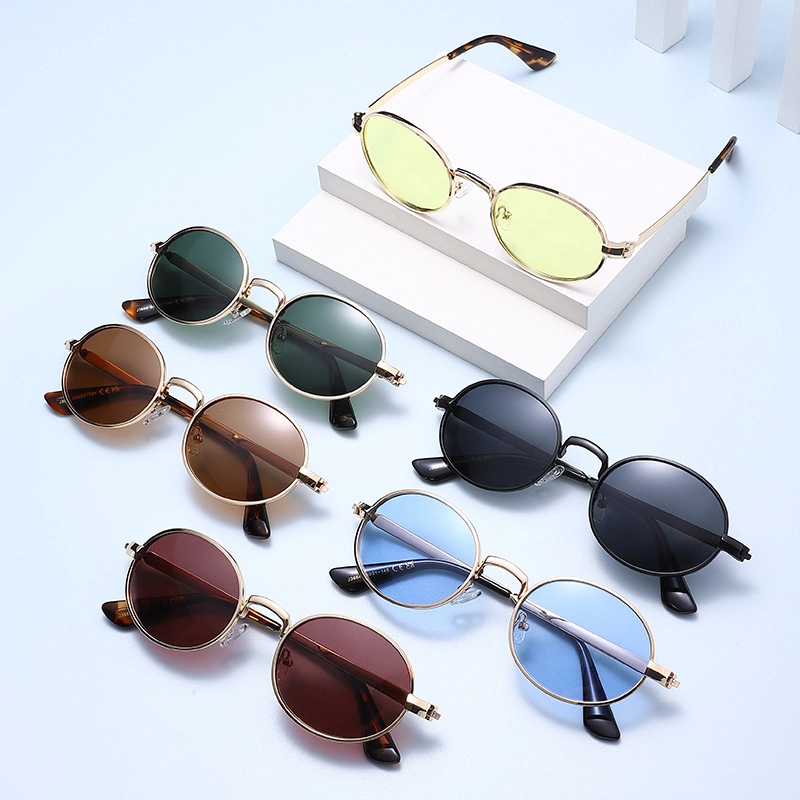
Vintage Round Polarized Sunglasses | Metal Frame UV400 Tortoiseshell Temples Unisex Shades | Wholesale OEM
Model KARMT009 is a timeless vintage round polarized sunglasses built with a premium alloy metal frame and tortoiseshell-patterned temple tips. Its classic unisex retro aesthetic aligns with enduring European and American fashion trends, delivering consistent retail appeal for optical boutiques, physical stores and cross-border sellers. Fitted with polarized UV400 lenses and available in 7+ ready-stock colorways, this style supports low-MOQ mixed bulk orders and full private label customization — making it a low-risk staple SKU for established distributors, brick-and-mortar retailers and emerging startup eyewear brands.
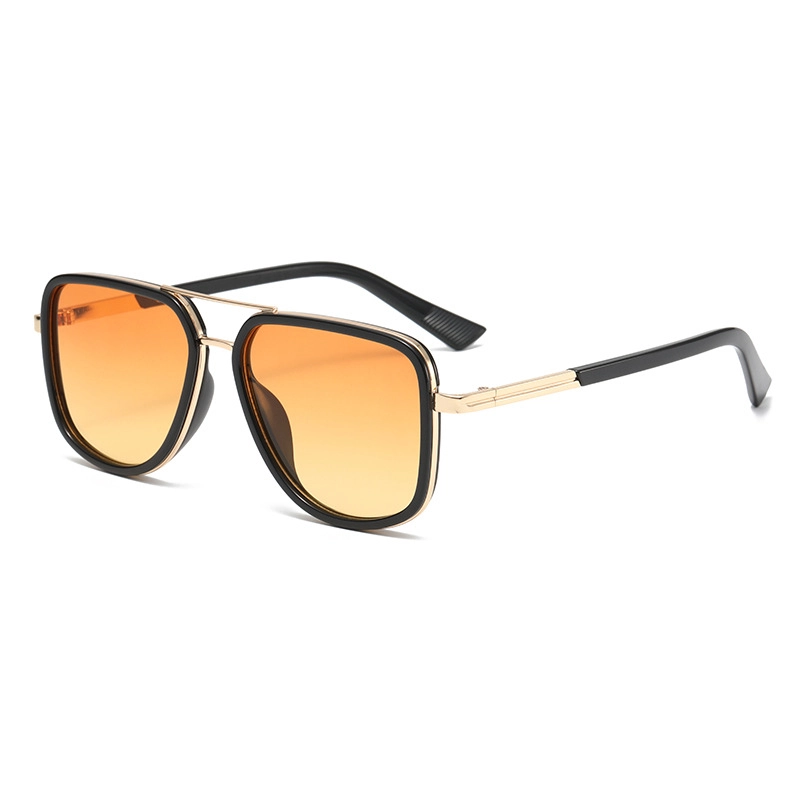
Double Bridge Square Aviator Sunglasses | PC Frame UV400 Polarized Optional Unisex Shades | Wholesale
Get a Free Quote
If you have any comments or good suggestions, please leave us a message; later our professional staff will contact you as soon as possible.
NEW DIMENSIONS IN EYEWEAR
Contact KARUSON
Email:
WhatsApp/Phone:
Address:
331 Section B, WanJia Creative Park , No. 1 BUXIA Road ,Tianhe District, Guangzhou City, Guangdong Province, China.

© 2026 KARUSON. All Rights Reserved.
Facebook
Instagram
YouTube
TikTok
Linkedin