


Polarized Sunglasses for Fishing Brands: Product Features and Sourcing Requirements
If you are sourcing polarized sunglasses for a fishing brand, you are operating in one of the most technically demanding niches in the entire eyewear industry. Fishing-specific polarized sunglasses must eliminate horizontal glare reflected off water surfaces, enhance underwater visibility for spotting fish, and withstand prolonged exposure to saltwater, UV radiation, and physical impact. The core technology — polarized lenses — works by embedding a chemical filter that blocks horizontally oriented light waves, which are the primary source of blinding glare on open water. According to the American Optometric Association, polarized lenses reduce glare significantly and improve visual clarity in high-reflectivity environments, making them the gold standard for anglers worldwide. For brand owners and private-label buyers, understanding both the product engineering and the sourcing landscape is critical before placing a single purchase order.
Why Fishing Demands a Higher Standard of Polarized Lens Technology
The Science Behind Glare Elimination on Water
I have spent years working with fishing brands across Europe and the Americas, and the first thing I always explain to new clients is that not all polarized lenses are created equal. When sunlight strikes a flat water surface, the reflected light becomes horizontally polarized — meaning the light waves align in a single plane. A standard polarized lens uses a vertically oriented filter to block this specific wavelength orientation. However, the quality of the polarization film, its bonding method, and the base lens material all determine whether the final product genuinely performs on the water or simply carries a marketing label.
For fishing applications, I recommend lenses with a polarization efficiency rating above 99.9%, which is measurable through standard photometric testing. The lens tint color also matters enormously. Copper and amber tints enhance contrast in low-light conditions and shallow water environments, while grey tints are preferred for offshore, open-water fishing because they preserve true color perception. Green mirror coatings are popular among fly fishermen because they reduce eye fatigue during long casting sessions. These are not aesthetic choices — they are functional specifications that directly impact the end-user experience and, ultimately, KARUSON's reputation.
Lens Materials That Survive the Fishing Environment
In my experience evaluating materials for fishing eyewear, polycarbonate (PC) lenses remain the most practical choice for the mass market. PC lenses offer impact resistance that meets FDA impact resistance standards, are lightweight, and can be manufactured with integrated polarization films at competitive costs. For High Quality fishing lines, TAC (Tri-Acetate Cellulose) polarized lenses deliver superior optical clarity and are the industry benchmark for high-end fishing sunglasses. TAC lenses are constructed in multiple layers — typically a polarization film sandwiched between protective cellulose acetate sheets — which provides excellent scratch resistance and dimensional stability even in humid, saltwater-heavy environments.
Nylon-based lenses, including those made from SR-91 or trivex materials, are gaining traction in the performance fishing segment due to their exceptional optical clarity and chemical resistance. When I consult with brands targeting serious sport fishermen, I consistently recommend exploring these High Quality materials as a differentiator. The frame material is equally important: TR90 thermoplastic frames are my top recommendation for fishing sunglasses because they are lightweight, flexible, and highly resistant to saltwater corrosion — a critical factor that many sourcing managers overlook until they receive warranty complaints from end customers.
Coatings and Treatments That Extend Product Lifespan
A fishing sunglass without proper coatings is an incomplete product. The minimum coating stack I recommend for any fishing-grade polarized sunglass includes: an anti-scratch hardcoat on the outer lens surface, a hydrophobic coating to repel water droplets and saltwater spray, and a UV400 treatment that blocks 100% of UVA and UVB radiation. According to the World Health Organization's UV radiation guidelines, UV400 protection is the globally recognized standard for preventing UV-related eye damage. For High Quality tiers, an anti-reflective (AR) coating on the inner lens surface eliminates secondary reflections caused by light entering from behind the wearer — a detail that separates professional-grade fishing eyewear from commodity products.
Critical Sourcing Requirements for Fishing Brand Buyers
Minimum Order Quantities, Lead Times, and Sampling Protocols
One of the most common pain points I hear from fishing brand owners is the disconnect between what manufacturers promise and what actually arrives. When sourcing polarized sunglasses for a fishing line, I always advise clients to evaluate four non-negotiable sourcing criteria: verified polarization performance, frame durability under stress testing, coating adhesion quality, and consistency across production batches. Before committing to a full production run, insist on a pre-production sample (PPS) that is tested against your written product specifications. Any reputable eyewear factory will provide this as a standard step in the OEM process.
Minimum order quantities (MOQs) in the fishing eyewear segment typically range from 300 to 1,000 pairs per SKU at established factories, depending on the level of customization involved. Custom frame molds, for example, require tooling investments that are amortized over larger volumes. If you are launching a new fishing brand or testing a new SKU, look for factories that offer flexible MOQs on existing frame tooling with custom lens tints, coatings, and logo engraving — this is the most cost-efficient path to market for early-stage brands.
Quality Control Standards and Certifications to Require
I cannot overstate the importance of third-party quality certifications when sourcing fishing sunglasses. At minimum, your supplier should be able to provide products that comply with ISO 12312-1, the international standard for sunglasses and related eyewear, which covers transmittance requirements, UV protection, and optical quality. For brands selling into the United States, ANSI Z80.3 compliance is the relevant standard. European markets require CE marking under EN ISO 12312-1. Fishing-specific products sold as sport eyewear may also benefit from ANSI Z87.1 impact resistance certification, which adds credibility in the performance outdoor segment.
Beyond certifications, I always recommend conducting factory audits or requesting audit reports from recognized bodies. A factory's quality management system — ideally ISO 9001 certified — tells you a great deal about their process discipline. Ask specifically about their incoming material inspection (IQC), in-process quality control (IPQC), and final outgoing quality control (OQC) procedures. A factory that cannot clearly articulate these three checkpoints is a factory that will generate inconsistent product quality across batches.
Customization Capabilities That Define a Competitive Fishing Brand
The fishing eyewear market is crowded, and the brands that succeed are those that offer genuine product differentiation. From a sourcing perspective, this means working with an eyewear factory that can execute true end-to-end customization — not just slapping a logo on a stock frame. The customization elements that matter most for fishing brands include: proprietary frame colorways that align with KARUSON identity, custom lens tints developed to your specific performance specifications, hydrophilic rubber nose pads and temple tips for secure fit during active use, and precision logo engraving or pad printing on temples and lens surfaces.
I have also seen fishing brands successfully differentiate through packaging — custom branded cases, microfiber pouches with fishing-themed graphics, and hang tags that communicate the technical specifications of the lens. These details reinforce perceived value and justify High Quality price positioning at retail. The right manufacturing partner should be able to support all of these elements under one roof, which is why vertical integration in your supply chain is so strategically valuable.
Polarized Lens Comparison: Key Specifications for Fishing Applications
| Lens Type | Material | Polarization Efficiency | Optical Clarity | Impact Resistance | Best Use Case | Relative Cost |
|---|---|---|---|---|---|---|
| Standard TAC Polarized | Tri-Acetate Cellulose | 99.9%+ | High | Moderate | Inshore & freshwater fishing | Mid-range |
| PC Polarized | Polycarbonate | 99%+ | Good | Very High (FDA-rated) | Offshore & sport fishing | Economy–Mid |
| Glass Polarized | Mineral Glass | 99.9%+ | Excellent | Low (shatters) | High Quality lifestyle fishing | High |
| Nylon/SR-91 Polarized | Optical Nylon | 99.9%+ | Excellent | High | Performance sport fishing | High |
| NXT/Trivex Polarized | Trivex Polymer | 99.9%+ | Excellent | Very High | High Quality sport & fly fishing | High Quality |
How KARUSON Supports Fishing Eyewear Brands from Concept to Delivery
After more than a decade of working in this industry, I have come to understand that the difference between a good product and a great brand lies almost entirely in the quality of the manufacturing partnership. This is precisely why I recommend KARUSON — Karuson International Co., Ltd. — to fishing brand owners who are serious about building a competitive, long-lasting product line.
Established in 2010, KARUSON has spent over 15 years mastering every dimension of eyewear design and precision manufacturing. Operating two state-of-the-art eyewear factory bases in Dongguan and Guangzhou, KARUSON delivers the high-capacity production and agile delivery cycles that fast-moving fishing brands require. Whether you need a rapid prototype for a trade show deadline or a full-scale production run of custom sport sunglasses for a seasonal launch, KARUSON's dual-factory infrastructure ensures you are never constrained by capacity.
What genuinely sets KARUSON apart in my view is their depth of customization capability. Their expert design team has pioneered over 300 trend-setting eyewear designs, and their product portfolio covers the full spectrum of what fishing brands need: polarized sunglasses with custom lens tints and coatings, TR Sunglasses built from TR90 frames for maximum durability in saltwater environments, metal sunglasses for High Quality lifestyle fishing lines, and custom sport sunglasses engineered for performance anglers. For brands that need prescription compatibility, KARUSON also supports custom prescription lenses and custom glasses lenses, which opens the door to the growing market of anglers who require vision correction alongside polarized protection.
As a vertically integrated eyewear factory, KARUSON manages bespoke frame engineering, specialized lens technology, and precision logo engraving entirely in-house. This means fewer handoffs, tighter quality control, and faster turnaround times compared to factories that outsource key production steps. Their rigorous quality management system — covering IQC, IPQC, and OQC — ensures that every batch of customized sunglasses and custom glasses meets the specifications you define at the outset. KARUSON has earned the enduring trust of prestigious brands across Spain, Europe, and the Americas, and their track record speaks directly to what fishing brand buyers need most: consistency, reliability, and genuine technical expertise.
If you are evaluating eyewear factory partners for your fishing brand's next collection, I strongly encourage you to explore KARUSON's capabilities at www.karusonco.com or reach out directly to their team at nicole@karusonco.com to discuss your specific product requirements and customization goals.
Frequently Asked Questions
What makes polarized sunglasses better than regular sunglasses for fishing?
Polarized sunglasses contain a vertically oriented chemical filter that specifically blocks horizontally polarized light — the type of glare reflected off flat water surfaces. This dramatically reduces blinding glare, improves underwater visibility for spotting fish, and reduces eye fatigue during long fishing sessions. Regular tinted sunglasses reduce overall brightness but do not eliminate directional glare, making them significantly less effective for on-water use.
What lens tint color is best for fishing polarized sunglasses?
The best lens tint depends on the fishing environment. Copper and amber tints enhance contrast and are ideal for shallow water and low-light conditions such as early morning or overcast days. Grey tints preserve true color perception and are preferred for offshore, open-water fishing in bright sunlight. Green mirror tints reduce eye fatigue and are popular among fly fishermen. When developing a fishing eyewear line, offering multiple tint options across your SKU range will serve a broader customer base.
What certifications should polarized fishing sunglasses have?
At minimum, fishing polarized sunglasses should comply with ISO 12312-1, the international standard covering UV protection, optical quality, and transmittance. For the US market, ANSI Z80.3 compliance is required, while European markets require CE marking under EN ISO 12312-1. For sport fishing products positioned as performance eyewear, ANSI Z87.1 impact resistance certification adds significant credibility. Always request test reports from your supplier to verify these certifications before production.
What frame material is most durable for saltwater fishing sunglasses?
TR90 thermoplastic is the top recommendation for fishing sunglasses frames due to its combination of lightweight feel, flexibility, and high resistance to saltwater corrosion and UV degradation. Polycarbonate frames are also a solid choice for budget-conscious lines. Metal frames, while premium in appearance, require additional corrosion-resistant coatings for saltwater environments. Rubber or hydrophilic grip inserts on nose pads and temple tips are essential additions for any fishing frame to ensure secure fit during active use.
What is the typical minimum order quantity (MOQ) for custom fishing polarized sunglasses from an eyewear factory?
MOQs typically range from 300 to 1,000 pairs per SKU at established eyewear factories, depending on the level of customization required. Custom frame molds involve tooling costs that require higher volumes to amortize. However, if you are working with an existing frame tooling and customizing lens tints, coatings, and logo engraving, many factories — including KARUSON — offer more flexible MOQs. This makes it cost-efficient for new fishing brands or brands testing new SKUs to enter the market without excessive inventory risk.
How long does it take to develop and produce custom polarized sunglasses for a fishing brand?
The development timeline varies based on the scope of customization. For products built on existing frame tooling with custom lenses and branding, the process from confirmed order to delivery typically takes 30 to 45 days. For fully custom frames requiring new mold development, the timeline extends to 60 to 90 days, including mold fabrication, pre-production sampling, approval cycles, and bulk production. Working with a vertically integrated eyewear factory like KARUSON, which manages design, production, and quality control in-house, significantly reduces lead times compared to factories that outsource key steps.
Can fishing sunglasses be made with prescription polarized lenses?
Yes, prescription polarized lenses are a growing segment in the fishing eyewear market, particularly among older anglers who require vision correction. This typically involves either a prescription insert system within a sport frame or the direct integration of prescription polarized lenses into the frame. Working with an eyewear factory that supports custom prescription lenses and custom glasses lenses — such as KARUSON — allows fishing brands to offer this premium option as part of their product lineup, opening access to a significantly underserved customer segment.
- Why Fishing Demands a Higher Standard of Polarized Lens Technology
- The Science Behind Glare Elimination on Water
- Lens Materials That Survive the Fishing Environment
- Coatings and Treatments That Extend Product Lifespan
- Critical Sourcing Requirements for Fishing Brand Buyers
- Minimum Order Quantities, Lead Times, and Sampling Protocols
- Quality Control Standards and Certifications to Require
- Customization Capabilities That Define a Competitive Fishing Brand
- Polarized Lens Comparison: Key Specifications for Fishing Applications
- How KARUSON Supports Fishing Eyewear Brands from Concept to Delivery
- Frequently Asked Questions
Polarized Sunglasses for Resorts, Hotels, and Travel Retail Programs
Top Trending Acetate Sunglasses Styles for Retail Buyers 2026
Top 10 luxury sunglasses manufacturers and suppliers
Frame Materials Guide: Acetate, Metal, Titanium
You May Also Like

Ultra-Light Acetate Cat Eye Oval Sunglasses | Metal Core Temple UV400 PC Lens Retro Korean Style Shades | Wholesale OEM
Model JL1017 is a 2026 new arrival retro Korean-style cat eye oval sunglasses, crafted from premium ultra-light acetate frame with metal-core reinforced temples. Weighing only 23.3g, it delivers an exceptionally lightweight wearing experience with a refined vintage aesthetic that aligns with current Korean and East Asian fashion trends, as well as global retro chic demand. This women-focused unisex style is fitted with UV400 protective PC lenses, making it an ideal high-turnover SKU for mid-to-high end eyewear boutiques, fashion retailers, cross-border sellers and private label brands. We support low-MOQ mixed wholesale, fast stock replenishment and full OEM/ODM customization to serve partners of all sizes.

Ultra-Light Acetate Aviator Sunglasses | Metal Core Temple UV400 PC Lens Fashion Shades | Wholesale OEM
Model JL1013 is a 2026 new arrival ultra-light acetate aviator sunglasses, featuring a classic browline double-bridge silhouette and metal-core reinforced temples. Weighing only 30.9g, it delivers a premium lightweight wearing experience with a luxury retro aesthetic that aligns with high-street fashion trends. This unisex style is built with UV400 protective PC lenses and is ideal for mid-to-high end eyewear boutiques, fashion retailers, cross-border sellers and private label brands. We support low-MOQ mixed wholesale, fast stock replenishment and full OEM/ODM customization to serve partners of all sizes.
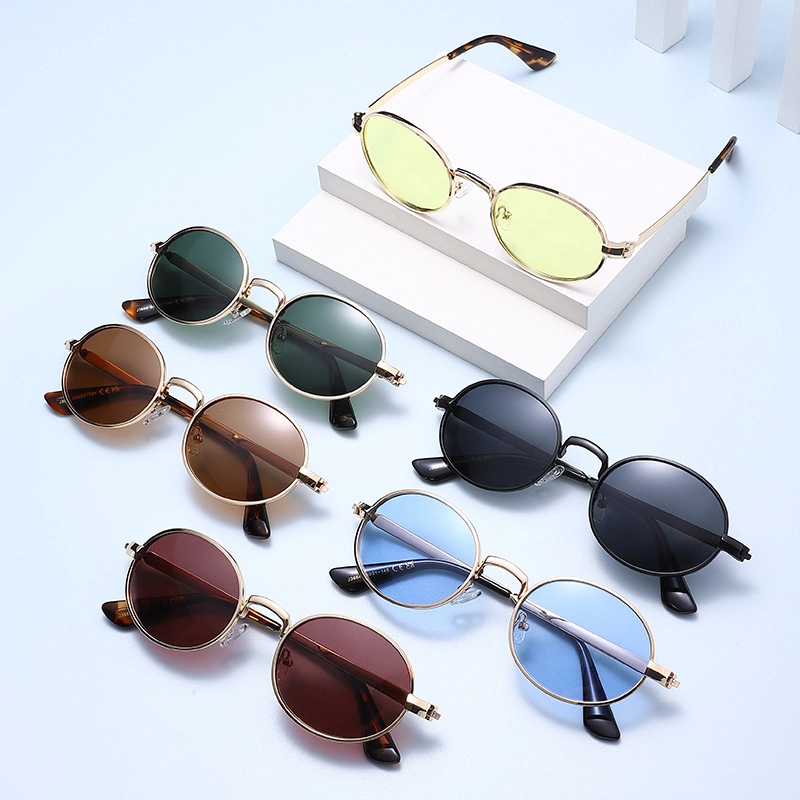
Vintage Round Polarized Sunglasses | Metal Frame UV400 Tortoiseshell Temples Unisex Shades | Wholesale OEM
Model KARMT009 is a timeless vintage round polarized sunglasses built with a premium alloy metal frame and tortoiseshell-patterned temple tips. Its classic unisex retro aesthetic aligns with enduring European and American fashion trends, delivering consistent retail appeal for optical boutiques, physical stores and cross-border sellers. Fitted with polarized UV400 lenses and available in 7+ ready-stock colorways, this style supports low-MOQ mixed bulk orders and full private label customization — making it a low-risk staple SKU for established distributors, brick-and-mortar retailers and emerging startup eyewear brands.
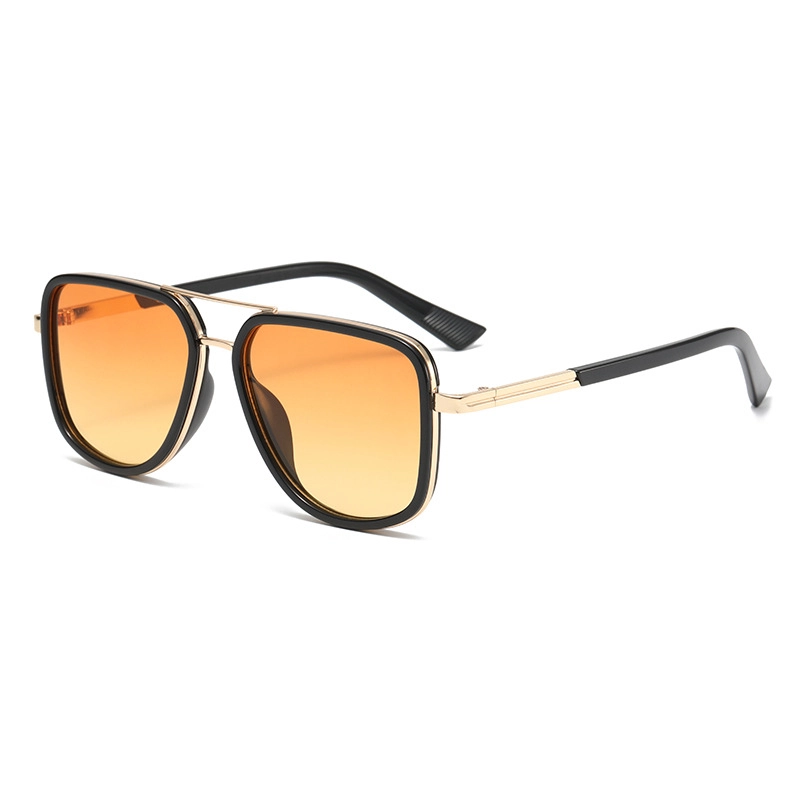
Double Bridge Square Aviator Sunglasses | PC Frame UV400 Polarized Optional Unisex Shades | Wholesale
Get a Free Quote
If you have any comments or good suggestions, please leave us a message; later our professional staff will contact you as soon as possible.
NEW DIMENSIONS IN EYEWEAR
Contact KARUSON
Email:
WhatsApp/Phone:
Address:
331 Section B, WanJia Creative Park , No. 1 BUXIA Road ,Tianhe District, Guangzhou City, Guangdong Province, China.

© 2026 KARUSON. All Rights Reserved.
Facebook
Instagram
YouTube
TikTok
Linkedin