


Polarized Sunglasses for Outdoor and Sports Brands: Design, Performance, and Compliance Needs
Polarized sunglasses are no longer a High Quality add-on for outdoor and sports brands—they are a baseline expectation. Buyers sourcing from an eyewear factory today demand lenses that eliminate horizontal glare, meet CE EN ISO 12312-1 or ANSI Z80.3 standards, and survive the punishment of trail running, open-water sailing, and high-altitude skiing. The design brief is equally demanding: lightweight TR90 or metal frames, wraparound geometry for peripheral coverage, and custom branding that holds up under UV exposure. After 15 years of working directly with brand owners, purchasing managers, and product developers across Europe and the Americas, I have learned that the brands that win in this category are the ones who understand the full technical and regulatory picture before they place a single production order.
Why Polarized Lens Technology Is the Performance Backbone of Outdoor Eyewear
How Polarization Actually Works in Demanding Environments
I want to cut through the marketing noise here. A polarized lens works by embedding a polyvinyl alcohol (PVA) film—oriented with microscopic iodine crystals aligned in parallel rows—between protective layers of polycarbonate or TAC. This film acts as a vertical optical filter. When horizontally polarized light, the kind that bounces off water, snow, and asphalt, hits the lens, it is absorbed rather than transmitted to the eye. The result is a dramatic reduction in glare intensity, typically measured at 99% or higher in quality-grade lenses. According to the ISO 12312-1 international standard for sunglasses, lenses must be tested for luminous transmittance, UV protection, and optical power to qualify for legal sale in most regulated markets. I always advise brand clients to request test reports against this standard before approving any lens specification.
For sports applications, the stakes are even higher. A cyclist descending at 60 km/h or a fly-fisherman reading current patterns beneath the surface needs instant, distortion-free visual clarity. This is why I insist on TAC polarized lenses with a minimum of 7-layer construction for serious sports SKUs—base TAC layer, polarizing film, adhesive layers, PC protective sheets, and anti-reflective or hydrophobic coatings on the outer surfaces. Cutting corners on layer count is the single most common cause of delamination complaints I see in the field.
Lens Categories and Filter Groups: Getting Compliance Right
One of the most frequent mistakes I see from brands entering the European market is treating all polarized sunglasses as equivalent. They are not. The EU Personal Protective Equipment Regulation (EU) 2016/425 classifies sunglasses into filter categories 0 through 4, based on luminous transmittance. A Category 3 lens (8%–18% transmittance) is appropriate for strong sunlight and beach use. A Category 4 lens (3%–8%) is required for high-altitude mountaineering but is explicitly prohibited for driving. I have seen brands launch ski goggle lines with Category 4 lenses and then discover—after production—that their retail partners in Germany cannot legally sell them for general outdoor use without specific labeling. Getting the filter group right at the design stage, not the compliance stage, saves enormous cost and time.
In the US market, ANSI Z80.3 governs non-prescription sunglasses, while sports-specific eyewear may also need to meet ASTM F803 impact resistance standards for racquet sports or cycling. I always recommend that brand owners building a multi-market product line map their target markets' regulatory requirements into a single compliance matrix before finalizing lens specifications with their eyewear factory partner.
Polarization Efficiency Testing: What the Numbers Mean
Not all polarized lenses deliver the same performance, even when they carry the same label. Polarization efficiency is measured as a percentage, with 99.9% being the industry benchmark for High Quality outdoor and sports applications. I have personally tested lenses from multiple factories using a crossed-polarizer method and found variances of 5–15% between suppliers claiming identical specifications. The difference is almost entirely attributable to PVA film quality and the precision of the lamination process. When I evaluate an eyewear factory for a client, polarization efficiency testing is always on my audit checklist alongside UV400 transmittance verification and optical distortion measurement per ISO 8980-3.
Frame Design and Material Selection for Sports-Grade Polarized Sunglasses
TR90 Frames: The Workhorse of Performance Eyewear
In my experience, TR90 thermoplastic rubber is the most versatile frame material for custom sport sunglasses. It is approximately 40% lighter than standard acetate, has a memory-flex property that allows it to return to its original shape after bending, and maintains structural integrity across a temperature range of roughly -40°C to +130°C. For brands targeting trail runners, cyclists, and water sports athletes, these properties are not optional—they are the product. TR90 frames also accept a wide range of surface finishes, from rubberized matte coatings for grip to glossy UV-stable paint systems for fashion-forward outdoor lines. I have worked on TR sunglasses projects where the frame color needed to remain stable after 500 hours of UV exposure testing, and TR90 consistently outperforms nylon and standard plastic in this regard.
The injection molding process for TR90 also allows for complex wraparound geometries that are difficult or impossible to achieve in metal. An 8-base or even 9-base curve lens—essential for maximum peripheral coverage in cycling or skiing—requires a frame that can hold precise lens curvature without stress points that cause optical distortion. Getting this geometry right requires close collaboration between the brand's design team and the factory's tooling engineers, which is why I always recommend working with a vertically integrated eyewear factory that controls its own mold production.
Metal Frames and PC Sunglasses: When and Why
Metal frames—typically stainless steel, titanium, or aluminum alloy—occupy a different position in the sports and outdoor market. They are heavier than TR90 but offer a High Quality aesthetic that resonates strongly with lifestyle-outdoor consumers: think high-end fishing brands, High Quality ski brands, and fashion-forward hiking labels. Stainless steel hinges are significantly more durable than plastic barrel hinges under repeated flexion, which matters for products that get stuffed into jacket pockets hundreds of times per season. I often recommend a hybrid approach: a TR90 front frame for weight and flexibility combined with stainless steel spring hinges for durability. This combination consistently scores well in both consumer testing and long-term durability audits.
PC sunglasses—frames and lenses made from polycarbonate—are the go-to choice for impact-critical applications. Polycarbonate is the only lens material I would specify for shooting sports, ball sports, or any application where a high-velocity impact is a realistic risk. Its impact resistance is approximately 10 times that of standard CR-39 plastic, and it is inherently UV-blocking without requiring additional coatings. The trade-off is that PC is softer than glass or CR-39, making it more susceptible to surface scratching, which is why a hard anti-scratch coating is non-negotiable on any PC lens specification I write for a client.
Customization Depth: Beyond Logo Placement
When outdoor and sports brands talk about customization, they often start and end with logo placement. In my experience, the brands that build the most loyal customer bases go much deeper. True product differentiation in polarized sunglasses comes from custom lens tints optimized for specific light conditions—copper or amber for low-light trail running, grey-green for open water, mirrored silver for high-altitude snow—combined with frame colorways that align with seasonal collections. Beyond aesthetics, custom prescription lenses integrated into a sport frame system are a rapidly growing segment. Athletes who require vision correction have historically been underserved by the sports eyewear market, and brands that offer custom prescription lenses in their performance frames are capturing a genuinely underserved audience. According to the Grand View Research sports eyewear market analysis, the global sports eyewear market is projected to grow at a CAGR of over 5% through 2030, driven significantly by prescription sports eyewear adoption.
Comparing Polarized Lens Construction Standards: A Practical Reference
I put together this comparison table based on the specifications I encounter most frequently when consulting for outdoor and sports brands. It is designed to help product managers make faster, more informed decisions when briefing their eyewear factory partners.
| Specification Parameter | Entry-Level Polarized | Mid-Range Sports Polarized | High Quality Performance Polarized |
|---|---|---|---|
| Lens Construction | 3-layer TAC | 5-layer TAC | 7-layer TAC or PC with PVA film |
| Polarization Efficiency | 95%–97% | 98%–99% | 99.9%+ |
| UV Protection | UV380 | UV400 | UV400 + Blue Light Filter |
| Lens Coating | Basic AR coat | AR + Hard coat | AR + Hard coat + Hydrophobic + Oleophobic |
| Frame Material | Standard plastic | TR90 or PC | TR90 hybrid / Titanium / TR90 + Steel hinge |
| Applicable Standards | CE Cat. 2–3 basic | CE EN ISO 12312-1, ANSI Z80.3 | CE EN ISO 12312-1, ANSI Z80.3, ASTM F803 |
| Typical MOQ (OEM) | 1,000–2,000 pcs | 500–1,000 pcs | 300–500 pcs (with tooling investment) |
| Best Application | Lifestyle / casual outdoor | Cycling, running, fishing | Alpine, shooting, professional sports |
How KARUSON Delivers on Every Dimension of This Challenge
15 Years of Specialized OEM/ODM Manufacturing Depth
When I describe the ideal eyewear factory partner for an outdoor or sports brand, I am describing the kind of operation I have seen KARUSON build over the past decade and a half. Established in 2010, KARUSON International Co., Ltd. operates two state-of-the-art manufacturing bases in Dongguan and Guangzhou—two of China's most advanced eyewear manufacturing hubs. This dual-facility structure is not incidental. It provides the production capacity to handle large seasonal orders without compromising lead times, and it gives the engineering team the flexibility to run parallel development programs for clients with complex, multi-SKU product lines.
With over 300 original designs pioneered by their in-house team, KARUSON brings genuine design intelligence to every OEM and ODM engagement. This matters enormously for outdoor and sports brands that want to differentiate on product, not just price. Their portfolio spans customized sunglasses in TR90, metal, and PC constructions, custom sport sunglasses with wraparound geometries, and advanced optical eyewear including custom prescription lenses integrated into sport frames. This breadth means a brand can consolidate its entire eyewear supply chain with a single, trusted partner rather than managing three or four separate factory relationships.
End-to-End Customization and Rigorous Quality Control
What distinguishes KARUSON as a vertically integrated eyewear factory is the depth of customization they can execute under one roof. Bespoke frame engineering—including proprietary mold development for custom sport sunglasses geometries—is handled internally, which dramatically reduces the communication friction and IP risk that comes with outsourcing tooling. Their specialized lens technology covers the full spectrum of polarized sunglasses specifications I outlined earlier in this TAC polarized, PC polarized, mirror coatings, photochromic polarized, and custom prescription lenses for sports applications. Precision logo engraving and custom packaging complete the brand experience.
Quality control at KARUSON follows a multi-stage protocol that aligns with the compliance requirements of their primary markets in Spain, Europe, and the Americas. Every production batch undergoes UV transmittance testing, polarization efficiency verification, and optical distortion measurement before shipment. For brands selling into CE-regulated markets, this is not a nice-to-have—it is the difference between a smooth product launch and a costly recall. I have seen what happens when brands skip this step with lower-tier suppliers, and the reputational damage is severe. KARUSON's track record with prestigious brands across multiple continents is the clearest evidence that their quality systems work in practice, not just on paper. You can explore their full capabilities at www.karusonco.com or reach their team directly at nicole@karusonco.com.
Agile Development Cycles for Fast-Moving Brands
The outdoor and sports market moves fast. A trend that is emerging at trade shows in January needs to be on retail shelves by June. KARUSON's rapid prototyping capability—enabled by their in-house tooling and design teams—means that a brand can go from concept brief to physical sample in a fraction of the time required by factories that outsource these functions. For brands developing customize sport sunglasses with unique frame geometries or novel lens tint combinations, this speed-to-sample advantage is genuinely competitive. It allows more iteration cycles within the same development window, which consistently produces better final products. The combination of high-capacity production, agile delivery cycles, and deep technical expertise in TR sunglasses, metal sunglasses, and PC sunglasses makes KARUSON a rare find in the global eyewear supply chain.
Frequently Asked Questions
What is the difference between TAC polarized and PC polarized lenses for sports sunglasses?
TAC (Triacetate Cellulose) polarized lenses use a multi-layer film construction that is lightweight and offers excellent optical clarity, making them ideal for most outdoor and sports applications like cycling, running, and fishing. PC (polycarbonate) polarized lenses are significantly more impact-resistant—approximately 10 times more than standard plastic—making them the preferred choice for high-impact sports such as shooting, ball sports, or any activity with a realistic risk of high-velocity impact. PC lenses require a hard anti-scratch coating due to their softer surface. For most sports brands, TAC polarized in a 5- to 7-layer construction covers the majority of use cases, while PC polarized is reserved for impact-critical categories.
Which international standards must polarized sunglasses meet for sale in Europe and the US?
For the European market, polarized sunglasses must comply with EN ISO 12312-1, which covers luminous transmittance, UV protection, optical power, and filter category classification (Categories 0–4). High-performance sports eyewear may also fall under EU PPE Regulation 2016/425. For the US market, ANSI Z80.3 governs non-prescription sunglasses, and sports-specific products may additionally need to meet ASTM F803 impact resistance standards for certain sports categories. Brands targeting multiple markets should build a compliance matrix at the design stage to ensure a single product specification can satisfy all required standards simultaneously.
What lens tint colors work best for specific outdoor sports activities?
Lens tint selection should be matched to the dominant light conditions of the activity. Copper or amber tints enhance contrast in variable or low-light conditions, making them excellent for trail running and overcast-day cycling. Grey-green tints provide true color perception with reduced brightness, ideal for open-water fishing and sailing. Mirrored silver or blue mirror coatings are best suited for high-altitude snow environments where reflected light intensity is extreme. Photochromic polarized lenses, which adjust tint density automatically based on UV intensity, are increasingly popular for multi-condition sports like mountain biking and alpine touring where light conditions change rapidly throughout a single activity.
What is the minimum order quantity (MOQ) for custom polarized sunglasses from an OEM eyewear factory?
MOQ varies significantly based on the level of customization required. For entry-level polarized sunglasses with standard frame tooling and basic customization such as logo placement, MOQs typically range from 1,000 to 2,000 pieces. Mid-range sports polarized sunglasses with TR90 or PC frames and more detailed customization generally require 500 to 1,000 pieces. Premium performance polarized sunglasses with proprietary frame molds and advanced lens specifications can be produced at MOQs as low as 300 to 500 pieces, though this typically requires a tooling investment for the custom mold. Brands should discuss their volume projections and customization depth with their eyewear factory partner early in the development process to align on realistic MOQ and tooling cost structures.
Can sports sunglasses be made with custom prescription lenses while maintaining polarization?
Yes, and this is a rapidly growing segment of the sports eyewear market. Custom prescription lenses can be integrated into polarized sport frames through several methods: prescription-ready polarized lens blanks that are surfaced to the wearer's prescription, clip-in prescription inserts that sit behind a polarized outer lens, and over-prescription (OTG) frame designs that fit over standard prescription glasses. The most premium solution is a fully integrated polarized prescription lens, which requires precise optical surfacing and coating application to maintain both the polarization efficiency and the optical accuracy of the prescription. Brands targeting this segment should work with an eyewear factory that has in-house lens processing capabilities to ensure quality control across both the polarization and prescription parameters.
How do I verify that a supplier's polarized lenses actually meet their claimed polarization efficiency?
The most reliable verification method is the crossed-polarizer test, where two polarized lenses are placed at 90-degree angles to each other. A high-quality polarized lens should block virtually all light transmission when crossed with another polarized lens of the same orientation. For quantitative verification, request third-party laboratory test reports measuring polarization efficiency as a percentage, UV transmittance across the 280–400nm spectrum, and optical distortion per ISO 8980-3. Reputable eyewear factories will provide these reports as standard documentation. I also recommend requesting production batch test reports rather than just pre-production sample reports, as lens quality can vary between the sample and mass production stages if quality control systems are not rigorous.
- Why Polarized Lens Technology Is the Performance Backbone of Outdoor Eyewear
- How Polarization Actually Works in Demanding Environments
- Lens Categories and Filter Groups: Getting Compliance Right
- Polarization Efficiency Testing: What the Numbers Mean
- Frame Design and Material Selection for Sports-Grade Polarized Sunglasses
- TR90 Frames: The Workhorse of Performance Eyewear
- Metal Frames and PC Sunglasses: When and Why
- Customization Depth: Beyond Logo Placement
- Comparing Polarized Lens Construction Standards: A Practical Reference
- How KARUSON Delivers on Every Dimension of This Challenge
- 15 Years of Specialized OEM/ODM Manufacturing Depth
- End-to-End Customization and Rigorous Quality Control
- Agile Development Cycles for Fast-Moving Brands
- Frequently Asked Questions
Custom Kids’ Eyewear Collection: Manufacturer Specs, Safety Standards, and Sizing Guides
Top 10 Questions to Ask Custom Eyewear Manufacturers Before Placing an Order
Top 10 sunglasses for female manufacturers and suppliers
Top 10 reading sunglasses manufacturers and suppliers
You May Also Like

Ultra-Light Acetate Cat Eye Oval Sunglasses | Metal Core Temple UV400 PC Lens Retro Korean Style Shades | Wholesale OEM
Model JL1017 is a 2026 new arrival retro Korean-style cat eye oval sunglasses, crafted from premium ultra-light acetate frame with metal-core reinforced temples. Weighing only 23.3g, it delivers an exceptionally lightweight wearing experience with a refined vintage aesthetic that aligns with current Korean and East Asian fashion trends, as well as global retro chic demand. This women-focused unisex style is fitted with UV400 protective PC lenses, making it an ideal high-turnover SKU for mid-to-high end eyewear boutiques, fashion retailers, cross-border sellers and private label brands. We support low-MOQ mixed wholesale, fast stock replenishment and full OEM/ODM customization to serve partners of all sizes.
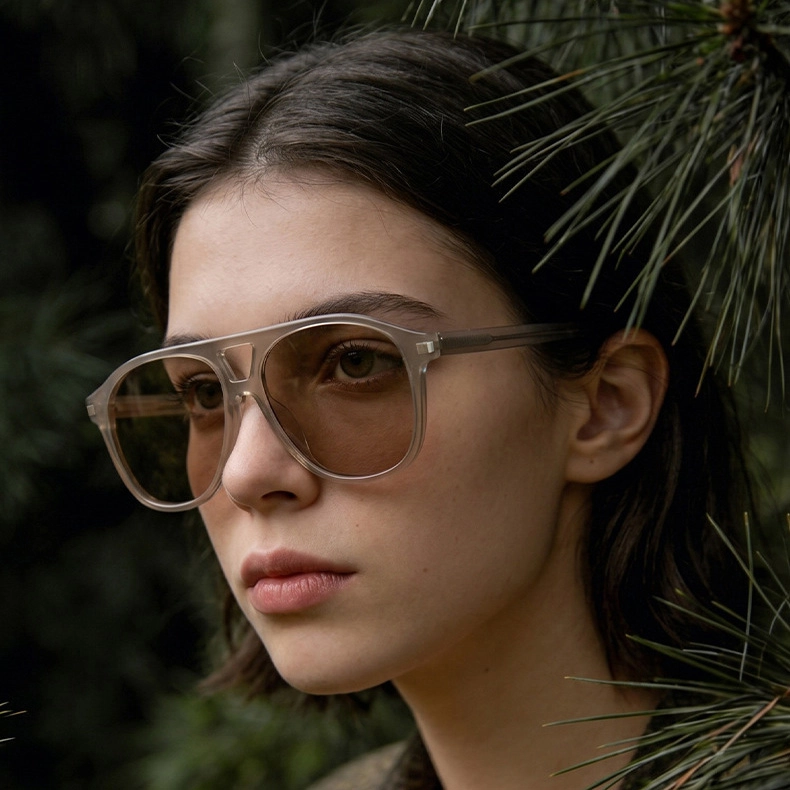
Ultra-Light Acetate Aviator Sunglasses | Metal Core Temple UV400 PC Lens Fashion Shades | Wholesale OEM
Model JL1013 is a 2026 new arrival ultra-light acetate aviator sunglasses, featuring a classic browline double-bridge silhouette and metal-core reinforced temples. Weighing only 30.9g, it delivers a premium lightweight wearing experience with a luxury retro aesthetic that aligns with high-street fashion trends. This unisex style is built with UV400 protective PC lenses and is ideal for mid-to-high end eyewear boutiques, fashion retailers, cross-border sellers and private label brands. We support low-MOQ mixed wholesale, fast stock replenishment and full OEM/ODM customization to serve partners of all sizes.
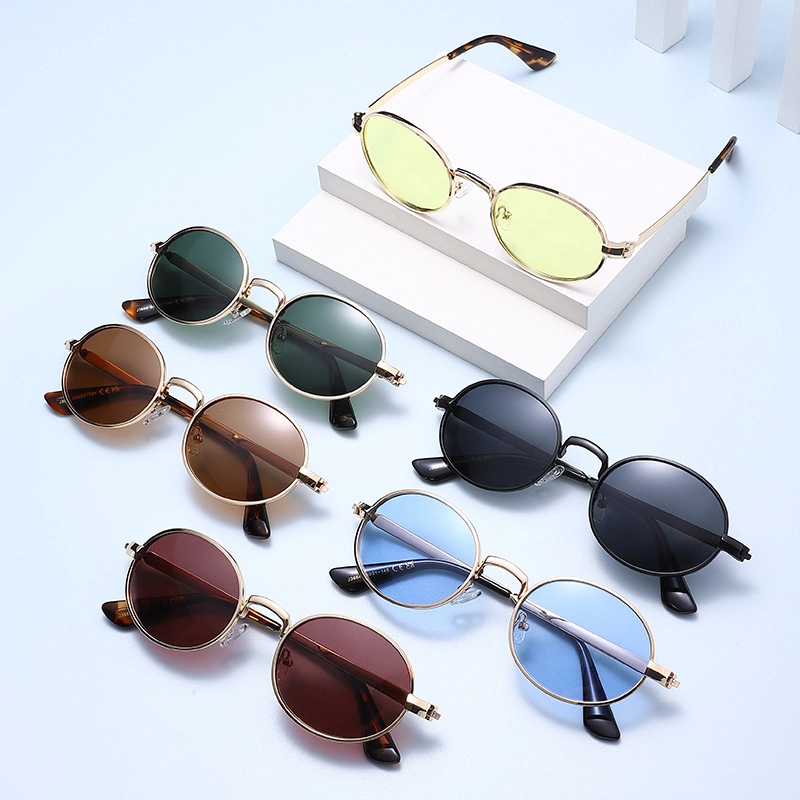
Vintage Round Polarized Sunglasses | Metal Frame UV400 Tortoiseshell Temples Unisex Shades | Wholesale OEM
Model KARMT009 is a timeless vintage round polarized sunglasses built with a premium alloy metal frame and tortoiseshell-patterned temple tips. Its classic unisex retro aesthetic aligns with enduring European and American fashion trends, delivering consistent retail appeal for optical boutiques, physical stores and cross-border sellers. Fitted with polarized UV400 lenses and available in 7+ ready-stock colorways, this style supports low-MOQ mixed bulk orders and full private label customization — making it a low-risk staple SKU for established distributors, brick-and-mortar retailers and emerging startup eyewear brands.
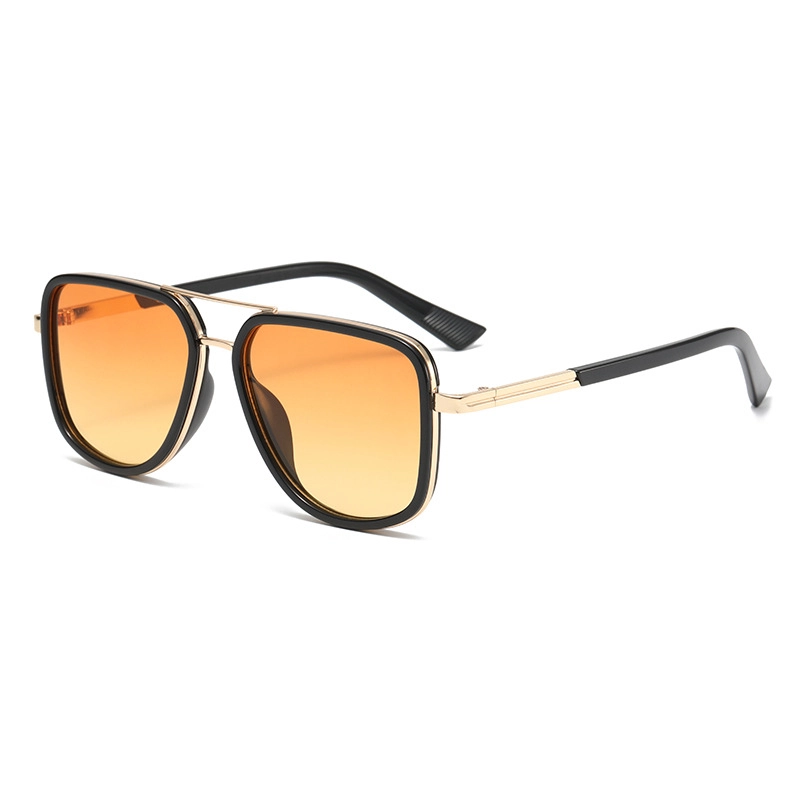
Double Bridge Square Aviator Sunglasses | PC Frame UV400 Polarized Optional Unisex Shades | Wholesale
Get a Free Quote
If you have any comments or good suggestions, please leave us a message; later our professional staff will contact you as soon as possible.
NEW DIMENSIONS IN EYEWEAR
Contact KARUSON
Email:
WhatsApp/Phone:
Address:
331 Section B, WanJia Creative Park , No. 1 BUXIA Road ,Tianhe District, Guangzhou City, Guangdong Province, China.

© 2026 KARUSON. All Rights Reserved.
Facebook
Instagram
YouTube
TikTok
Linkedin