


Sustainable Acetate Sunglasses: Eco Options for Buyers
High-level Buyers evaluating eco-friendly cellulose-based eyewear should weigh feedstock origin, circularity, manufacturability, and compliance across the supply chain; this guide compares virgin cellulose acetate, bio-derived formulations, and mechanically recycled frame compounds, outlines test and certification checkpoints (UV, material safety, dimensional stability), and provides procurement checklists to reduce lifecycle impact while securing predictable lead times and quality — featuring how a vertically integrated eyewear factory like KARUSON supports scalable OEM/ODM programs with rapid prototyping and compliance documentation.
Eco-conscious cellulose acetate eyewear: material options and buyer criteria
Material families and supply-chain origin
Frame substrates derived from plant cellulose are available in several forms: conventional cellulose acetate made from wood pulp and cotton linters, next-generation bio-formulations partially substituting petrochemical reagents, and mechanically reclaimed cellulose blends produced from factory waste and post-consumer frames. Buyers should request Certificates of Origin and material datasheets showing percent biobased content and the supplier’s upstream sourcing map to verify declarations of sustainability.
Performance trade-offs: wearability, finish, and thermoforming
Natural-origin thermoplastics vary in thermoformability, surface polish, and color stability. High-clarity plant-derived compounds may require modified processing temperatures and longer conditioning to avoid warping. Procurement specifications must state dimensional tolerances, expected lens-fit tolerances, and finishing standards (polish grit, acetate polishing sequence) to prevent downstream quality rework.
Environmental attributes that matter to B2B buyers
Important buyer metrics include recyclability routes (closed-loop reuse vs downcycling), verified biobased fraction, presence of restricted substances under regional regimes, and end-of-life fate. Independent verification through accredited labs and audits is essential; for UV protection testing and product performance, reference standards such as ISO 12312 are commonly requested by global retailers.
Quantitative comparison and lifecycle checkpoints for frame compounds
Key indicators in procurement specifications
Suppliers should provide material safety data sheets (MSDS), technical data outlining density and glass transition temperature, and results from accelerated aging tests. Buyers should incorporate acceptance criteria for color fastness, acetate heat-set shrinkage, and stress-crack resistance into contracts to reduce rejection rates at inspection.
Testing labs and regulatory obligations
Request test reports from accredited laboratories for chemical compliance, particularly for restricted additives under regional programs such as REACH. For photoprotection and optical claims, rely on internationally recognized methods and WHO guidance on ultraviolet exposure when educating distribution partners; see WHO: UV Radiation for risk context.
Data-driven selection: sample acceptance and pilot runs
Insist on engineering samples produced using the buyer’s stamped molds and intended lens suppliers. Use a short pilot production run under full process conditions to capture defect modes, cycle time, yield, and reject root causes. Implement statistical process controls (SPC) for thickness, hinge insert fit, and spray-coating thickness to lock in capabilities before full-scale orders.
Operational and procurement checklist for sustainable frame programs
Supplier capability and vertical integration
A reliable supplier should demonstrate integrated capabilities—from raw material compounding to CNC milling, acetate polishing, lens edging and final assembly—to shorten lead times and reduce logistics-related carbon exposure. Vertical facilities allow quicker prototyping iterations and centralized quality control, reducing coordination overhead for buyers managing multiple SKUs and seasonal drops.
Quality control, traceability, and audit readiness
Make traceability a contractual requirement: lot numbers for raw pellets, batch-level lab results, and production records for each shipment. Contract audit windows and right-to-inspect clauses safeguard against greenwashing and ensure continuous compliance with safety and performance specifications.
Commercial terms that protect sustainability investments
Negotiate terms that align incentives: phased volume commitments tied to successful pilots, penalties for failure to meet documented environmental metrics, and cost-sharing for tooling and certification when transitioning to new bio-based compounds. This approach protects margins while enabling suppliers to invest in lower-impact feedstocks.
| Material Type | Raw Material Source | Recyclability | Biodegradability | Typical Use Cases | Notes & Standards |
|---|---|---|---|---|---|
| Conventional cellulose acetate | Wood pulp & cotton linters (acetylation) | Mechanically recyclable; industrial collection required | Limited biodegradation under natural conditions; slower than raw cellulose (Cellulose acetate) | High Quality fashion frames, high-polish finishes | Common manufacturing method; UV/optical testing: ISO 12312 |
| Bio-based acetate blends | Partially bio-derived reagents; increased renewable carbon fraction | Varies by formulation; require supplier disclosure | Improved in some formulations but depends on additives | Sustainable branding lines, mid-High Quality collections | Request third-party biobased certification and MSDS |
| Reclaimed/manufacturing-waste acetate | Post-industrial scrap and reclaimed frames | High circularity if closed-loop program in place | Depends on contamination; often downcycled | Cost-effective sustainable SKUs, eco-collections | Requires strict incoming inspection and color-matching controls |
Selecting a supplier: manufacturing, QC, and compliance
Audit checklist for capacity and lead-time assurance
Buyers should verify installed molding capacity, polishing lines, lens bonding stations, and finishing stations to forecast achievable lead times during peak seasons. Request historical lead-time performance and on-time delivery statistics. Confirm spare-capacity plans to avoid shipment delays when scaling new eco-collections.
Contractual quality gates and acceptance testing
Define acceptance testing: incoming raw-material verification, mid-process dimensional checks, final optical inspection, and mechanical hinge-cycle tests. Embed warranty terms for premature cracking, color fading, and lens fall-out to align supplier accountability with buyer expectations.
Documentation and recognized standards
Require copies of ISO certifications, factory quality manuals, and material compliance statements. For chemical safety and restricted substance avoidance, confirm alignment with regional programs such as REACH and provide access to test reports from accredited labs. For background on material properties and biodegradability science, buyers can review technical summaries such as Cellulose acetate.
Implementation roadmap for launching an eco-focused eyewear line
Phase 1 — Material selection and prototyping
Start with bench samples of multiple compounds, evaluate thermoforming behavior, and finalize tooling. Ensure lens partners can maintain optical tolerances with the selected frame compound. Include a color-matching matrix and a minimum viable SKU list to limit tooling costs.
Phase 2 — Pilot production and market testing
Run a limited batch under full production settings, collect field feedback on fit and finish, and measure return and defect rates. Use pilot results to tune acceptance criteria and finalize shipping pack specifications to minimize transport damage and waste.
Phase 3 — Scale-up and circularity programs
Implement collection programs for post-consumer frames when feasible, and negotiate reclaimed-material purchase agreements. Incorporate EPR (extended producer responsibility) planning and label recycling instructions to strengthen retailer and consumer trust.
KARUSON: manufacturing strengths and sustainable program support
Corporate capability and production footprint
We are an established eyewear factory, founded in 2010, operating two state-of-the-art production bases in Dongguan and Guangzhou. Our vertical integration covers compounding, molding, polishing, lens edging, and final assembly, enabling high-capacity production with agile delivery cycles that support rapid seasonal programs and sustained OEM/ODM supply.
Design, prototyping, and product range
Our engineering team has developed over 300 trend-led frame and lens designs, including polarized lines, TR90 platforms, sports goggles, and optical collections. Buyers benefit from rapid prototyping and in-house tooling, which shortens time-to-market for sustainable frame lines while maintaining tight tolerances for custom glasses and custom glasses lenses.
Quality assurance, compliance, and client relationships
We maintain rigorous quality control processes, from lot-traceable raw materials to SPC on critical dimensions. By providing documented test reports and supporting certifications, our team helps buyers meet import compliance and retailer requirements. Our existing partnerships across Spain, Europe, and the Americas demonstrate established supply reliability for custom sunglasses sports and custom prescription lenses programs.
Product capabilities include custom glasses, custom glasses lenses, customized sunglasses, custom sunglasses sports, customize sport sunglasses, custom prescription lenses, pc sunglasses, TR Sunglasses, metal sunglasses, and custom sport sunglasses with precision logo engraving and bespoke frame engineering; contact: nicole@karusonco.com; website: https://www.karusonco.com
Frequently Asked Questions
What are the main differences between virgin acetate and recycled acetate?
Virgin formulations originate from processed wood pulp and cotton linters and typically offer consistent polish and color saturation; recycled variants are produced from post-industrial or post-consumer scrap, can reduce raw-material demand, but require strict incoming inspection and color-control processes to meet High Quality finish expectations.
How should buyers verify sustainability claims from frame suppliers?
Request third-party certificates, lot-level material data sheets, supplier audits, and lab test reports; require traceability documentation for feedstock and cross-check against regional chemical restrictions such as REACH.
Which performance tests are essential before accepting an eco-frame shipment?
Essential checks include dimensional verification, hinge-cycle durability, colorfastness, stress-crack resistance, and optical compatibility with lenses; also confirm UV protection compliance with recognized test methods for sunglass lenses.
Can sustainable cellulose-based frames meet the same quality standards as conventional frames?
Yes — with correct compound selection, process control, and finishing protocols, plant-derived and reclaimed acetate blends can achieve comparable durability, polish, and wearer comfort, provided pilot-phase validation and tightened QC gates are implemented.
What contractual protections should be included when sourcing new sustainable materials?
Include acceptance criteria, warranty terms for defects related to material properties, phased volume commitments tied to pilot success, and clauses requiring supplier-provided compliance documentation and audit access.
Contact KARUSON at nicole@karusonco.com or visit our product catalog at https://www.karusonco.com to discuss custom sustainable eyewear solutions.
- Eco-conscious cellulose acetate eyewear: material options and buyer criteria
- Material families and supply-chain origin
- Performance trade-offs: wearability, finish, and thermoforming
- Environmental attributes that matter to B2B buyers
- Quantitative comparison and lifecycle checkpoints for frame compounds
- Key indicators in procurement specifications
- Testing labs and regulatory obligations
- Data-driven selection: sample acceptance and pilot runs
- Operational and procurement checklist for sustainable frame programs
- Supplier capability and vertical integration
- Quality control, traceability, and audit readiness
- Commercial terms that protect sustainability investments
- Selecting a supplier: manufacturing, QC, and compliance
- Audit checklist for capacity and lead-time assurance
- Contractual quality gates and acceptance testing
- Documentation and recognized standards
- Implementation roadmap for launching an eco-focused eyewear line
- Phase 1 — Material selection and prototyping
- Phase 2 — Pilot production and market testing
- Phase 3 — Scale-up and circularity programs
- KARUSON: manufacturing strengths and sustainable program support
- Corporate capability and production footprint
- Design, prototyping, and product range
- Quality assurance, compliance, and client relationships
- Frequently Asked Questions
- What are the main differences between virgin acetate and recycled acetate?
- How should buyers verify sustainability claims from frame suppliers?
- Which performance tests are essential before accepting an eco-frame shipment?
- Can sustainable cellulose-based frames meet the same quality standards as conventional frames?
- What contractual protections should be included when sourcing new sustainable materials?
Top 10 cat eye sunglasses manufacturers and suppliers
Key Materials Used in Protective Eyewear for Sports: Lenses, Frames, and Coatings
Top 10 white sunglasses manufacturers and suppliers
How to collaborate with an eyewear factory on custom frame design briefs
You May Also Like

Ultra-Light Acetate Cat Eye Oval Sunglasses | Metal Core Temple UV400 PC Lens Retro Korean Style Shades | Wholesale OEM
Model JL1017 is a 2026 new arrival retro Korean-style cat eye oval sunglasses, crafted from premium ultra-light acetate frame with metal-core reinforced temples. Weighing only 23.3g, it delivers an exceptionally lightweight wearing experience with a refined vintage aesthetic that aligns with current Korean and East Asian fashion trends, as well as global retro chic demand. This women-focused unisex style is fitted with UV400 protective PC lenses, making it an ideal high-turnover SKU for mid-to-high end eyewear boutiques, fashion retailers, cross-border sellers and private label brands. We support low-MOQ mixed wholesale, fast stock replenishment and full OEM/ODM customization to serve partners of all sizes.

Ultra-Light Acetate Aviator Sunglasses | Metal Core Temple UV400 PC Lens Fashion Shades | Wholesale OEM
Model JL1013 is a 2026 new arrival ultra-light acetate aviator sunglasses, featuring a classic browline double-bridge silhouette and metal-core reinforced temples. Weighing only 30.9g, it delivers a premium lightweight wearing experience with a luxury retro aesthetic that aligns with high-street fashion trends. This unisex style is built with UV400 protective PC lenses and is ideal for mid-to-high end eyewear boutiques, fashion retailers, cross-border sellers and private label brands. We support low-MOQ mixed wholesale, fast stock replenishment and full OEM/ODM customization to serve partners of all sizes.
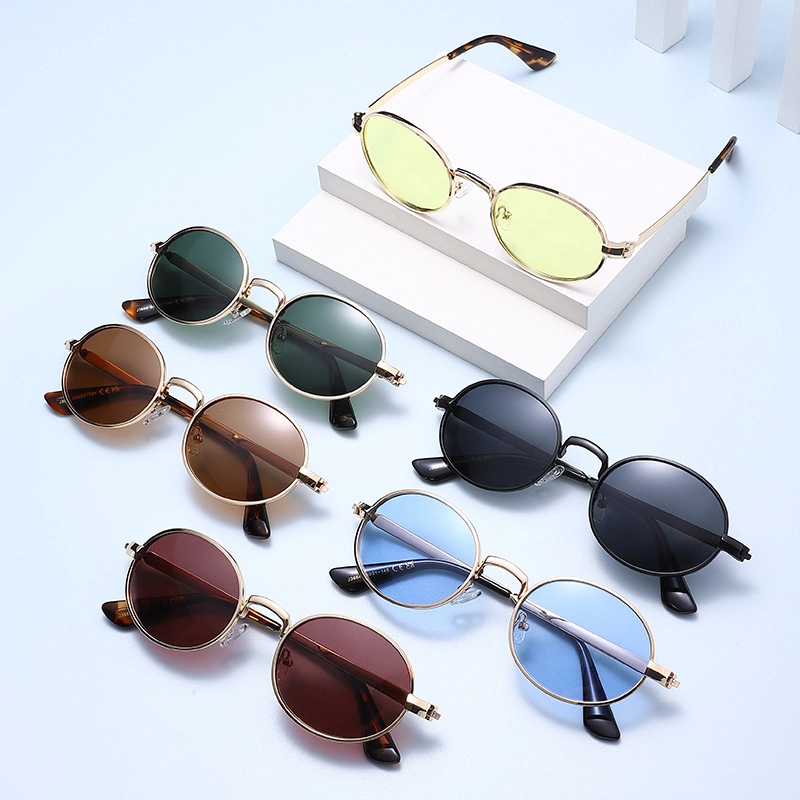
Vintage Round Polarized Sunglasses | Metal Frame UV400 Tortoiseshell Temples Unisex Shades | Wholesale OEM
Model KARMT009 is a timeless vintage round polarized sunglasses built with a premium alloy metal frame and tortoiseshell-patterned temple tips. Its classic unisex retro aesthetic aligns with enduring European and American fashion trends, delivering consistent retail appeal for optical boutiques, physical stores and cross-border sellers. Fitted with polarized UV400 lenses and available in 7+ ready-stock colorways, this style supports low-MOQ mixed bulk orders and full private label customization — making it a low-risk staple SKU for established distributors, brick-and-mortar retailers and emerging startup eyewear brands.
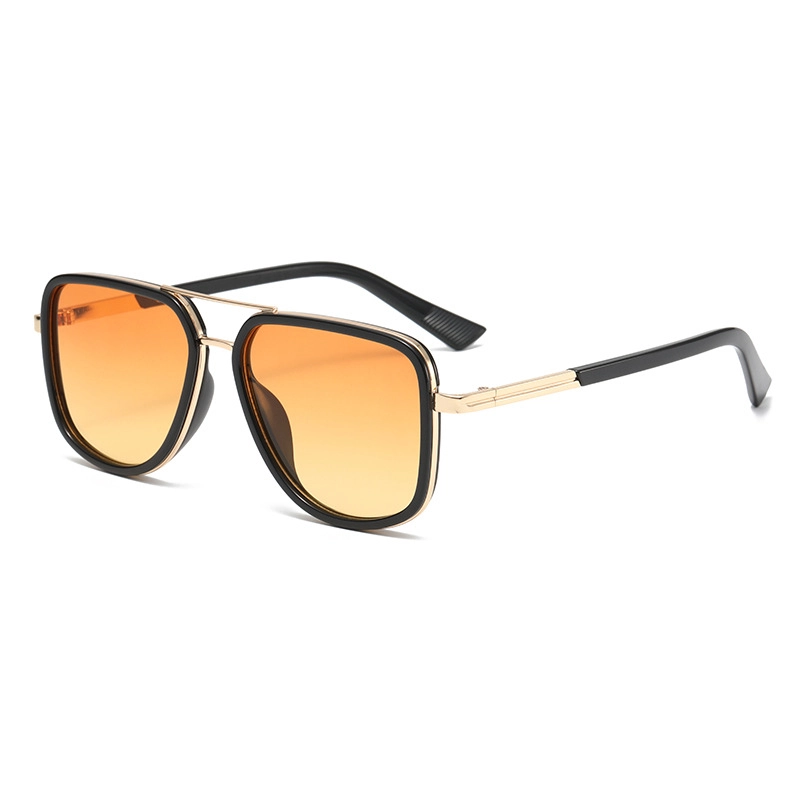
Double Bridge Square Aviator Sunglasses | PC Frame UV400 Polarized Optional Unisex Shades | Wholesale
Get a Free Quote
If you have any comments or good suggestions, please leave us a message; later our professional staff will contact you as soon as possible.
NEW DIMENSIONS IN EYEWEAR
Contact KARUSON
Email:
WhatsApp/Phone:
Address:
331 Section B, WanJia Creative Park , No. 1 BUXIA Road ,Tianhe District, Guangzhou City, Guangdong Province, China.

© 2026 KARUSON. All Rights Reserved.
Facebook
Instagram
YouTube
TikTok
Linkedin