



How Sustainable Materials Are Changing Private Label Sunglasses Manufacturing
Sustainable materials are reshaping private label sunglasses manufacturing by making material sourcing, product life, traceability, and end-of-life planning part of the same buying decision as style, price, and lead time. For brand owners, the practical opportunity is to develop frames and packaging with more responsible inputs without compromising fit, lens performance, durability, or repeat-order consistency. The most reliable approach is to compare documented material specifications, chain-of-custody evidence, production tolerances, chemical compliance, and substantiated environmental claims before approving a sample or placing a production order.
How material choices are reshaping eyewear product development
Material selection is no longer a late-stage styling decision. It affects tooling, color consistency, minimum order quantities, surface finishing, component compatibility, packaging, and the evidence a brand can use to support environmental statements. Buyers evaluating private label sunglasses suppliers should therefore assess the complete product system rather than selecting a frame material based on a sustainability label alone.
Cellulose acetate and certified feedstock
Cellulose acetate is used in eyewear frames and is derived from cellulose, but a plant-derived feedstock does not automatically make a finished frame biodegradable, compostable, or lower-impact in every application. Formulations can include plasticizers, pigments, coatings, and other additives, while manufacturing methods and product lifetime influence overall performance. Buyers should request a current material specification that identifies the grade, composition, color process, and any relevant supplier documentation. Where wood-based inputs are claimed as responsibly sourced, chain-of-custody documentation can help connect the claim to the material supply chain. The Forest Stewardship Council chain-of-custody system explains how certified material can be tracked through supply chains; buyers still need to confirm that the certificate scope covers the relevant supplier and product inputs.
Recycled and bio-based polymers
Recycled-content frames can help redirect existing material into a new product, while bio-based polymers may use renewable feedstocks in place of some fossil-based inputs. Neither term provides a complete impact assessment. Recycled material may vary in color, mechanical behavior, or availability between production lots, and “bio-based” describes feedstock origin rather than necessarily describing biodegradability or recyclability. Procurement teams should ask for the percentage of recycled or bio-based content, the calculation method, supporting records, and the point in the production process where the material is used. A supplier should also explain how incoming material is checked and how batch variation is controlled.
These questions matter because sunglasses are composite products. A frame, hinges, screws, coatings, nose pads, lenses, and printed packaging may use different materials and follow different recovery routes. Claims should clearly state whether they refer to the frame alone, a specific component, or the entire product. The ISO 14021 standard on self-declared environmental claims provides a framework for claims such as recycled content and recyclability, reinforcing the need for clear, verifiable wording rather than broad, unsupported promises.
Procurement decisions: compare material options and evidence
A useful sourcing comparison goes beyond asking which material is “greenest.” The right option depends on design intent, target price, sales channel, expected product life, color requirements, production volume, and the evidence the brand can substantiate in its markets. Use the following table as a screening tool, then validate specifications against the actual product and production route.
| Material or input approach | Potential procurement advantage | Buyer checks before approval |
|---|---|---|
| Conventional virgin polymer | Established processing routes and broad design flexibility may support consistent production. | Confirm resin identity, additives, chemical documentation, durability, and whether the material claim is limited to a component. |
| Recycled polymer content | Uses recovered feedstock and may support a quantified recycled-content claim when evidence is available. | Request content percentage, source and calculation records, batch controls, color tolerances, and performance results for the finished frame. |
| Cellulose acetate | Offers a familiar eyewear frame material with a cellulose-based feedstock. | Verify grade, formulation, additives, sourcing evidence where claimed, finish consistency, and the exact basis of any environmental statement. |
| Bio-based polymer | May substitute renewable feedstock for some fossil-based feedstock, depending on formulation. | Check the verified bio-based fraction, test method, additives, supply continuity, and avoid implying biodegradability without relevant evidence. |
| Reduced or recycled packaging | Can reduce packaging material use or incorporate recycled inputs in the shipping presentation. | Measure packaging by component, confirm recycled-content records, assess protection during transit, and check local recovery guidance. |
Assess the full product lifecycle, not a single material attribute
Material claims should be reviewed alongside product life and manufacturing impacts. A frame that fails early can require replacement and create avoidable waste, while an attractive material with inconsistent supply can disrupt replenishment. Ask for durability and fit checks appropriate to the design, including hinge operation, frame deformation, finish adhesion, lens retention, and performance after normal handling. The OECD Global Plastics Outlook examines plastics across their lifecycle, including production and waste management; it is a useful reminder that input selection is only one part of a broader materials strategy.
For international distribution, chemical and product requirements also need to be built into supplier approval. The European Chemicals Agency overview of REACH explains the EU framework for chemicals, including obligations relevant to substances and articles. Buyers should identify the regulations that apply in each destination market and request product-specific documentation rather than assuming that a material certificate covers every finished-product requirement. Sunglasses also need optical and physical quality checks appropriate to their intended use; sustainable frame inputs do not replace lens or product testing.
Build traceability into the RFQ and quality plan
Procurement teams can reduce ambiguity by putting sustainability requirements directly into the request for quotation. Specify the material name and grade, required recycled or bio-based content, permitted substitutions, documentary evidence, approved color range, packaging expectations, and change-notification rules. Ask the supplier to identify which production site and subcontractors handle the materials. For repeat orders, match the approved sample to retained material and production records so that a change in resin, supplier, pigment, or finish cannot be introduced without review.
Samples should be assessed against both commercial and technical criteria. Compare color and surface quality under consistent lighting, check fit and comfort across intended sizes, and review lens clarity and retention. Buyers should establish acceptable tolerances before bulk production and agree how nonconforming products will be contained and corrected. A well-documented change-control process is particularly important when recycled feedstock is used, because input characteristics may require tighter incoming inspection or adjustments to process settings.
Turning sustainability requirements into a manufacturable collection
Responsible material selection works best when designers, sourcing teams, quality managers, and manufacturing partners collaborate early. An aesthetic concept that depends on a particular translucency, texture, or color may need a material grade with reliable supply and repeatable finishing. Conversely, a material chosen primarily for an environmental claim may not fit the target product’s comfort, price, or performance requirements. A practical development brief defines what is non-negotiable and what can be adjusted before tooling and sampling begin.
Protect performance, comfort, and optical quality
For an eyewear program, sustainability cannot be separated from use. Frame weight, temple pressure, nose support, hinge life, UV protection, lens tint, and optical consistency influence whether customers keep using the product. Product owners should agree intended use and lens specifications at the start of development, then verify the finished sample against relevant market requirements. This is especially important for sport styles, prescription applications, and products intended for prolonged outdoor use. A responsible material story is commercially stronger when the product remains comfortable, functional, and suitable for its stated purpose.
Supplier qualification should include more than a catalog review. Evaluate sample quality, production capacity, communication discipline, batch traceability, corrective-action procedures, and readiness to share evidence supporting material claims. Ask how the factory handles substitution when a specified input becomes unavailable and whether the proposed alternative would change the product’s appearance, performance, compliance status, or environmental statement. These controls protect launch schedules and reduce the risk of receiving a product that differs materially from the approved sample.
Plan claims and packaging for the markets served
Environmental messaging should be specific, proportionate, and aligned with available proof. “Contains 30% recycled material in the frame front,” if accurately documented, communicates more clearly than a broad claim that an entire pair is sustainable. Keep technical records, supplier declarations, test reports, and artwork approvals together so marketing copy can be checked against the product actually manufactured. Avoid claims such as “eco-friendly” or “fully recyclable” unless their meaning, scope, and evidence are clear and defensible in the relevant market.
Packaging is another opportunity to reduce unnecessary material, but it must still protect lenses and frames through warehousing and shipping. Compare the total packaging system—including pouch, case, inserts, carton, and transport packaging—and check whether reduced packaging increases product damage. Specify recycled content or material reduction in measurable terms and ensure the relevant documentation is retained. A packaging change should be validated through transit and handling checks before being applied to a commercial order.
How our eyewear range can support private label development
Our product scope includes custom glasses, custom glasses lenses, customized sunglasses, custom prescription lenses, PC sunglasses, TR Sunglasses, metal sunglasses, and custom sport sunglasses. These categories allow buyers to explore different frame constructions and lens configurations within a private label brief. The supplied product range also includes sports-focused sunglasses options for projects that require a more activity-oriented design. Because no company-specific certifications, factory details, or performance records have been provided here, buyers should confirm those items directly during supplier qualification rather than treating product-category availability as proof of a particular sustainability credential.
Match material and construction to the commercial brief
For a collection built around a polished lifestyle look, buyers can assess acetate-style and metal-frame directions alongside color, weight, finish, and packaging requirements. For value-led or active-use programs, PC sunglasses and sports styles can be evaluated against fit, lens needs, durability, and target retail price. TR Sunglasses and other customized sunglasses can be scoped around the intended silhouette, color palette, branding method, and order volume. The project brief should identify which components require sustainable content and whether the requirement applies to frames, packaging, or both.
Our role in the development discussion is to align the requested product category with a clear specification: frame style, lens type, customization, target quantity, market destination, and documentation expectations. Buyers considering custom glasses lenses or custom prescription lenses should define optical requirements separately from frame-material preferences. Likewise, teams planning custom sport sunglasses or customized sports eyewear should set use-case and fit requirements before finalizing a material or finish. This structured process helps expose trade-offs early and makes sampling feedback more actionable.
Use evidence-led supplier evaluation
Before confirming a bulk order, request samples and the documents relevant to the stated claims and target markets. Confirm material identity, recycled or bio-based percentages where applicable, production-site details, test scope, packaging composition, and the process for controlling changes. Review the supplier’s response against the RFQ, then retain the approved sample and written specifications as the quality reference for production. These steps give brand owners a practical basis for comparing suppliers on transparency and execution, not just on a sustainability label or a low initial quote.
Materials are changing the way eyewear collections are designed, sourced, and marketed, but the strongest programs still balance credible sourcing with comfort, optical performance, supply reliability, and cost. Buyers that define measurable requirements early can make more defensible claims, reduce surprises during production, and create products that meet both customer expectations and operational realities.
Contact our team to discuss a private label eyewear brief or explore our custom glasses, lens, and sunglasses product options.
Frequently Asked Questions
Which sustainable materials are used in private label sunglasses?
Common options include cellulose acetate, recycled polymers, and bio-based polymers. Buyers should verify the exact material grade, composition, content percentage, and supporting evidence because the material name alone does not establish the product’s overall environmental impact.
Does bio-based material mean sunglasses are biodegradable?
No. Bio-based describes the origin of some or all feedstock, not necessarily whether a finished product is biodegradable or compostable. Buyers should request evidence specific to the finished material and avoid making broader claims than the documentation supports.
What documents should buyers request for recycled-content sunglasses?
Request the recycled-content percentage and calculation method, source and supplier records, batch controls, material specifications, and relevant finished-product performance or compliance documentation. Confirm whether the claim applies to the frame, another component, or the complete product.
How can a brand verify sustainability claims from an eyewear manufacturer?
Include measurable requirements in the RFQ, request current supporting documentation, identify which production site and components are covered, and retain approved samples and specifications. Claims should be specific and consistent with the product actually supplied.
Can sustainable frame materials affect quality or production consistency?
They can affect color, mechanical behavior, finishing, availability, or process settings, depending on the material and supplier. Buyers should evaluate samples, agree production tolerances, check incoming material controls, and require notification before material substitutions.
What should buyers consider when selecting sustainable sunglasses packaging?
Assess the full packaging system, including cases, pouches, inserts, cartons, and transport packaging. Confirm material or recycled-content claims, retain supporting records, and validate that any reduction still protects products during handling and shipping.
- How material choices are reshaping eyewear product development
- Cellulose acetate and certified feedstock
- Recycled and bio-based polymers
- Procurement decisions: compare material options and evidence
- Assess the full product lifecycle, not a single material attribute
- Build traceability into the RFQ and quality plan
- Turning sustainability requirements into a manufacturable collection
- Protect performance, comfort, and optical quality
- Plan claims and packaging for the markets served
- How our eyewear range can support private label development
- Match material and construction to the commercial brief
- Use evidence-led supplier evaluation
- Frequently Asked Questions
Wholesale Round Polarized Sunglasses for Optical Retailers: Assortment and Merchandising Considerations
Influencer outreach templates and campaign types for private label eyewear launch
Polarized Sunglasses Lens Colors Explained for Different Outdoor Applications
Top 10 sunglasses for women manufacturers and suppliers
You May Also Like

Classic Square Polarized Sunglasses | High-Performance OEM Eyewear
As a premier oem sunglasses manufacturer, Karuson presents this essential Square Frame series—a staple for any eyewear brand’s core collection. These sunglasses feature a timeless matte black finish and are equipped with vibrant green REVO mirrored lenses, offering a perfect blend of modern tech aesthetics and professional-grade eye protection.
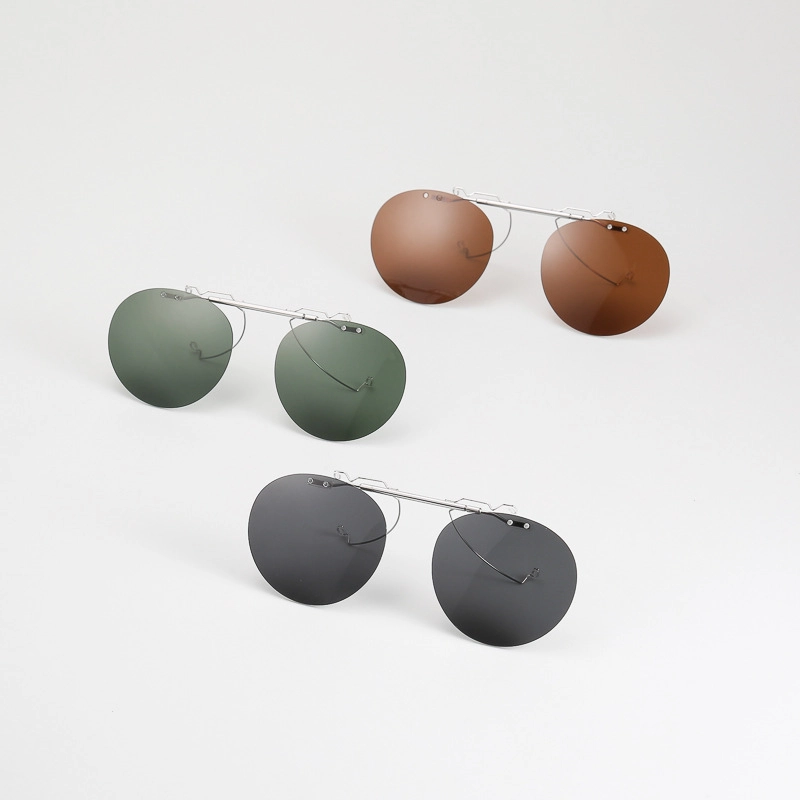
Round Polarized Flip-Up Clip-On Sunglasses for Prescription Glasses
Turn everyday prescription glasses into a retro-inspired sunwear look with these round flip-up clip-on sunglasses. The clean, rimless circular lenses sit in front of an existing optical frame, while the slim metal attachment can be lifted upward when the wearer wants to move between tinted and untinted vision without removing the clip-on.
Small silicone-padded contact points and an understated metal structure keep the focus on the frame already being worn. The range is presented in grey, brown, green and yellow tint options, making it a versatile add-on for optical boutiques and eyewear accessories collections. Actual lens performance and compatibility vary by configuration and should be confirmed with samples.
For wholesale and private label sourcing, discuss available tint combinations, lens specifications, logo or packaging options, and clip fit with KARUSON before confirming your assortment.
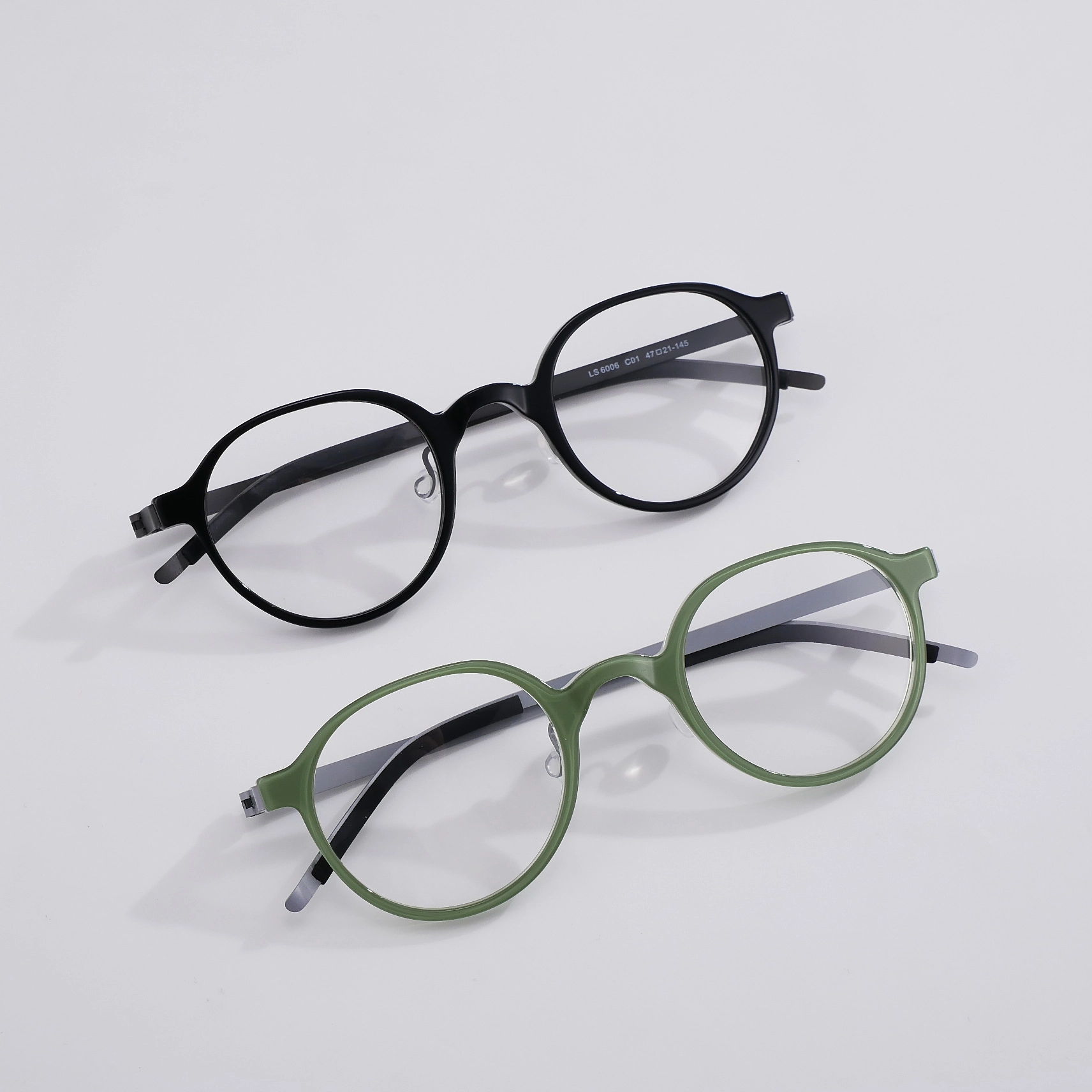
Screwless Round Acetate Optical Frames with Slim Alloy Temples
Understated from the front, refined from every angle. These round acetate optical frames combine a softly rounded silhouette with slim alloy temples for an effortless, modern-retro look. The polished front lends definition to the shape, while delicate metal sides keep the profile visually light.
Adjustable silicone nose pads offer room for fit adjustments, and the listed frame weight is just 11 g without lenses. A versatile choice for optical boutiques, everyday prescription eyewear ranges and brands building minimalist unisex collections.
Available color finishes and prescription lens compatibility can be discussed for each order, along with custom logos and branded packaging for wholesale or private label programs.
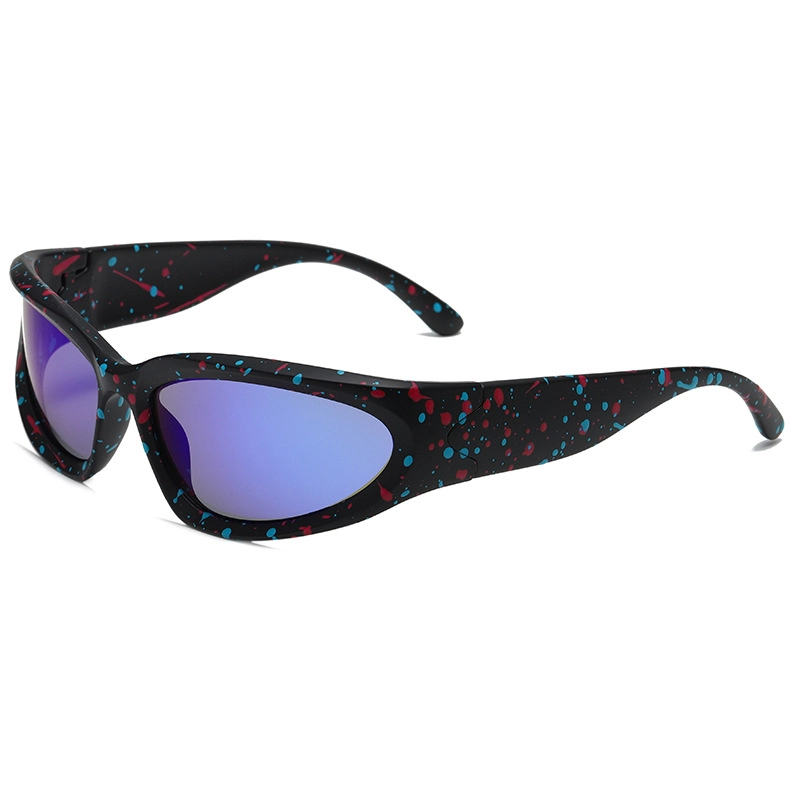
Futuristic Oval Shield Sunglasses with Sculpted Wave Temples
Bring the energy of Y2K eyewear into a modern collection with these futuristic oval shield sunglasses. The closely curved front and elongated oval lenses create a bold, streamlined silhouette, while wide sculpted temples flow into the frame through a distinctive wave-shaped junction.
From sharp black finishes to expressive metallic and mirror-inspired color combinations, the design makes a striking addition to fashion-forward sunglasses ranges, festival collections and sport-inspired streetwear assortments. Buyers can discuss available polarized and Revo-style mirror lens configurations, as well as frame color, logo and packaging options, with KARUSON.
For wholesale and private label programs, choose the preferred colorways and lens specifications before requesting samples and a production quotation. Frame material, lens performance and available customizations should be confirmed for the selected version.
Get a Free Quote
If you have any comments or good suggestions, please leave us a message; later our professional staff will contact you as soon as possible.
NEW DIMENSIONS IN EYEWEAR
Contact KARUSON
Email:
WhatsApp/Phone:
Address:
331 Section B, WanJia Creative Park , No. 1 BUXIA Road ,Tianhe District, Guangzhou City, Guangdong Province, China.

© 2026 KARUSON. All Rights Reserved.
Facebook
Instagram
YouTube
TikTok
Linkedin