


Vintage Round Polarized Sunglasses for Wholesale: A Buyer’s Guide to Styles, Specifications, and Suppliers
Vintage round polarized sunglasses are a dependable wholesale category when you lock down frame material, lens quality, and fit before you place a bulk order. The strongest programs I have seen combine 44 to 50 mm round lenses, polarized lenses with UV400 protection, and lightweight metal, TR, or PC frames, supported by sample approval and inline inspection. Buyers should confirm compliance with ISO 12312-1 or ANSI Z80.3, verify polarization with a simple cross-filter test, and choose a supplier that offers customization, realistic MOQs, and documented quality control. This guide shares what I have learned from more than 15 years of developing and sourcing eyewear for retailers, online sellers, and private-label brands.
Understanding Retro Round Polarized Eyewear Before You Place a Bulk Order
Why the Round Silhouette Keeps Selling
In my experience, round frames are one of the few shapes that never fully leave the market. They trace back to early 20th-century eyewear and gained a second life through music and fashion culture, and the Wikipedia overview of sunglasses documents how styles cycle while classic shapes keep returning. For a wholesale buyer, that means lower fashion risk than a trend-driven shape. When I advise new clients, I usually tell them that vintage round polarized sunglasses work as a core SKU, not a seasonal gamble, because they flatter a wide range of face shapes, especially square and angular ones.
The category also stretches across price tiers. A thin wire metal round frame suits a boutique or gift shop, while a bolder TR round frame works for fast-fashion and online channels. Knowing which customer you serve decides everything else in your specification.
How Polarization Works and What It Does Not Do
Polarized lenses contain a laminated filter that blocks horizontally oriented light, which is the glare bouncing off water, wet roads, and car hoods. The physics is explained clearly in the Wikipedia entry on polarizers. What many new buyers misunderstand is that polarization is not the same as UV protection. The American Academy of Ophthalmology’s sunglasses guidance makes this point: you should look for UV protection regardless of whether a lens is polarized. I always specify both, and I always ask for a UV400 test report instead of trusting a hangtag.
There are trade-offs worth communicating to your own customers. Polarized lenses can make some LCD screens and pilot or motorcycle displays look dim or patchy. A good retailer explains this honestly, which reduces returns.
Sizing and Fit Specifications That Reduce Returns
Fit is the silent killer of margins. Round lenses make poor sizing obvious, because an oversized circle slides down the nose and an undersized one looks like a costume. For most adult unisex vintage round polarized sunglasses, I recommend a lens width of 46 to 50 mm, a bridge of 20 to 22 mm, and temple length of 140 to 145 mm. If your market skews toward smaller faces, such as parts of Asia, consider a 44 to 48 mm range. Nose pads on metal frames should be adjustable, and TR or PC frames should have a molded bridge that suits lower nose profiles. I suggest ordering a size run with two or three variants rather than a single size across the whole order.
Materials, Lenses, and Specifications That Decide Real Quality
Frame Materials Compared
Material choice influences weight, price, durability, and customization potential. This is the comparison I share with buyers before we discuss pricing.
| Frame Material | Feel and Weight | Durability and Flexibility | Best For | Wholesale Consideration |
|---|---|---|---|---|
| Metal (alloy, stainless steel, titanium blends) | Slim, classic, light to medium | Strong but can bend permanently; coating quality matters | Authentic vintage look, High Quality boutiques | Check plating thickness, hinge type, and nose pad quality |
| TR (TR90 thermoplastic) | Very light, flexible | Excellent memory, resists impact and heat deformation | All-day wear, travel, active lifestyles | Good color consistency; suits logo and color customization |
| PC (polycarbonate) | Light, rigid | Impact resistant, less flexible than TR | Budget to mid-range, high-volume programs | Cost-efficient tooling; ideal for fast-moving styles |
| Acetate | Heavier, High Quality feel | Durable, polishable, rich color depth | Fashion and high-end positioning | Higher cost and longer lead time |
For a true retro look, metal sunglasses are my first recommendation, since fine wire rims are what people picture when they think of vintage round frames. For comfort and durability at an accessible price, TR Sunglasses and PC sunglasses give you modern performance with a classic outline.
Lens Specifications Worth Writing Into Your Purchase Order
Do not just write polarized lens on your order. Specify the lens material (TAC, nylon, polarized PC, or glass), the lens category or tint darkness, the UV400 requirement, the base curve, and a minimum polarization efficiency. TAC polarized lenses offer good optical clarity and are common in mid-range orders, while nylon lenses are lighter and more impact resistant. Mirror coatings and gradient tints suit the vintage aesthetic, but each coating adds a scratch and adhesion test requirement. When I audit a batch, I check for distortion by holding the lens at arm’s length and watching a straight line move across it, then I verify polarization by rotating one lens over another and confirming the view turns nearly black at 90 degrees.
Compliance and Testing You Should Not Skip
The international benchmark for general-use sunglasses is ISO 12312-1, which covers transmittance categories, UV requirements, and optical quality. In the US, buyers often reference ANSI Z80.3, and in the EU the product must meet CE requirements for personal protective equipment. On the health side, the World Health Organization’s UV radiation fact sheet links long-term UV exposure with eye conditions such as cataracts, which is why a credible UV400 claim matters beyond marketing. I ask every supplier for a recent third-party test report that matches the actual lens batch, not a generic certificate.
How to Vet Wholesale Suppliers and Avoid Costly Mistakes
MOQ, Sampling, and Lead Time Reality
Many first-time buyers focus on unit price and ignore process. I focus on three questions: what is the MOQ per style and per color, how many sampling rounds are included, and how long does production take after approval? For stock designs, MOQs can be modest, often a few hundred pieces per model. For custom work, they rise because of tooling, lens cutting, and packaging. I always approve a pre-production sample and keep it sealed as the reference standard for the final inspection. That single habit has saved me from more disputes than any contract clause.
Quality Control Checkpoints I Use
A dependable supplier should be able to describe its inspection stages without hesitation. The checkpoints I look for are incoming material inspection for lenses and frames, hinge cycle testing, coating adhesion checks, polarization verification, and a final random inspection using an AQL sampling plan. Ask for photos or videos of the actual batch before shipment. If a factory resists this, I treat it as a warning sign. Good manufacturers welcome transparency because it protects them as well.
Red Flags That Cost Buyers Money
Over the years I have learned to be wary of several patterns: prices far below the market for genuinely polarized lenses, which usually means a thin or inconsistent film; refusal to provide test reports; vague answers about lens materials; and samples that look noticeably better than bulk output. Another red flag is a supplier that cannot adjust anything. Wholesale success often depends on small refinements such as a slightly smaller lens, a different hinge, or a color that fits your market. Flexibility is a quality signal in itself.
Why Custom Manufacturing Gives Wholesale Buyers a Real Edge
Moving From Generic Stock to Customized Sunglasses
Selling the same open-catalog frame as every competitor leads to price wars. The retailers and brands I have seen grow steadily are the ones who invest in customized sunglasses, even at a small scale. That might mean a custom frame color, an engraved temple logo, branded cases, or a modified lens tint. In our factory, we support custom glasses projects from concept sketch through sampling to mass production, so a buyer can turn a classic round silhouette into a distinctive collection without building a factory relationship from scratch. Our product range covers metal sunglasses for authentic retro lines, TR Sunglasses for flexible lightweight comfort, and PC sunglasses for cost-efficient volume programs.
Lens Options: Polarized, Tinted, and Prescription
Lens flexibility is where many suppliers fall short. We offer custom glasses lenses in polarized, gradient, mirrored, and photochromic options, so you can match lens performance to your customer. For clients targeting older shoppers or optical retailers, custom prescription lenses make vintage round frames far more valuable, because they turn a fashion accessory into an everyday product. Round frames suit single-vision prescriptions well, though stronger powers may require thicker edges or higher-index materials, and I always discuss that during the design phase rather than after production.
Performance Lines for Outdoor and Sport Buyers
Not every retro-inspired customer wants a purely fashion product. Cyclists, anglers, and runners increasingly like understated frames that look classic yet perform well. We produce custom sunglasses sports collections where you can adjust wrap, nose grip, ventilation, and lens category. If you want to customize sport sunglasses under your own label, we can combine a TR frame with impact-resistant polarized lenses and a branded accessory set. For teams, clubs, and event organizers, custom sport sunglasses with logo placement and matching colors offer a practical promotional product. Our engineers and sourcing specialists work with clear specifications and documented testing, so what you approve in the sample is what arrives in your warehouse.
Start by sending us your target market, preferred sizes, and budget range, and we will recommend a frame material, lens structure, and customization plan that fits your wholesale goals.
Frequently Asked Questions
What lens size is best for vintage round polarized sunglasses in wholesale orders?
For most adult unisex styles, I recommend a lens width of 46 to 50 mm, a bridge of 20 to 22 mm, and a temple length of 140 to 145 mm. If your customers tend to have smaller faces, add a 44 to 48 mm option. Ordering two or three size variants usually reduces returns more than a single size does.
How can I check that sunglasses are truly polarized?
Rotate one lens over another lens or a known polarized filter. If the overlapping area turns almost black at about 90 degrees, the lens is polarized. You can also look at glare on water or a glossy surface through the lens and see whether the glare drops sharply. For bulk orders, request a test report for the specific lens batch.
Is polarization the same as UV protection?
No. Polarization reduces glare from reflective surfaces, while UV protection blocks harmful ultraviolet light. A lens can be polarized without offering adequate UV protection, so always specify UV400 and ask for a test report that confirms it.
Which frame material is better for retro round sunglasses: metal, TR, or PC?
Metal gives the most authentic vintage look with thin rims and a classic feel. TR is lighter and more flexible, which makes it comfortable and durable for daily wear. PC is rigid, impact resistant, and cost-efficient for high-volume programs. The right choice depends on your price tier and customer.
What standards should wholesale sunglasses meet?
ISO 12312-1 is the international standard for general-use sunglasses, and ANSI Z80.3 is commonly referenced in the United States. In Europe, products must meet CE requirements. Ask suppliers for recent third-party test reports that match your production batch.
Can I order vintage round sunglasses with custom logos or prescription lenses?
Yes. Many manufacturers, including us, support custom logos, frame colors, packaging, lens tints, and custom prescription lenses. Customization usually raises MOQs slightly because of tooling and lens processing, but it helps your products stand apart from generic catalog styles.
- Understanding Retro Round Polarized Eyewear Before You Place a Bulk Order
- Why the Round Silhouette Keeps Selling
- How Polarization Works and What It Does Not Do
- Sizing and Fit Specifications That Reduce Returns
- Materials, Lenses, and Specifications That Decide Real Quality
- Frame Materials Compared
- Lens Specifications Worth Writing Into Your Purchase Order
- Compliance and Testing You Should Not Skip
- How to Vet Wholesale Suppliers and Avoid Costly Mistakes
- MOQ, Sampling, and Lead Time Reality
- Quality Control Checkpoints I Use
- Red Flags That Cost Buyers Money
- Why Custom Manufacturing Gives Wholesale Buyers a Real Edge
- Moving From Generic Stock to Customized Sunglasses
- Lens Options: Polarized, Tinted, and Prescription
- Performance Lines for Outdoor and Sport Buyers
- Frequently Asked Questions
How to Match Coated Lens Types with Prescription, Safety, Sports, and Fashion Eyewear
Using 3D prototyping and sampling to accelerate private label eyewear development
Hand-finishing, polishing and final inspection procedures in an eyewear factory
Surface treatments and plating technologies implemented in an eyewear factory
You May Also Like
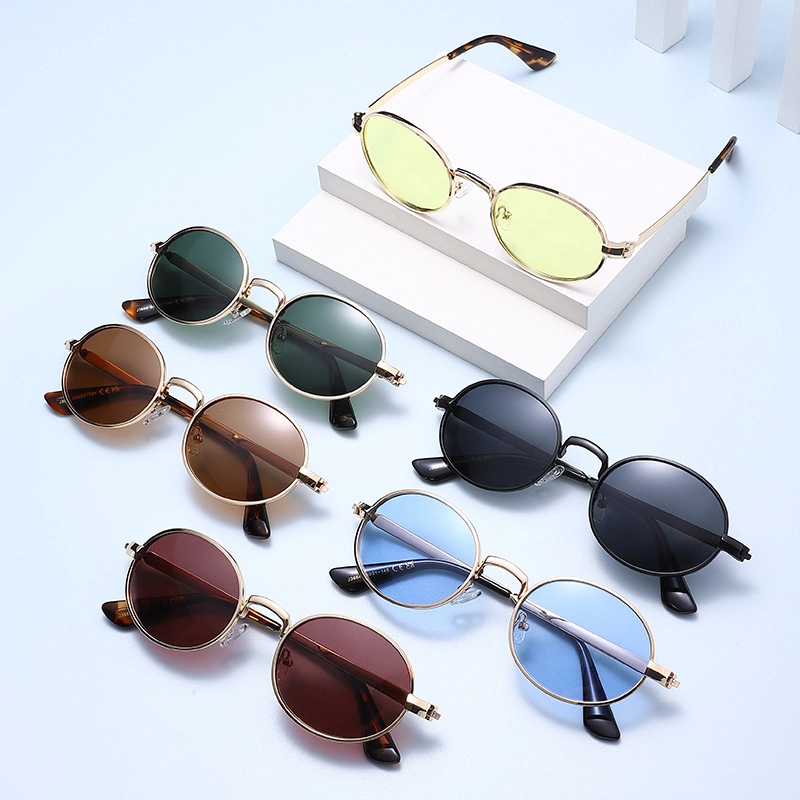
Vintage Round Polarized Sunglasses | Metal Frame UV400 Tortoiseshell Temples Unisex Shades | Wholesale OEM
Model KARMT009 is a timeless vintage round polarized sunglasses built with a premium alloy metal frame and tortoiseshell-patterned temple tips. Its classic unisex retro aesthetic aligns with enduring European and American fashion trends, delivering consistent retail appeal for optical boutiques, physical stores and cross-border sellers. Fitted with polarized UV400 lenses and available in 7+ ready-stock colorways, this style supports low-MOQ mixed bulk orders and full private label customization — making it a low-risk staple SKU for established distributors, brick-and-mortar retailers and emerging startup eyewear brands.
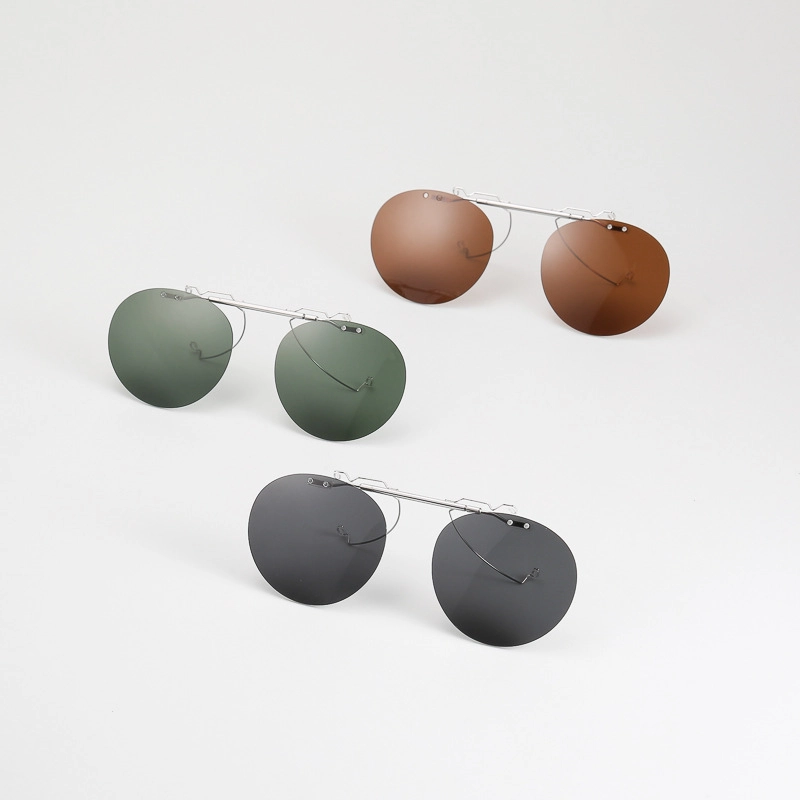
Round Polarized Flip-Up Clip-On Sunglasses for Prescription Glasses
Turn everyday prescription glasses into a retro-inspired sunwear look with these round flip-up clip-on sunglasses. The clean, rimless circular lenses sit in front of an existing optical frame, while the slim metal attachment can be lifted upward when the wearer wants to move between tinted and untinted vision without removing the clip-on.
Small silicone-padded contact points and an understated metal structure keep the focus on the frame already being worn. The range is presented in grey, brown, green and yellow tint options, making it a versatile add-on for optical boutiques and eyewear accessories collections. Actual lens performance and compatibility vary by configuration and should be confirmed with samples.
For wholesale and private label sourcing, discuss available tint combinations, lens specifications, logo or packaging options, and clip fit with KARUSON before confirming your assortment.
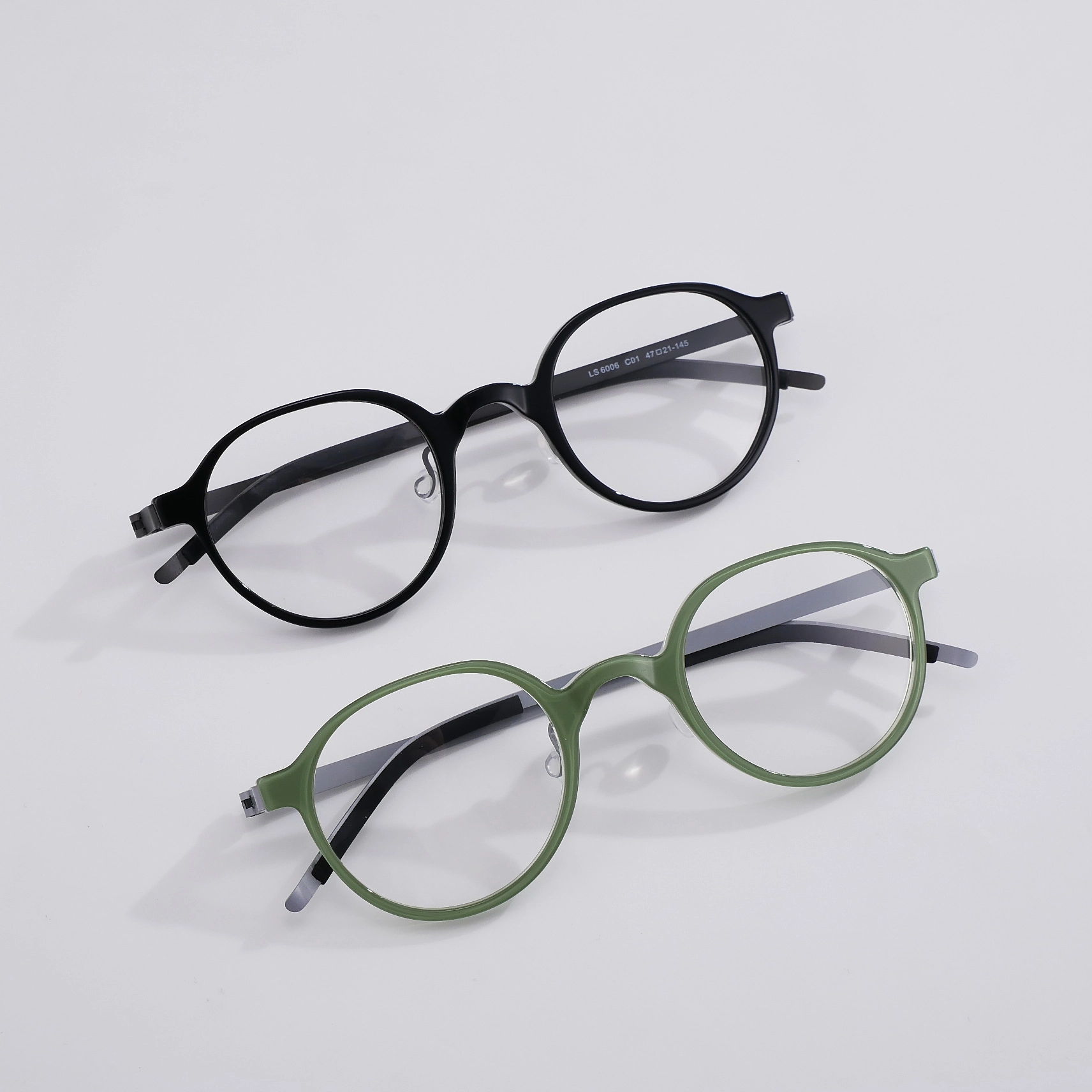
Screwless Round Acetate Optical Frames with Slim Alloy Temples
Understated from the front, refined from every angle. These round acetate optical frames combine a softly rounded silhouette with slim alloy temples for an effortless, modern-retro look. The polished front lends definition to the shape, while delicate metal sides keep the profile visually light.
Adjustable silicone nose pads offer room for fit adjustments, and the listed frame weight is just 11 g without lenses. A versatile choice for optical boutiques, everyday prescription eyewear ranges and brands building minimalist unisex collections.
Available color finishes and prescription lens compatibility can be discussed for each order, along with custom logos and branded packaging for wholesale or private label programs.
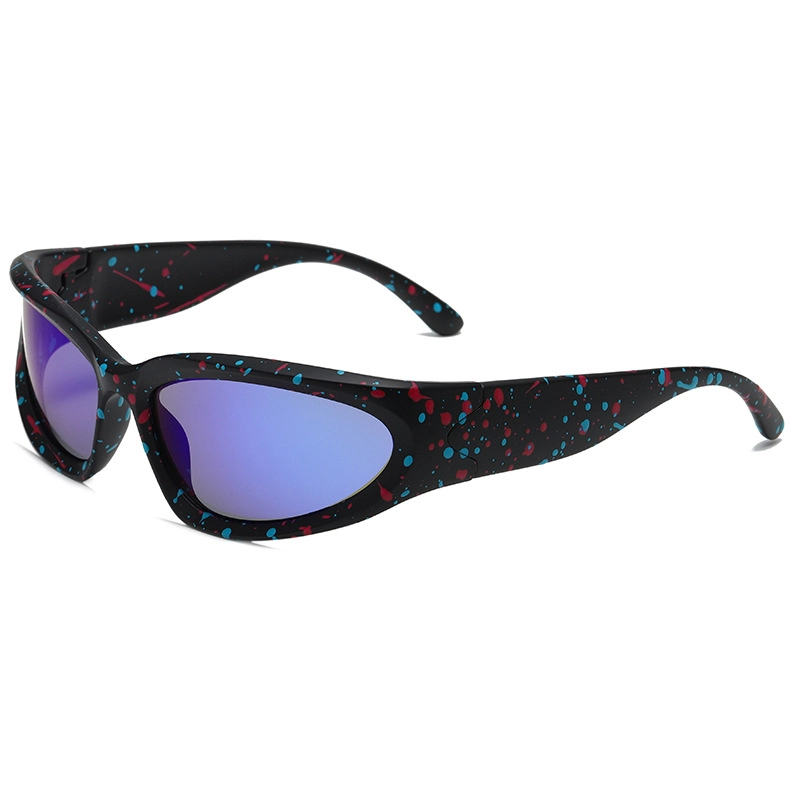
Futuristic Oval Shield Sunglasses with Sculpted Wave Temples
Bring the energy of Y2K eyewear into a modern collection with these futuristic oval shield sunglasses. The closely curved front and elongated oval lenses create a bold, streamlined silhouette, while wide sculpted temples flow into the frame through a distinctive wave-shaped junction.
From sharp black finishes to expressive metallic and mirror-inspired color combinations, the design makes a striking addition to fashion-forward sunglasses ranges, festival collections and sport-inspired streetwear assortments. Buyers can discuss available polarized and Revo-style mirror lens configurations, as well as frame color, logo and packaging options, with KARUSON.
For wholesale and private label programs, choose the preferred colorways and lens specifications before requesting samples and a production quotation. Frame material, lens performance and available customizations should be confirmed for the selected version.
Get a Free Quote
If you have any comments or good suggestions, please leave us a message; later our professional staff will contact you as soon as possible.
NEW DIMENSIONS IN EYEWEAR
Contact KARUSON
Email:
WhatsApp/Phone:
Address:
331 Section B, WanJia Creative Park , No. 1 BUXIA Road ,Tianhe District, Guangzhou City, Guangdong Province, China.

© 2026 KARUSON. All Rights Reserved.
Facebook
Instagram
YouTube
TikTok
Linkedin