


Wholesale Designer Sunglasses for Women and Men
Wholesale buyers and brand owners targeting High Quality sun eyewear must balance material selection, manufacturing tolerances, regulatory compliance, and supply-chain agility to launch profitable collections; this briefing highlights cellulose-acetate frame engineering, lens technology pairings, MOQ and lead-time planning, quality assurance checkpoints, and cost drivers—revealing practical sourcing decisions that reduce returns, speed market entry, and protect brand equity.
Material Engineering and Frame Technology for High Quality Sun Eyewear
Thermoplastic cellulose alternatives and frame selection
High-end frame procurement often centers on plant-derived cellulose formulations and engineered polymer blends. Cellulose-based sheet materials deliver a balance of polishability, color depth, and hypoallergenic performance preferred for fashion collections, while high-performance polymers such as polyamide (TR series) provide lightweight resilience for active or sports-focused SKUs. Buyers should evaluate raw-sheet specifications (thickness, tempering grade, color layering) and request material certificates of analysis to ensure batch consistency across seasonal runs.
Precision tolerances, hinge systems, and warpage control
Dimensional accuracy is a major failure point for High Quality ranges. Specifying CNC-tolerance bands for bridge width, temple spring tension, and lens bevel geometry reduces post-assembly rework. Metal-core temples or reinforced hinge systems improve lifecycle performance for heavier lens packages. Request process capability indices (Cp/Cpk) from suppliers for key dimensions and require corrective action plans for parts that drift beyond tolerance limits during pilot runs.
Lens pairings: coatings, polarization, and prescription integration
Selecting the correct lens stack prevents early returns and ensures optical satisfaction. Polarized filter laminates reduce glare for marine and driving lines, while anti-reflective and oleophobic coatings maintain visual clarity. For prescription-ready collections, compatibility between frame bevels and custom prescription blanks is essential; buyers should verify lens blank thickness ranges, base curve compatibility, and optical center alignment before committing to full tooling.
Supply Chain Economics, MOQ Strategies, and Time-to-Market
MOQ planning and flexible production models
MOQ decisions directly affect inventory carrying costs and SKU breadth. A tiered MOQ approach—pilot samples, small batch, and full-run tiers—allows brands to validate consumer response before scaling. Contract manufacturers with modular tooling and in-house CNC can often offer lower pilot quantities without sacrificing lead times, reducing market-risk for seasonal drops.
Lead-time management and agile delivery cycles
Typical lead times for bespoke frame tooling and lens production range from 6 to 12 weeks depending on complexity and certification requirements. Manufacturers operating dual-factory footprints or multiple production lines can compress delivery cycles through parallel processing. Buyers should require agreed-upon production milestones, inbound raw-material traceability, and contingency plans for supply disruptions.
Cost drivers: tooling amortization, material High Qualitys, and logistics
Upfront tooling amortization is a primary cost for designer collections, often recovered over successive production runs. Material choice (High Quality sheet, polarized lens discs, metal alloys) and surface finishing (hand polishing, electroplating) add variable unit costs. Freight optimization and consolidated shipments reduce per-unit landed cost; request landed-cost models that include duties, testing, and packaging to evaluate true margin impact.
Design Customization, Compliance, and Global Market Access
End-to-end customization: CAD, prototyping, and branding techniques
Bespoke frame engineering starts with parametric CAD and rapid prototyping for fit validation. Laser engraving, pad printing, and micro-etching enable discrete brand marks on temples and lens corners. For High Quality collections, multi-material lamination and bespoke colorways differentiate SKUs; specify Pantone references and provide final color approvals on pre-production samples to avoid mismatches at scale.
Regulatory testing, UV protection, and product marking
Global compliance requires adherence to regional optical safety standards and UV transmission tests. For consumer protection and market acceptance, verify product testing against recognized standards such as the ISO sunglasses standard and consult World Health Organization guidance on ultraviolet exposure. Labels, packaging, and instruction leaflets should document UV category, lens material, and care instructions to meet retailer and customs expectations.
Cross-border distribution, certification, and retailer requirements
Different geographies require varying documentation—from CE marking in the EU to specific import declarations in the Americas. Prepare a compliance pack containing test reports, material declarations, and care labeling to streamline vendor onboarding with large retailers. For mass-market placements, pre-qualification audits and lab-verified test results shorten purchase cycles.
Operational Benchmarks: Materials Comparison and Verification
| Attribute | Cellulose/Acetate Sheets | TR/Polyamide | Metal (Stainless/Alloy) |
|---|---|---|---|
| Density (g/cm³) | ~1.26–1.30 | ~1.14–1.20 | ~7.5–8.0 |
| Flexibility | Good, formable by heat | Excellent, high fatigue resistance | Moderate, requires hinge engineering |
| Finish & Color Range | High polish & layered color options | Solid colors, matte finishes | Plating or polishing required |
| Suitability for High-Fashion | High — depth and sheen ideal for designer frames | Medium — performance and sporty styles | High — minimalist and luxury metal builds |
| Sustainability Considerations | Bio-based cellulose options available | Recyclability varies by formulation | High recyclability but energy-intensive |
Why Partner with KARUSON: OEM/ODM Capabilities and Product Portfolio
Factory footprint, capacity, and rapid prototyping
Established in 2010, Karuson International Co., Ltd. operates two modern production bases in Dongguan and Guangzhou. Our vertical integration and in-house tooling capabilities enable high-capacity production while maintaining agile delivery cycles. Buyers benefit from rapid prototyping workflows—CNC machining, thermoforming, and hand-finishing—so that fit, comfort, and aesthetic approvals happen before mass production.
Comprehensive product range and tailored manufacturing services
Our product portfolio spans High Quality custom glasses and advanced lens assemblies to sports-specific performance designs. Core offerings include custom glasses lenses, customized sunglasses for women and men, custom sunglasses sports lines, custom prescription lenses, PC sunglasses, TR sunglasses, metal sunglasses, and custom sport sunglasses. We provide end-to-end OEM/ODM services: bespoke frame engineering, lens technology selection (polarized, gradient, mirrored), and precise brand marking through laser engraving and pad printing.
Quality assurance, certification support, and client ROI
We implement multi-stage quality control—raw material inspection, in-process dimension checks, and finished-product optical testing—to minimize defects and returns. Our team maintains testing documentation aligned with international standards such as the consumer eyewear guidance and consults recognized public health guidance like the World Health Organization on UV risk communication. These measures protect brand reputation and maximize sell-through for distributors and retailers in Europe, the Americas, and beyond.
How KARUSON reduces procurement friction
Buyers select KARUSON for predictable lead times, transparent landed-cost modeling, and the technical ability to translate trend briefs into production-ready SKUs. With over 300 proprietary designs and a history of collaboration with High Quality brands, our engineering and design teams optimize tooling amortization across lines to reduce unit costs and shorten time-to-market. For first-time collaborations, our sample and pilot-run options de-risk assortment decisions while preserving margin potential on full-scale production.
Frequently Asked Questions
What are the primary differences between plant-derived sheet eyewear and high-performance polymer frames?
Plant-derived frames (cellulose variants) offer superior polish, layered coloration, and traditional luxury aesthetics, while high-performance polymers such as TR90 provide lighter weight, greater flexibility, and higher fatigue resistance—making them preferable for sports and active wear. Selection should be guided by target consumer use-case, finish expectations, and unit-cost constraints.
What minimum order quantities should brand owners expect for new designer models?
Minimums depend on tooling needs and supplier manufacturing models; tiered MOQ structures are common—pilot runs (50–200 units), small production (500–1,000 units), and full production (2,000+ units). Suppliers with in-house tooling and flexible lines can often permit lower pilot volumes to validate market response without prohibitive upfront investment.
Which tests and certifications are essential for international distribution?
Essential documentation includes UV transmission test reports, mechanical safety tests (impact resistance), and labeling that meets regional regulations (e.g., CE marking for the EU). Referencing the ISO sunglasses standard and compiling a compliance pack with lab reports accelerates retailer onboarding and customs clearance.
How long does it take from design approval to shipment for a bespoke sunglass collection?
Typical timelines range from 8 to 16 weeks: 2–4 weeks for prototyping and approvals (depending on iteration count), 4–8 weeks for tooling and pilot runs, and 2–4 weeks for full production and packaging. Timelines compress when working with manufacturers that operate multiple production lines and maintain necessary raw-material stock.
Can prescription lenses be integrated into designer sun frames, and what constraints apply?
Yes—prescription-ready frames require compatible lens bevels, sufficient lens thickness allowance, and correct optical center placement. Buyers should supply target diopter ranges and consult the factory’s lens compatibility matrix to ensure frame geometry supports the intended prescription range without optical distortion or cosmetic compromise.
What practices reduce returns and improve consumer satisfaction for High Quality sunglasses?
Key practices include pre-production fit validation, consistent color approvals, robust packaging with care instructions, verified lens optical testing, and clear labeling of UV protection categories. Implementing these controls reduces post-sale returns and preserves retail relationships.
Contact KARUSON for OEM/ODM inquiries, sample requests, or to view our product portfolio: https://www.karusonco.com or email nicole@karusonco.com.
- Material Engineering and Frame Technology for High Quality Sun Eyewear
- Thermoplastic cellulose alternatives and frame selection
- Precision tolerances, hinge systems, and warpage control
- Lens pairings: coatings, polarization, and prescription integration
- Supply Chain Economics, MOQ Strategies, and Time-to-Market
- MOQ planning and flexible production models
- Lead-time management and agile delivery cycles
- Cost drivers: tooling amortization, material High Qualitys, and logistics
- Design Customization, Compliance, and Global Market Access
- End-to-end customization: CAD, prototyping, and branding techniques
- Regulatory testing, UV protection, and product marking
- Cross-border distribution, certification, and retailer requirements
- Operational Benchmarks: Materials Comparison and Verification
- Why Partner with KARUSON: OEM/ODM Capabilities and Product Portfolio
- Factory footprint, capacity, and rapid prototyping
- Comprehensive product range and tailored manufacturing services
- Quality assurance, certification support, and client ROI
- How KARUSON reduces procurement friction
- Frequently Asked Questions
- What are the primary differences between plant-derived sheet eyewear and high-performance polymer frames?
- What minimum order quantities should brand owners expect for new designer models?
- Which tests and certifications are essential for international distribution?
- How long does it take from design approval to shipment for a bespoke sunglass collection?
- Can prescription lenses be integrated into designer sun frames, and what constraints apply?
- What practices reduce returns and improve consumer satisfaction for High Quality sunglasses?
What Are Custom Eyewear Manufacturers and How They Differ from Standard Suppliers
Top 10 baby sunglasses manufacturers and suppliers
Best Square-Frame Aviator Glasses for Retailers and Distributors
How to Set Up a Private Label Eyewear Line Using Custom Eyewear Manufacturers
You May Also Like

Ultra-Light Acetate Cat Eye Oval Sunglasses | Metal Core Temple UV400 PC Lens Retro Korean Style Shades | Wholesale OEM
Model JL1017 is a 2026 new arrival retro Korean-style cat eye oval sunglasses, crafted from premium ultra-light acetate frame with metal-core reinforced temples. Weighing only 23.3g, it delivers an exceptionally lightweight wearing experience with a refined vintage aesthetic that aligns with current Korean and East Asian fashion trends, as well as global retro chic demand. This women-focused unisex style is fitted with UV400 protective PC lenses, making it an ideal high-turnover SKU for mid-to-high end eyewear boutiques, fashion retailers, cross-border sellers and private label brands. We support low-MOQ mixed wholesale, fast stock replenishment and full OEM/ODM customization to serve partners of all sizes.

Ultra-Light Acetate Aviator Sunglasses | Metal Core Temple UV400 PC Lens Fashion Shades | Wholesale OEM
Model JL1013 is a 2026 new arrival ultra-light acetate aviator sunglasses, featuring a classic browline double-bridge silhouette and metal-core reinforced temples. Weighing only 30.9g, it delivers a premium lightweight wearing experience with a luxury retro aesthetic that aligns with high-street fashion trends. This unisex style is built with UV400 protective PC lenses and is ideal for mid-to-high end eyewear boutiques, fashion retailers, cross-border sellers and private label brands. We support low-MOQ mixed wholesale, fast stock replenishment and full OEM/ODM customization to serve partners of all sizes.
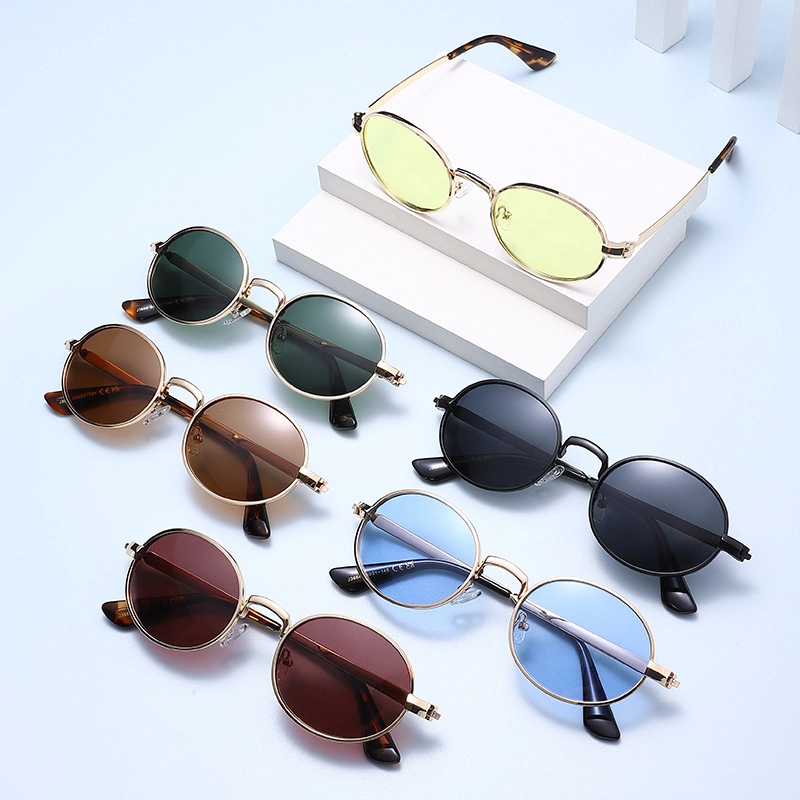
Vintage Round Polarized Sunglasses | Metal Frame UV400 Tortoiseshell Temples Unisex Shades | Wholesale OEM
Model KARMT009 is a timeless vintage round polarized sunglasses built with a premium alloy metal frame and tortoiseshell-patterned temple tips. Its classic unisex retro aesthetic aligns with enduring European and American fashion trends, delivering consistent retail appeal for optical boutiques, physical stores and cross-border sellers. Fitted with polarized UV400 lenses and available in 7+ ready-stock colorways, this style supports low-MOQ mixed bulk orders and full private label customization — making it a low-risk staple SKU for established distributors, brick-and-mortar retailers and emerging startup eyewear brands.
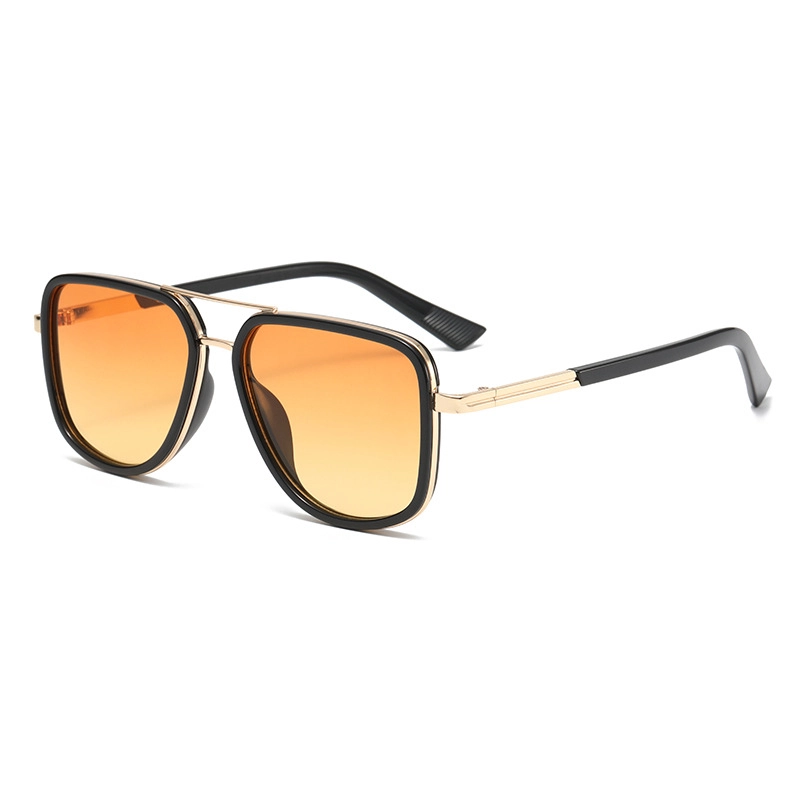
Double Bridge Square Aviator Sunglasses | PC Frame UV400 Polarized Optional Unisex Shades | Wholesale
Get a Free Quote
If you have any comments or good suggestions, please leave us a message; later our professional staff will contact you as soon as possible.
NEW DIMENSIONS IN EYEWEAR
Contact KARUSON
Email:
WhatsApp/Phone:
Address:
331 Section B, WanJia Creative Park , No. 1 BUXIA Road ,Tianhe District, Guangzhou City, Guangdong Province, China.

© 2026 KARUSON. All Rights Reserved.
Facebook
Instagram
YouTube
TikTok
Linkedin