

Choosing a Sunglasses Manufacturer: 8 Questions Every Brand Should Ask Before Placing an Order
An eight-point supplier evaluation framework for eyewear startups, established brands, and wholesale buyers.
Before choosing a sunglasses manufacturer, verify eight areas: production-to-sample consistency, lens compliance in your target market, minimum order quantities, sampling accuracy, delivery schedules, in-house versus outsourced capabilities, customization and design ownership, and total landed cost.
A strong supplier should answer these questions with model-specific specifications, clear documentation, realistic timelines, and written commercial terms—not just broad promises.
For a sunglasses brand, choosing a manufacturer is one of the most consequential sourcing decisions. A low unit price can look attractive until bulk products differ from the approved sample, lens documentation is missing, or a shipment arrives after the peak selling period.
Whether you're launching your first collection or moving production from another supplier, the following eight questions will help you evaluate factory capabilities, identify risks, and prepare a more reliable request for quotation (RFQ).
1. Will My Bulk Order Match the Approved Sample?
An attractive prototype is only useful if the production run matches it. Differences in color, hinge movement, lens finish, logo position, or fit can lead to returns and costly rework.
What to ask the manufacturer
- Do you retain an approved golden sample and a signed specification sheet for each order?
- Which checks take place at incoming material inspection, during assembly, and before shipment?
- What acceptance criteria and sampling method will be applied at final inspection—for example, an agreed AQL inspection plan?
- What is the corrective-action process if a shipment differs from the approved reference?
Do not treat a factory's statement that it checks every product as a complete quality plan. Ask to see a typical inspection checklist, tolerance definitions, and evidence of how nonconforming products are handled.
2. Can the Sunglasses Meet the Requirements of My Target Market?
Sunglasses are more than fashion accessories: their optical performance, labeling, and safety requirements depend on the destination market and the intended use. General-purpose nonprescription sunglasses should not be confused with prescription, industrial, or specialist sports-protective eyewear.
| Market | What the buyer should verify |
|---|---|
| European Union | The applicability of EU Regulation 2016/425 on personal protective equipment, appropriate conformity assessment, CE marking, and relevant test standards such as EN ISO 12312-1 for general-use sunglasses. |
| United States | FDA requirements for nonprescription sunglasses, including applicable impact-resistant lens rules under 21 CFR 801.410; consult FDA guidance for nonprescription sunglasses. Review any claimed voluntary ANSI performance standard separately. |
| Australia | The Australian mandatory sunglasses and fashion spectacles safety standard, which draws on specified parts of AS/NZS 1067.1:2016 and includes testing and labeling obligations. |
What to ask the manufacturer
- Can you provide test reports and technical documentation for the specific frame and lens configuration I plan to order?
- Which filter category, visible-light-transmission value, UV claims, and warnings apply?
- Who is responsible for market-specific labels, conformity documentation, and importer obligations?
- Will any changed lens material, tint, coating, or frame require additional evaluation?
CE marking, voluntary performance standards, and an ISO 9001 quality management certificate are not interchangeable. Ask for documentation that applies to the actual product and destination market.
For more detail on tint categories and visible-light transmission, see KARUSON's Sunglass Lens Tint Categories Explained guide.
3. Does the MOQ Fit My Stage of Growth?
A new brand testing a few colorways needs different purchasing terms from a distributor replenishing established models. MOQ should therefore be evaluated by style, lens configuration, color, branding method, and packaging—not as a single website-wide number.
| Customization level | Typical sourcing consideration |
|---|---|
| Existing stock style | Ask about available inventory, mixed-color quantities, and brand-free or logo-added options. |
| Stock frame with custom logo or packaging | Confirm setup costs, printing or engraving methods, and minimum branding quantities. |
| Custom frame color or lens finish | Ask whether separate material batches create per-color or per-configuration minimums. |
| Original design with new tooling | Clarify tooling cost, development schedule, ownership rights, and production MOQ. |
For reference, several KARUSON product listings—including selected sunglasses models—currently show a starting MOQ of 300 units. That is a model-level reference, not a promise that all stock or fully customized products share the same minimum.
If your brand is early-stage, request a quote for a small initial assortment, and ask whether the supplier will allow color mixing or staged reorders under the proposed conditions.
4. How Fast—and How Accurate—Is the Sampling Process?
Sampling reveals whether the supplier understands your drawings, reference products, materials, and revision requests. The number of correction rounds matters as much as the first sample deadline.
What to ask the manufacturer
- How many days are needed for an in-stock sample versus a customized sample?
- Will the sample use the intended production materials, hinge parts, coating, and lens specification?
- How are design changes recorded, approved, and priced?
- When does a sample become the final production reference?
As a reference only, selected KARUSON product listings indicate approximately 1–3 days for available stock samples and 10–15 days for customized samples. Original mold development or complex lens requirements may require a different schedule.
Ask the supplier to identify the sample type in the quote. A showroom sample, logo sample, prototype, and production-intent sample may require different timelines and levels of validation.
5. Can the Manufacturer Deliver on Time—Including in Peak Season?
Seasonal retail planning requires more than a quoted factory production window. Your timeline must account for design revisions, tooling, sample approvals, inspection, packaging, shipping, and customs clearance.
What to ask the manufacturer
- When does the production lead-time clock start—deposit, material confirmation, or signed sample approval?
- What are the current production capacity and peak-season scheduling constraints for my style?
- Are frame, lens, coating, or packaging processes dependent on subcontractors?
- What happens if materials, test reports, or inspections cause a delay?
Several selected KARUSON product pages currently list indicative production lead times of 25–35 days. Those figures may not apply to new tooling, special coatings, unusually large orders, or peak-season capacity constraints.
| Planning milestone | What to confirm |
|---|---|
| Product brief and RFQ | Final specifications, target market, packaging and commercial terms |
| Samples and revisions | Sample type, approval responsibilities, test requirements and revision rounds |
| Production slot | Actual start condition, capacity allocation and estimated completion |
| Quality release and shipment | Inspection, documentation, packing list, Incoterms and freight booking |
6. How Much of Production Is Done In-House?
Many eyewear programs use a combination of internal capabilities and specialized external suppliers. Outsourcing does not automatically signal poor quality, but buyers should understand how each production step is controlled.
What to ask the manufacturer
- Which operations are performed at your own facilities: frame production, metal parts, lens processing, coating, assembly, and final inspection?
- Which components or processes are subcontracted, and how are those suppliers qualified?
- Who approves incoming materials and resolves defects discovered during assembly?
- Can you provide a process map, factory visit, audit information, or inspection evidence relevant to the order?
KARUSON describes manufacturing resources in Guangzhou and Dongguan and supports eyewear OEM/ODM projects. The actual in-house and outsourced scope should be confirmed for each proposed model; buyers should not assume that every frame, metal, lens, or coating operation occurs inside the same facility.
For a fuller picture of the available service scope, visit KARUSON's OEM & ODM eyewear services.
7. How Far Can I Customize—and Who Owns the Design?
Private label development may start with a logo on an existing frame, but a growing brand often needs custom colors, lens specifications, packaging, or original tooling. Ask for a clear breakdown of standard customization versus new development.
- Branding: available logo methods, placement, wear resistance, and sample approval.
- Frames and lenses: material options, tint or coating compatibility, and whether new molds are required.
- Packaging: cases, cloths, retail boxes, labels, and shipment protection.
- Intellectual property: ownership of paid molds, design files, exclusivity boundaries, and confidentiality obligations.
Have the supplier put mold ownership, maintenance responsibilities, reuse restrictions, and access to design files in writing. Original designs may require an appropriate confidentiality agreement before sharing full drawings.
See KARUSON's custom eyewear manufacturing options to discuss the feasible scope for your collection.
8. What Is the True Total Cost—not Just the Unit Price?
Compare quotations on an equivalent specification and delivery basis. The lowest unit price can become the more expensive option after tooling, branding, testing, quality issues, packaging and transport are included.
| Cost item | Questions for your RFQ |
|---|---|
| Unit price and quantity breaks | What changes by volume, color, lens configuration or finish? |
| Tooling and setup | Which charges are one-time, refundable, or amortized? |
| Compliance and testing | Who pays for product-specific reports, retesting and required labeling? |
| Logo and packaging | Are printing, cases, inserts, retail boxes and cartons included? |
| Quality and replacements | How are defects, shortages, inspection failures and warranty claims resolved? |
| Freight and trade terms | Are quotes EXW, FOB or DDP, and which duties, taxes and handling charges remain with the buyer? |
A transparent supplier should be able to explain what is included in the quote, how changes affect price, and which milestones trigger payment. Request a written cost breakdown instead of choosing solely by per-unit pricing.
Quick Checklist: Evaluating a Sunglasses Manufacturer
Use this table when comparing supplier responses. Ask for documentation or a written commitment wherever possible.
| Question | Evidence to request |
|---|---|
| 1. Bulk vs. sample consistency | Approved golden sample, specifications, inspection plan and acceptance criteria |
| 2. Lens compliance | Product-specific test reports, correct labels, and destination-market documentation |
| 3. MOQ | Model- and customization-specific minimums, mixed-color and reorder terms |
| 4. Sampling | Sample type, material equivalence, revision method, written schedule |
| 5. Lead time | Production start condition, realistic milestones and peak-season capacity |
| 6. Production capability | In-house/outsourced process map, quality oversight and audit evidence |
| 7. Design ownership | Written tooling, IP, logo, exclusivity and confidentiality terms |
| 8. Total cost | Itemized quote, Incoterms, inspection, packaging and replacement conditions |
KARUSON Product Examples to Discuss With a Supplier
Product examples can help turn the eight questions above into a concrete sourcing conversation. Confirm model-specific specifications, prices, and availability during your RFQ.
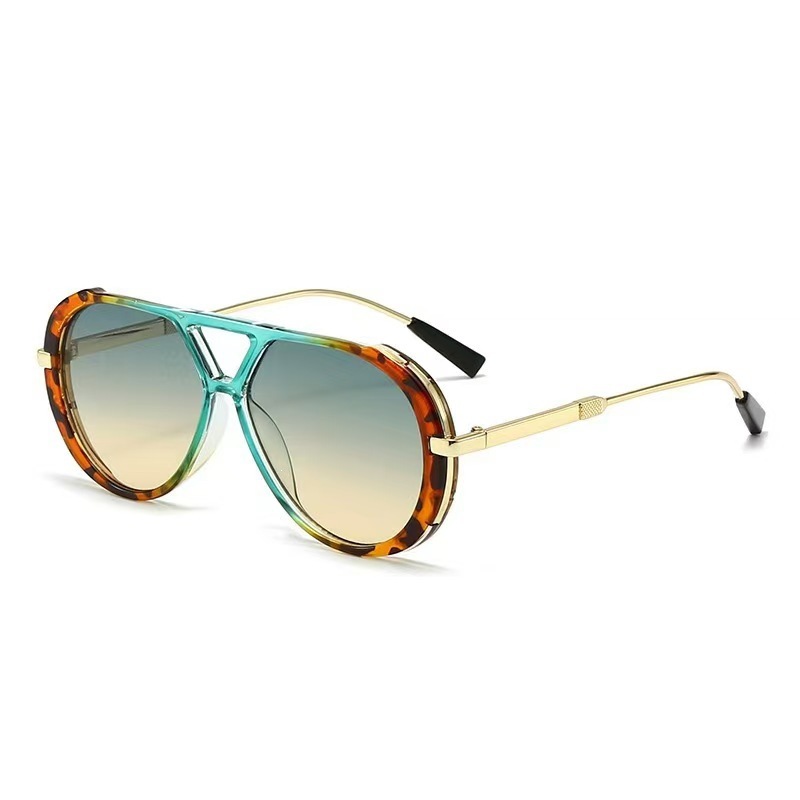
Oversized Double-Bridge Aviator Sunglasses
A fashion-led frame option for discussing material confirmation, gradient lens specifications, color samples, and private label packaging.
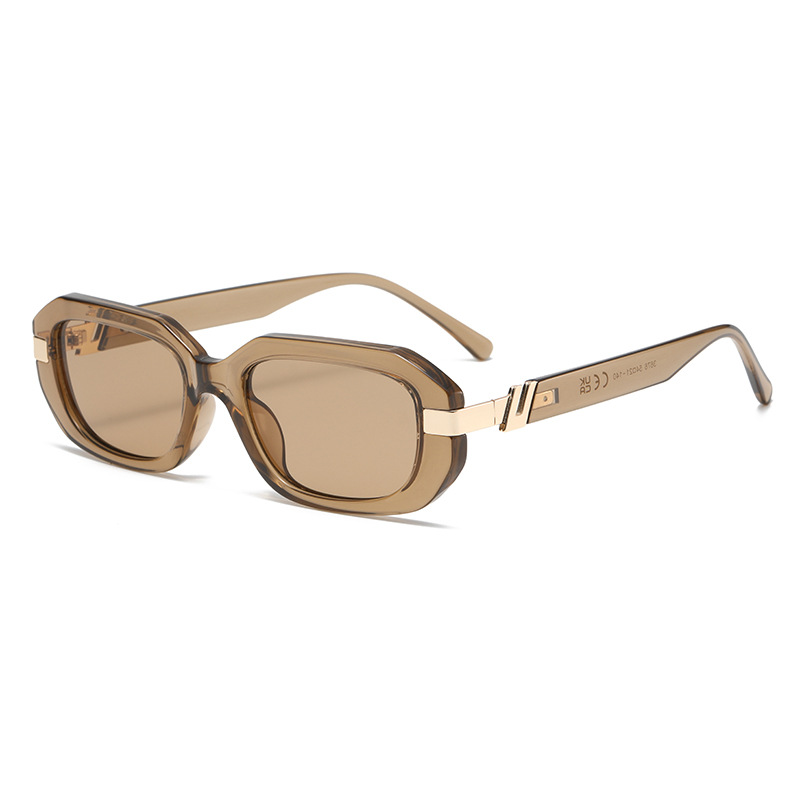
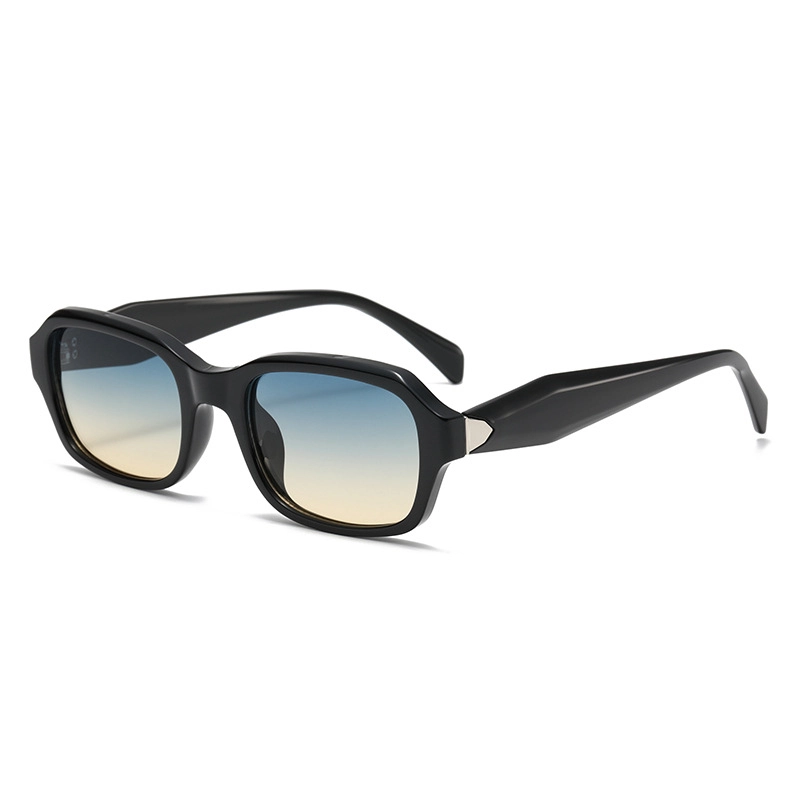
Small Square Vintage Sunglasses
A separate frame silhouette that buyers can use to evaluate dimension consistency, UV-protection documentation, logo options, and wholesale color assortment.
Frequently Asked Questions
What is a typical MOQ for custom sunglasses?
There is no single industry-wide minimum. MOQ changes with frame design, materials, lens options, branding, and packaging. Selected KARUSON product listings currently show a starting MOQ of 300 units. Ask for a style-specific quote and confirm whether colors can be combined.
How long does it take to produce private label sunglasses?
Lead time varies by sample type, production complexity, customization and shipping route. Selected KARUSON product listings give indicative stock sampling of 1–3 days, custom sampling of 10–15 days, and production of 25–35 days. These are not guaranteed project timelines; allow for revisions, testing, shipping and peak-season scheduling.
What compliance documents do sunglasses need for the US and EU?
For general-use nonprescription sunglasses, the EU PPE framework and relevant test standards should be evaluated for CE-marking obligations, while the United States has FDA requirements including impact-resistant lens rules. Ask for model-specific reports and confirm labeling and importer obligations; do not treat a generic certificate as proof for every variant.
Should I work with a manufacturer or a trading company?
Both can be suitable. Direct manufacturers may provide easier access to engineering and process details; trading companies may offer broader sourcing or consolidation. Evaluate actual factory access, quality accountability, communication, documentation, and delivered cost rather than assuming one business model is always superior.
Discuss Your Sunglasses OEM/ODM Project
KARUSON supports sunglasses and eyewear sourcing for brands, importers, distributors, and retailers. Share your target market, preferred models, estimated order quantity, customization needs and launch timing to request a model-specific manufacturing discussion.
A useful first RFQ includes sample requirements, lens and frame specifications, logo and packaging plans, target delivery date, and the compliance documents needed in your destination market.
Request a Sunglasses Manufacturing Quote →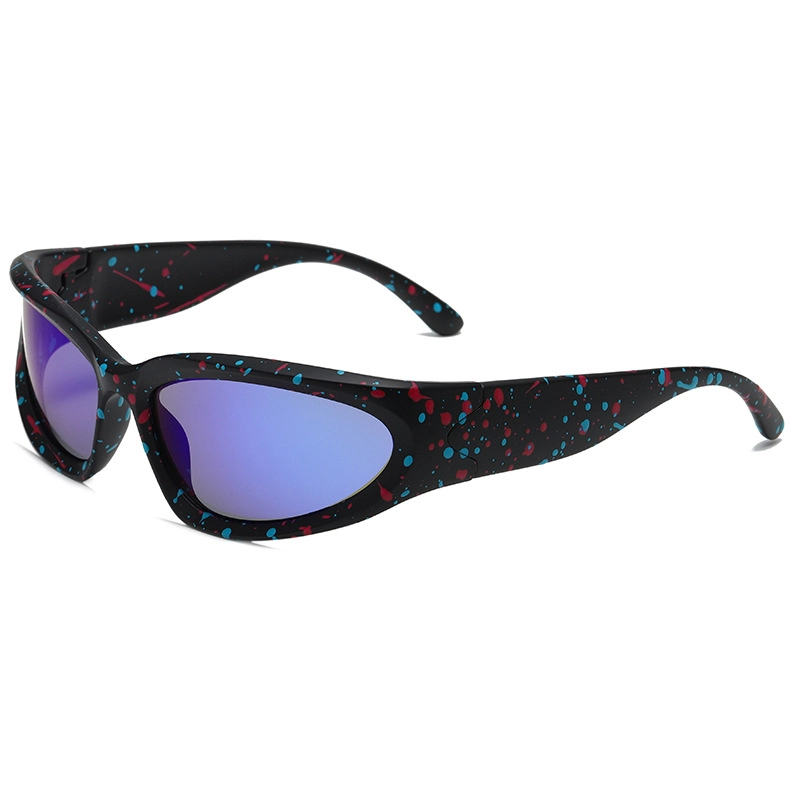

Facebook
Instagram
YouTube
TikTok
Linkedin