


KARUSON / PRIVATE LABEL EYEWEAR GUIDE
How to Start a Private Label Eyewear Brand: A 7-Step Guide
A practical roadmap for emerging eyewear brands, importers, distributors and retailers.
To start a private label eyewear brand, define your target customer and retail positioning, choose a manageable first collection, select frame and lens specifications, evaluate manufacturers, design brand applications and packaging, approve production samples and compliance, then place a controlled first order.
Private label often uses existing supplier frame designs with custom logos or finishes. Fully original frames may require additional tooling, development and investment. MOQ, testing needs and production time vary by model and destination market.
Building an eyewear brand is more than placing a logo on sunglasses. A clear market position, consistent product specifications, reliable samples and documented commercial terms can help prevent avoidable costs and launch delays. The seven stages below turn an initial eyewear idea into a practical sourcing and launch plan.
STEP 01 Define Your Target Market and Brand Positioning
Identify who will buy your products and where they will shop. A premium optical boutique, an online fashion label and a sports retail chain need different frame styles, materials, lens options and packaging. Your intended destination market should be known before planning product testing.
- Customer and channel: decide whether to focus on online shoppers, independent retailers, optical stores or distributors.
- Product focus: begin with sunglasses, optical frames or sports eyewear rather than an unfocused range.
- Positioning and retail price: compare competitor offers and work backward from the required margin.
- Brand language: choose a coherent shape, color and packaging direction.
- Market requirements: identify the destination country and relevant labelling and safety obligations.
Build a one-page sourcing brief showing frame references, target price, likely purchase quantity, lens requirements, target market and expected launch date. This makes supplier quotes easier to compare.
STEP 02 Build a Focused First Eyewear Collection
Too many styles and color combinations can complicate samples, inventory and quality control. Consider a small number of different silhouettes with a few versatile colors, then expand successful combinations after evaluating sales and returns.
Choose styles that support your sales channel
| Sales channel | First-collection priorities |
|---|---|
| Fashion e-commerce | Distinctive shapes, accurate product photos and manageable variants |
| Optical retailers | Precise dimensions, lens-fitting compatibility and documented specifications |
| Boutiques | Curated colorways, attractive packaging and consistent replenishment |
| Sports distributors | Fit, coverage, intended-use suitability and verified lens performance |
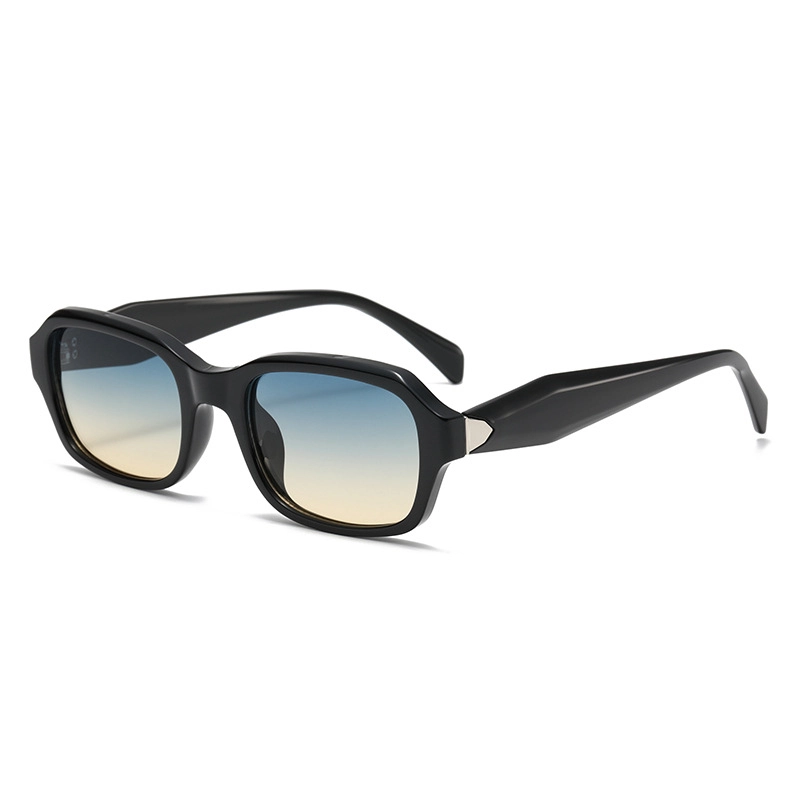
Explore the wholesale sunglasses collection for possible silhouettes, but confirm current colors, frame specifications and MOQ before planning multiple variations.
STEP 03 Select Frame Materials and Lens Options
Frame materials affect weight, comfort, finish and cost. Verify the actual components of each model: the front, temples, hinges and lenses may be made from different materials. Avoid inferring a frame's construction from its visual appearance.
| Frame material | Typical attributes | What to confirm |
|---|---|---|
| Polycarbonate (PC) | Lightweight and moldable | Actual frame construction, rigidity and finish |
| TR90 / TR-series resin | Often flexible and lightweight | Resin grade, fit and repeatability |
| Acetate | Layered color effects and a premium appearance | Genuine material, finishing and color consistency |
| Metal and mixed material | Slim profiles or decorative components | Alloy, plating, hinges and corrosion considerations |
Select lenses by their function, not color alone
UV protection, visible-light transmission, polarization, photochromic response and impact performance describe different properties. Gradient tint does not establish polarization or UV performance. Ask for evidence applicable to the exact lens and frame combination.
The CR-39 versus polycarbonate lens guide provides further material comparisons.
STEP 04 Find and Evaluate an Eyewear Manufacturing Partner
Compare suppliers based on consistent samples, technical documentation, manufacturing control, responsiveness and clarity of pricing—not just the lowest unit cost. Ask which operations are performed in-house and which are outsourced.
Questions to include in your first RFQ
- What is the MOQ by model, frame color, lens type and packaging specification?
- Which ready-stock and customized sample options can be provided?
- How is the golden sample approved and used during bulk inspection?
- What exact logo marking, color, packaging and tooling choices are possible?
- Which product-specific test reports are available for the destination market?
- What are the payment milestones, lead-time start conditions, inspection terms and Incoterms?
Use the companion eight-question sunglasses manufacturer evaluation guide to review supplier risk in more detail. The private label OEM sunglasses sourcing FAQ covers additional questions about wholesale purchasing.
STEP 05 Develop Branding, Customization and Packaging
For a first collection, logo customization on an established frame can be more straightforward than designing a new frame. Confirm logo artwork, placement and application method on an approved sample. Packaging must be suitable for your sales channel and protect eyewear during transport.
- Logo and trademark: confirm rights to use the name and artwork, logo dimensions and placement.
- Branded packaging: discuss cases, pouches, cleaning cloths, inserts, retail boxes and protective cartons.
- Customization limitations: check availability and minimums for each finish, lens and logo method.
- Original tooling: establish ownership, maintenance, exclusivity and confidentiality in writing.
- Quote transparency: distinguish one-time tooling charges from per-unit expenses.
Review the differences in OEM versus ODM eyewear manufacturing and consider KARUSON customization options when preparing the product brief.
STEP 06 Approve Samples and Prepare for Market Compliance
Review physical samples for fit, dimensions, colors, finish, hinges, lens installation, logo position and packaging. Retain a final approved reference sample and signed specification sheet for production and inspection.
Pre-production sample checklist
- Check frame alignment, physical size and temple function.
- Verify material composition and lens performance claims.
- Compare logo finish, retail presentation and packaging.
- Confirm any requested tint, gradient or lens category.
- Agree on inspection tolerances, acceptance criteria and change-control procedures.
Compliance differs by destination market
General-use sunglasses sold in the EU may need assessment under Regulation (EU) 2016/425 and relevant standards such as ISO 12312-1. In the United States, see the FDA guidance on nonprescription sunglasses, including applicable impact-resistance obligations. Other eyewear types can require different testing.
California Proposition 65 warning requirements depend on the applicable chemical exposures and rules rather than the mere use of PC or another material. A brand or importer should verify labeling, testing and documentation obligations for its specific market.
For practical lens categories, see the sunglass lens tint and VLT guide.
STEP 07 Place Your First Order and Build a Reorder Plan
Keep the first order aligned with a reasonable sales forecast. Confirm SKU quantities, approved samples, product specifications, packaging, quality criteria, lead-time milestones, shipment conditions and payment terms in writing.
Plan backward from the date you need finished goods at your warehouse. Allow for sample revisions, production, inspection, testing if required, freight and customs clearance. After launch, monitor sell-through by style and color, returns and customer feedback before expanding.
Private Label Eyewear Startup Cost Breakdown
There is no universal fixed startup budget. Request an itemized quotation and calculate total landed cost before comparing suppliers.
| Cost category | What to include |
|---|---|
| Frames and lenses | Materials, specifications, colors and unit quantity |
| Sampling | Stock or custom samples, revisions and shipping |
| Branding and tooling | Logo setup, marking, mold development and design changes |
| Packaging | Cases, cloths, inserts, retail boxes and cartons |
| Testing and labeling | Product-specific reports and market requirements |
| Freight and import | Incoterms, shipping, duties, taxes and clearance |
| Launch and inventory | Product photography, listings, marketing and returned stock reserve |
From Product Idea to First Bulk Order
| Stage | Main deliverable | Buyer checkpoint |
|---|---|---|
| Product brief | Target audience, price and specifications | Confirm destination market |
| RFQ | Comparable quotations | Check MOQ, tooling and payment terms |
| Samples | Product samples and revisions | Confirm materials, fit and lenses |
| Approval | Golden sample and acceptance criteria | Sign off final specifications |
| Compliance review | Applicable reports and labels | Confirm target-market requirements |
| Production | Manufacturing plan and inspection | Verify milestones and quality controls |
| Shipment and launch | Finished goods and listings | Track delivery, sell-through and returns |
Frequently Asked Questions
How much does it cost to start a private label eyewear brand?
It depends on frame and lens specifications, MOQ, branding, packaging, sampling, testing, shipping and launch costs. Ask for an itemized quote and estimate total landed cost rather than using an unverified fixed amount.
What is the difference between private label and custom design eyewear?
Private label usually modifies existing frames with a logo, colors or packaging. Fully custom designs may need new tooling, technical development, longer timelines and clear design-ownership terms.
Can I mix different lens types within one eyewear order?
Possibly, but lens compatibility, available configurations and minimum quantities depend on the specific frame and supplier. Confirm each requested combination before placing an order.
What is a typical MOQ for private label eyewear?
There is no single standard MOQ. Some KARUSON sunglasses models list starting quantities around 300 units, while optical-frame and lens listings may differ. Confirm quantities for each model, color and customization method.
How long does it take to launch a private label eyewear collection?
The schedule depends on supplier selection, sample development, revisions, testing, production, packaging and shipping. Request an agreed milestone plan and allow additional time for customs and launch preparation.
Start Your Private Label Eyewear Project with KARUSON
Share your target market, frame references, lens options, estimated order quantity, branding requirements and launch timing. KARUSON can review compatible OEM/ODM sourcing options and discuss samples and quotes.
Request a Private Label Eyewear Quote →Explore KARUSON OEM & ODM Services.

Facebook
Instagram
YouTube
TikTok
Linkedin