


How are polarized lenses manufactured and tested?
- 1. How do factories laminate polarizing film to plastic lenses without bubbles, delamination, or loss of polarization under heat and humidity?
- 2. How can I verify a supplier’s “polarized” claim with measurable metrics before placing a bulk order?
- 3. For wraparound sunglass designs, how do factories maintain polarization across a curved surface without causing tint shifts or birefringence artifacts?
- 4. What specific lab tests and standards should I require from an eyewear factory to ensure lenses meet safety and optical performance standards?
- 5. What are realistic MOQs, tooling costs, and lead times for custom polarized lenses and frames at a qualified eyewear factory?
- 6. What are the most common root causes when polarized lenses fail in the field (e.g., loss of polarization, peeling mirror coatings, scratches), and how do factories mitigate these problems?
- Concluding summary: advantages of choosing a qualified eyewear factory like Karuson
Eyewear Factory Guide: How Polarized Lenses Are Manufactured and Tested
This article addresses six specific, pain-point oriented questions buyers and newcomers often search for when working with an eyewear factory. It embeds factory terminology—lens lamination, polarizing film, UV400, AR coating, injection molding, CNC blocking, optical QC—and cites the standards and tests you should request when sourcing polarized sunglasses and lenses.
1. How do factories laminate polarizing film to plastic lenses without bubbles, delamination, or loss of polarization under heat and humidity?
Why this matters: Many buyers receive polarized sunglasses that delaminate, show haze, or lose polarization after a few months. These are usually manufacturing or material-selection issues, not inevitable wear.
Factory-level solution (step-by-step):- Material selection: High-quality polarizing sheets for sunglass lenses are typically stretched polyvinyl alcohol (PVA) films impregnated with iodine or dichroic dyes. For plastic lenses the common substrates are cast CR-39, thermally formed polycarbonate, and advanced optical monomers for cast lenses. Choose a polarizer film rated for heat and humidity compatible with your substrate (ask for datasheets).- Adhesive choice: Factories use UV-curable or thermosetting polyurethane/urethane adhesives formulated for optical lamination. These adhesives have controlled refractive index matching to reduce internal reflections and are engineered for low hygroscopic expansion.- Clean-room lamination: Effective lamination requires a Class 1000–10000 dust-reduced environment. Surfaces must be plasma- or corona-treated for consistent adhesive wetting.- Vacuum lamination: To avoid bubbles, manufacturers perform lamination under vacuum or controlled low-pressure roll-lamination to remove trapped air before curing.- Temperature and cure profile: Adhesives are cured under specific UV or thermal profiles. Improper cure causes weak bonding and higher delamination risk—ask suppliers for cure charts and post-cure humidity/temperature test data.- Stress control: Plastic lenses are susceptible to residual stress that causes birefringence and can alter polarization. After lamination many factories perform an annealing step (controlled heat soak) and subsequent mechanical stress-relief (temper or controlled cooling) to stabilize the lens.- Accelerated aging verification: Ask for humidity and temperature cycle tests (e.g., 85°C/85% RH for a set duration or a similar industry-accepted accelerated aging protocol) to prove that polarization and adhesion remain intact.
Buyer checklist: request polarizing film spec sheets, adhesive technical data, vacuum-lamination process details, and accelerated aging/test reports showing polarization efficiency and bond integrity after thermal/humidity cycles.
2. How can I verify a supplier’s “polarized” claim with measurable metrics before placing a bulk order?
Why this matters: Many low-cost suppliers label lenses as 'polarized' but the optical performance is poor—low polarization efficiency, wrong axis, or inadequate UV blocking.
Measurable verification steps:- Polarization efficiency (degree of polarization): Request a spectral polarization-efficiency curve measured with a calibrated spectrophotometer or polarimeter. Quality polarized sunglasses typically show ≥95–98% polarization efficiency across visible wavelengths; professional products may report ≥99% at target wavelengths.- Axis orientation and uniformity: For wrap or curved lenses, the polarization axis must be aligned to the wearer’s line of sight. Ask for a map or measurement showing axis deviation across the lens surface (in degrees). Good factories can supply axis alignment tolerance (e.g., ±2°).- Visible Light Transmission (VLT) and filter category: Request a spectral transmittance curve (380–780 nm) and confirm the filter category per ISO 12312-1 (or your regional standard). VLT percentage determines darkness and performance for driving vs. outdoor sports.- UV blocking (UV400): Ask for UV transmittance data showing blocking to 380–400 nm as required. UV400 certification is a standard buyer requirement.- Optical power and centration: For prescription polarized lenses, request lensometer/power maps and centering data (optical center position), plus wavefront measurements if available.- Lab accreditation and traceability: Prefer suppliers that provide test reports from an ISO/IEC 17025-accredited laboratory or in-house instruments calibrated to traceable standards. Ask for calibration certificates for spectrophotometers and polarimeters.
Buyer checklist: Require a sample test report including spectral transmittance, polarization efficiency, axis mapping, VLT, and UV blocking. Specify acceptable tolerances in the PO.
3. For wraparound sunglass designs, how do factories maintain polarization across a curved surface without causing tint shifts or birefringence artifacts?
Why this matters: Wrap frames are popular but create manufacturing complexity—flat polarizing film applied to a curved substrate can cause uneven axis orientation, stress birefringence, and visible color shifts.
Factory methods to manage curvature:- Pre-forming vs. post-lamination forming: Two approaches exist. Option A: thermoform the plastic substrate first (block and curve the blank), then lamina te the polarizing film to the already-curved lens. Option B: cast the lens by pouring monomer around a pre-cut polarizing film (cast-in-place) so the film conforms as the lens polymerizes. Casting can yield very uniform results if the polarizer tolerates the polymer chemistry and cure heat.- Use of curved polarizing film: Some suppliers produce polarizing films pre-stretched or shaped to match specific curvature radii to maintain axis alignment.- Multi-zone lamination technique: For complex curvature, advanced factories use segmented lamination tools or heated roll lamination with controlled stretch to avoid wrinkles and axis misalignment.- Birefringence management: To avoid stress-induced birefringence (which causes rainbow or color shifts when viewed through polarizers), manufacturers control molding parameters, annealing schedules, and use low-stress substrates (cast CR-39 generally exhibits lower stress than injection-molded polycarbonate).- Optical metrology: Factories performing high-end work will provide retardation maps (birefringence maps) measured with polariscope imaging to demonstrate acceptable stress levels across the lens.
Buyer checklist: For wrap designs, require samples made with the intended curvature and ask for axis mapping and birefringence (retardation) data. If you plan to use polycarbonate for impact resistance, accept that more advanced stress-relief steps and higher-grade polarizers are necessary.
4. What specific lab tests and standards should I require from an eyewear factory to ensure lenses meet safety and optical performance standards?
Why this matters: Buyers often accept generic “we test to standards” statements. What matters is which tests and what pass/fail criteria apply to your product and market.
Key standards and tests to request (with purpose):- ISO 12312-1 (sunglasses): spectral transmittance, filter categories (VLT ranges), and UV protection requirements.- ANSI Z80.3 (or local prescription lens standards): optical power tolerance and prescription lens specifications.- EN ISO 12312 (European) and EN 166/EN 1836 (where applicable): optical and mechanical requirements for sunglasses and protective eyewear.- Polarization/polarimeter measurement: spectral polarization-efficiency across 380–780 nm.- Spectrophotometer transmittance scan: full visible and UV spectrum to map VLT and UV blocking.- Haze and clarity (ASTM D1003): measurement of light scattering within the lens.- Abrasion resistance (Taber abrasion, ASTM D1044 or manufacturer's coating test): for hard-coat and AR coatings.- Coating adhesion (cross-cut adhesion or tape test per ISO 2409), salt spray/corrosion (ASTM B117) for metal components, and chemical resistance tests for lens coatings.- Impact resistance: choose the correct test for product category—ANSI Z87.1 (safety), EN 166 (mechanical resistance), or ISO ballistic/impact tests used for sports eyewear.- Environmental/aging: accelerated UV and humidity exposure (e.g., 85°C/85%RH), thermal cycling, and outdoor weathering tests.- Traceability and calibration: ask that instruments be calibrated with a traceable chain to national standards and that reports identify lot numbers and sample IDs.
Buyer checklist: Specify which standards apply to your target market in your request for quotation. Require a consolidated test report (spectral + polarization + mechanical + environmental) for approval samples, ideally from an ISO/IEC 17025 lab or the supplier's accredited lab with calibration records.
5. What are realistic MOQs, tooling costs, and lead times for custom polarized lenses and frames at a qualified eyewear factory?
Why this matters: Pricing surprises, long lead times, and hidden tooling fees disrupt product launches. Knowing typical ranges helps you plan and negotiate.
Typical ranges (these are industry-typical guidelines—actuals vary by factory, region, and customization level):- Custom polarized lens tooling: If you require unique lens molds (injection-molded optical lenses), mold/tooling for lenses can range from US$4,000 to US$20,000+ depending on complexity, cavity count, and material. Cast lens cutting dies and blocking tools are cheaper—often US$500–3,000 depending on CNC complexity.- Frames tooling: Injection molds for frames are often the biggest upfront cost—single color single cavity molds start around US$6,000–12,000 in mid-tier factories; multi-cavity or family molds can be US$20,000–60,000+.- Minimum order quantities (MOQs): For standard stocked polarized lenses and common frames, MOQs can be low (hundreds). For custom-molded lenses or bespoke frame molds, small-batch custom runs often have MOQs of 1,000–5,000 pieces per SKU to amortize tooling and setup. Some factories will offer low-volume prototypes (10–200 pcs) at higher per-unit prices.- Lead times: Sample/prototype phase for lenses and coatings can take 2–6 weeks. Mass production lead times typically 6–12 weeks after sample approval for stocked dies; with custom molds, add 6–12 weeks for tooling. Coated lens batches (AR + hydrophobic + mirror deposition) add additional processing days to weeks depending on coating oven capacity and vacuum-coating schedule.
Buyer checklist: Request a detailed cost breakdown (tooling amortization per unit at different volumes), clear MOQ per SKU, prototype pricing, and estimated lead times. Negotiate phased deliveries to reduce inventory risk and consider shared tooling or modular molds to lower costs.
6. What are the most common root causes when polarized lenses fail in the field (e.g., loss of polarization, peeling mirror coatings, scratches), and how do factories mitigate these problems?
Why this matters: Understanding root causes helps you demand proper QA and warranty provisions that actually reduce returns.
Common failure modes and factory mitigations:- Delamination/peeling: Cause—poor adhesive cure, contamination, or thermal/humidity cycles. Mitigation—vacuum lamination, specified adhesives, clean-room processing, and post-lamination accelerated aging tests.- Loss of polarization or axis drift: Cause—mechanical stress, excessive heat during forming, or low-quality polarizer film. Mitigation—use higher-grade polarizing film, controlled forming/annealing steps, and post-process polarization-efficiency checks.- Mirror coating peeling: Cause—inadequate surface prep, poor adhesion layer, or exposure to oils/chemicals. Mitigation—proper substrate pretreatment, use of physical vapor deposition (PVD) with robust adhesion layers, and final protective topcoat (hard coat). Require adhesion test reports.- Scratches on lenses: Cause—insufficient hard-coat quality or inadequate packaging. Mitigation—multi-layer hard-coat + AR coatings baked per spec, Taber abrasion testing, and careful packaging and handling procedures.- Corrosion of hardware (hinges, screws): Cause—non-compliant metal plating or salt exposure. Mitigation—use of stainless steel or corrosion-resistant plating and ASTM B117 salt-spray test reports.
Warranty and QC recommendations: Ensure the factory provides batch traceability, rejects rate metrics, and a clear warranty/returns policy. Require pre-shipment inspection reports including polarization efficiency, adhesion checks, and sample photos of the batch.
Concluding summary: advantages of choosing a qualified eyewear factory like Karuson
Working with a qualified eyewear factory that follows documented optical and manufacturing standards reduces defects, ensures consistent polarization performance, and gives predictable lead times. Advantages include traceable material sourcing (polarizing film and adhesives), factory-level vacuum lamination and AR/mirror vacuum deposition, calibrated optical QC (spectrophotometer and polarimeter), stress-relief annealing for wrap lenses, and compliance testing to ISO 12312-1, ANSI/EN standards, and ISO 9001 quality systems. These capabilities translate into higher polarization efficiency (>95–98%), stable UV400 protection, consistent VLT and tint, lower returns, and better brand reputation.
For a tailored quote, specification review, or sample testing from our eyewear factory, contact us at www.karusonco.com or email nicole@karusonco.com. We can provide sample test reports, ISO/IEC 17025 lab certificates, and detailed cost/lead-time breakdowns for project planning.
Why Sourcing from a China Eyewear Factory is the Strategic Choice for Global Brands
OEM vs. ODM: Which Partnership Model is Best for Your Eyewear Business?
2026 Eyewear Trend Forecast: Colors, Shapes, and Textures to Watch
About OEM&ODM
How long does it take to make samples?
Samples are typically completed within 7–15 working days if available molds are present.
What is your production lead time?
Mass production generally takes 30–45 days after sample approval.
About Products
What is the MOQ?
Usually ≥100, depending on the model.
How do you ensure product quality?
Full QC process, factory testing, and international certifications.
Do you support OEM/ODM?
Yes, our R&D and design teams support full customization.
You May Also Like
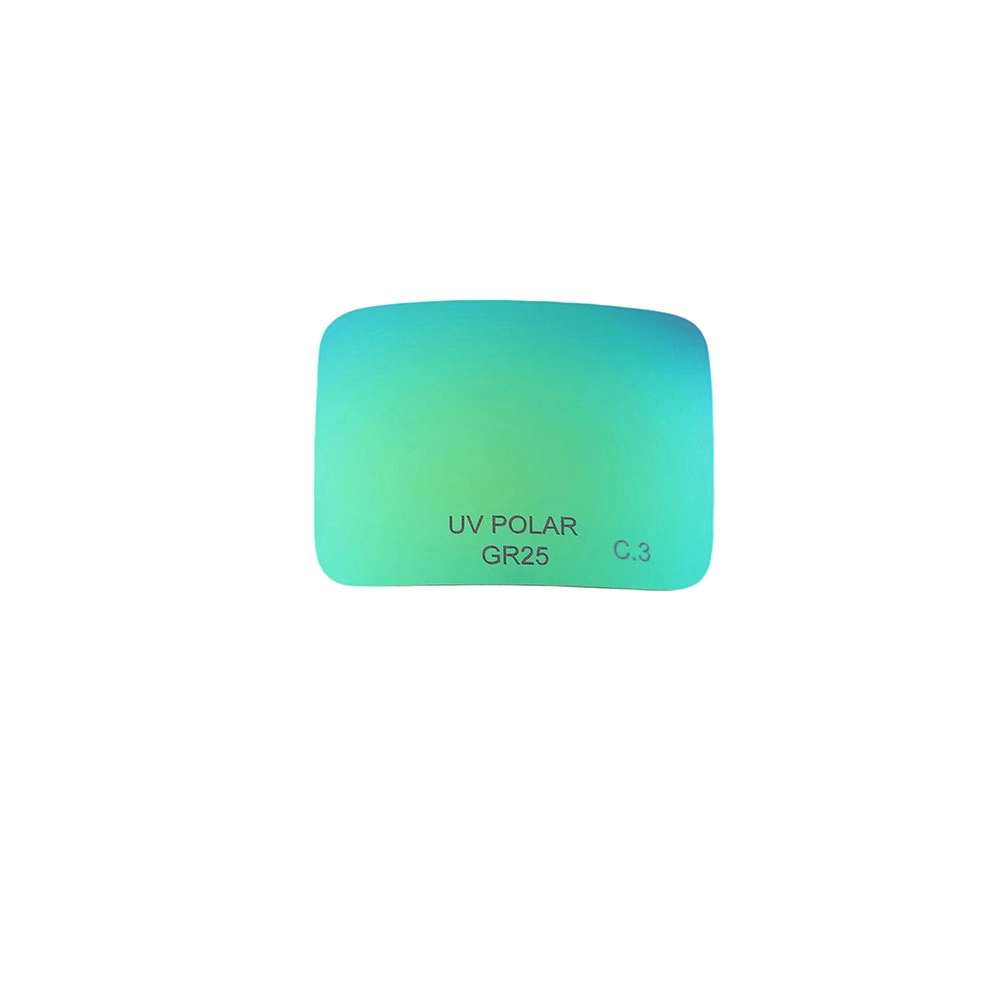
High-Definition Visual Clarity: Premium CR-39 & Polycarbonate Lenses
Experience the precision of a professional custom glasses lenses manufacturer. Karuson polarized lenses are engineered with a 99.9% high-polarization effect to provide unparalleled visual definition and glare reduction. By strategically absorbing reflected light through a high-stability PVA layer, our lenses are optimized for high-intensity outdoor environments, including maritime sailing, hunting, and alpine skiing. Furthermore, our specialized treatment ensures the lenses remain durable and distortion-free even in environments with high heat and humidity.
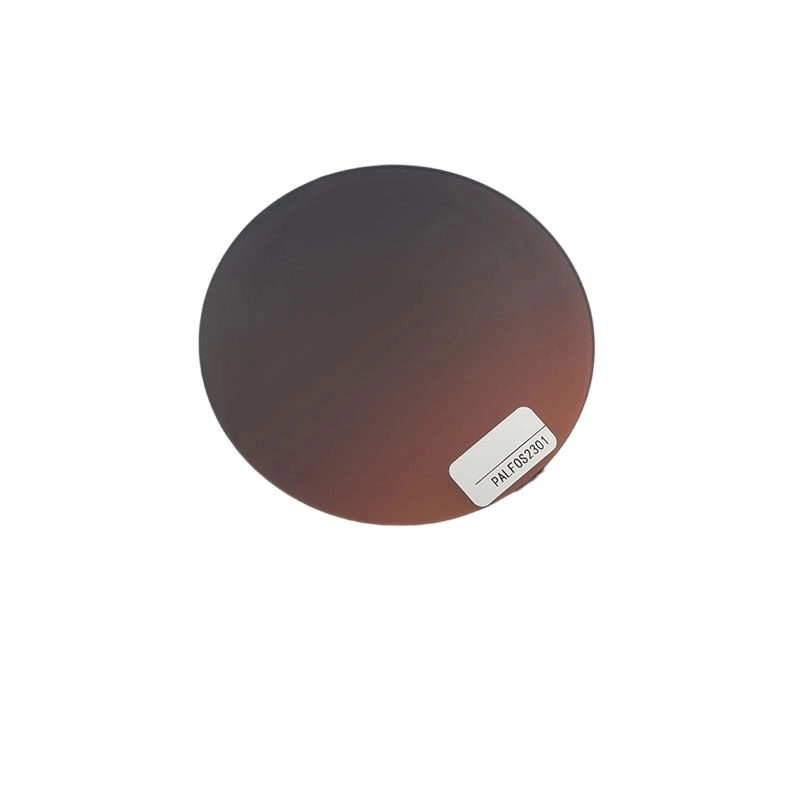
Advanced Sunglasses Solutions: Polarized Lenses with Anti-Seawater Coating
As a versatile photochromic lenses manufacturer and high-performance optics expert, Karuson crafts high-quality Polycarbonate (PC) Gradient Tinted Lenses that perfectly balance aesthetics with advanced protection. By fusing the ultra-lightweight and impact-resistant properties of PC material with precision gradient tinting technology, we deliver a durable visual solution that enhances clarity and comfort for urban lifestyles and outdoor sports. These lenses not only optimize visibility across varying light conditions by reducing glare but also offer a sleek, customizable design—allowing global brands to blend practical eye protection with a modern, fashion-forward accessory.
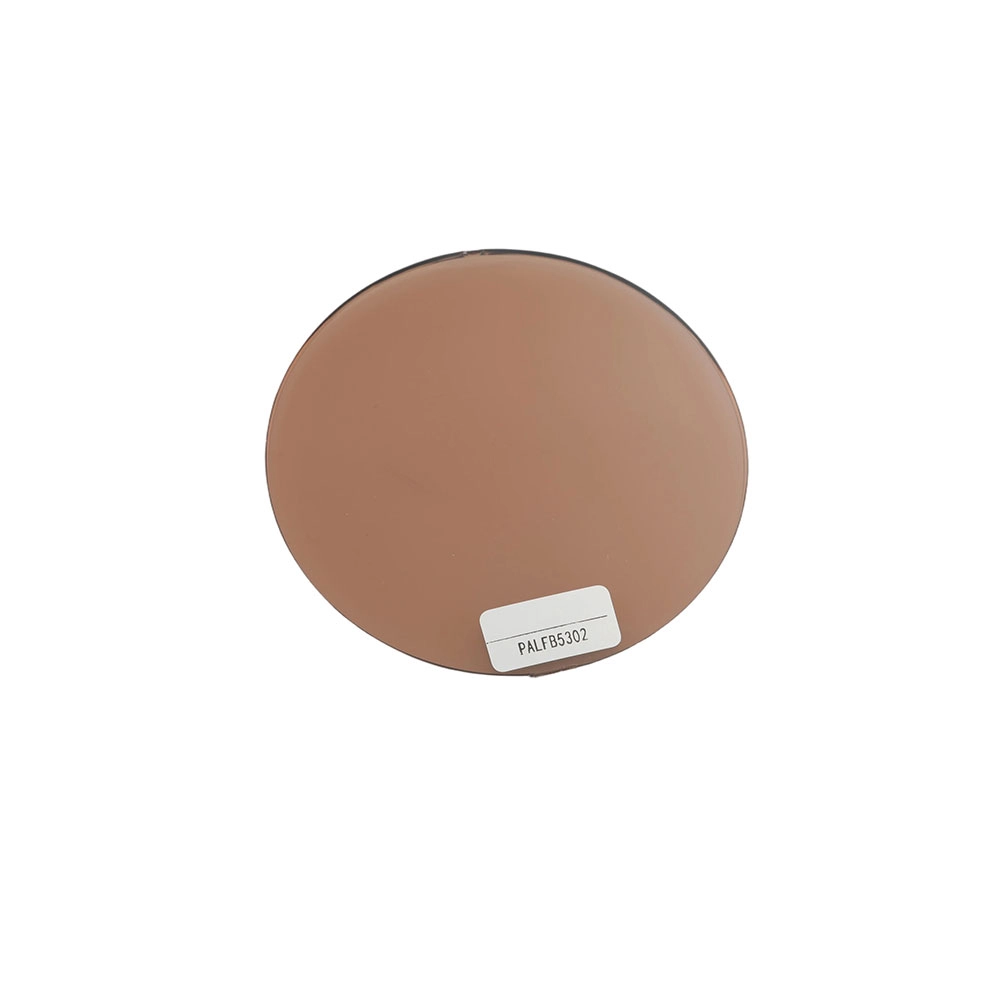
Why Quality Lenses are the Core of Your Eyewear Brand’s Reputation
As a premier high-definition glasses lenses manufacturer, Karuson crafts high-quality Polyamide (PA) Nylon Tinted Lenses that represent the perfect synergy of ultra-lightweight performance and high-toughness durability. By integrating professional-grade tinting technology with advanced material science, we offer a lens solution that delivers exceptional optical clarity alongside vibrant, fashionable color expression. Designed for both daily commutes and trendy lifestyle matching, these lenses provide a comfortable and aesthetic visual experience, serving as a high-performance fashion accessory for the modern, style-conscious consumer.
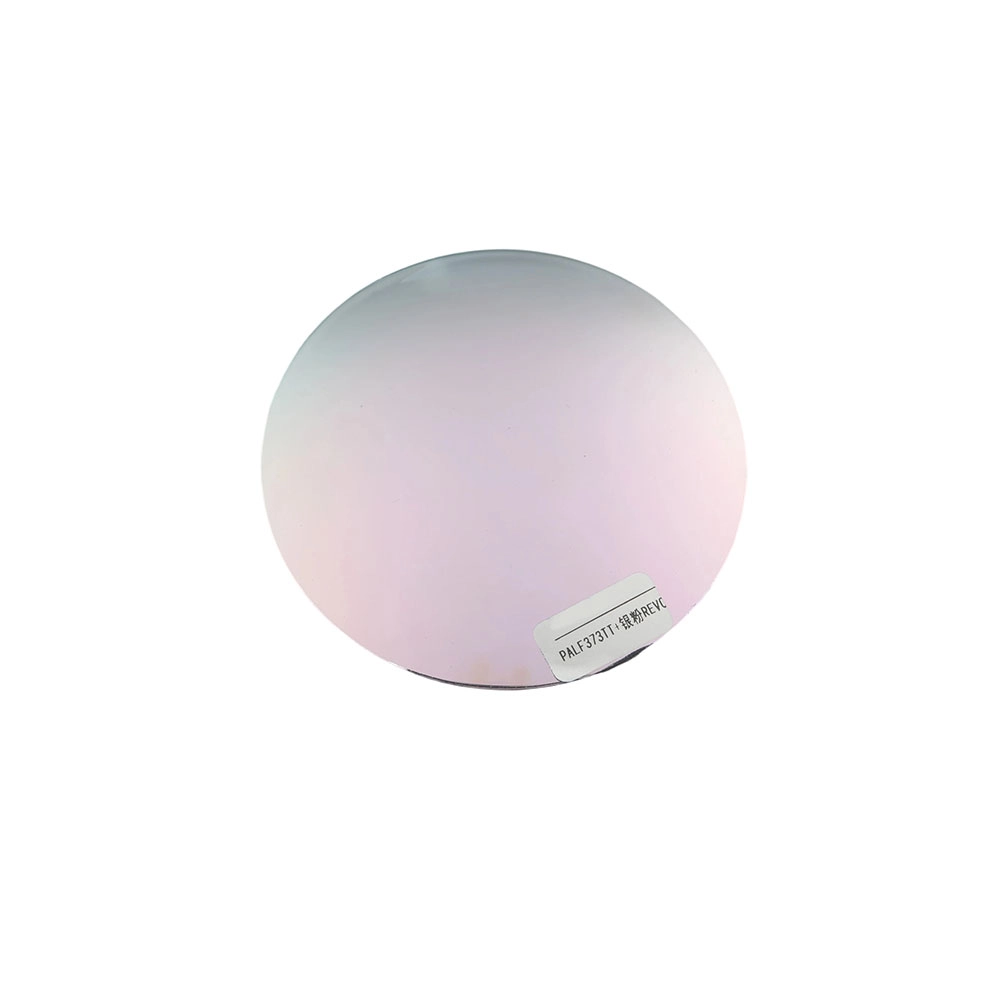
Dynamic Adaptation: Next-Gen Photochromic Lenses for Indoor & Outdoor Use
As premier eyeglass lenses manufacturers, Karuson crafts high-performance PC polarized coated lenses that seamlessly integrate lightweight, impact-resistant polycarbonate with advanced optical film technology. These lenses are engineered to achieve superior glare reduction and enhanced visual definition while offering a spectrum of stylish, customizable tints. Optimized for professional driving, outdoor sports, and urban lifestyles, our manufacturing process ensures that harmful reflections from water, roads, and snow are effectively filtered out. The result is a durable, fashion-forward visual solution that perfectly balances essential eye protection with high-end aesthetic appeal—making them the ideal choice for brands seeking to merge practicality with a modern fashion statement.
Get in touch with us
If you have any comments or good suggestions, please leave us a message; later our professional staff will contact you as soon as possible.
NEW DIMENSIONS IN EYEWEAR
Contact KARUSON
Email:
WhatsApp/Phone:
Address:
331 Section B, WanJia Creative Park , No. 1 BUXIA Road ,Tianhe District, Guangzhou City, Guangdong Province, China.

© 2026 KARUSON. All Rights Reserved.
Facebook
Instagram
YouTube
TikTok
Linkedin