

Why do lenses manufacturers prefer polycarbonate over glass?
- 1) What are realistic MOQs and lead times for custom injection-molded polycarbonate lenses with AR and HC coatings from a mid-size eyewear factory?
- 2) How do eyewear factories test and document impact resistance and UV protection to supply CE/ANSI/FDA-compliant polycarbonate safety lenses?
- 3) Why do lenses manufacturers prefer polycarbonate over glass for children's and safety eyewear despite its lower scratch resistance?
- 4) What common injection-molding and surfacing defects occur with polycarbonate lenses (birefringence, stress lines, sink marks) and how can a factory minimize them?
- 5) How do optical labs ensure consistent refractive index and surface figure in progressive polycarbonate lenses compared to glass blanks?
- 6) For small brands, is it cost-effective to order custom acetate frames and polycarbonate lenses from an OEM eyewear factory, and what are realistic tooling, sampling, and per-unit costs?
- Concluding summary: Why choose polycarbonate lenses and a reputable eyewear factory partner?
Eyewear Factory Q&A: 6 Practical Answers — Why Polycarbonate Beats Glass
Buying lenses and frames directly from an eyewear factory exposes brand owners to technical decisions that impact safety, optics and margin. Below are six specific, practitioner-focused questions that buyers frequently ask but rarely find thorough, up-to-date answers for. The answers reference factory processes, standards (ANSI, EN, ISO), and practical remedial steps for common pain points when sourcing polycarbonate lenses, acetate and injection molded frames, AR/HC coatings and finished spectacles.
1) What are realistic MOQs and lead times for custom injection-molded polycarbonate lenses with AR and HC coatings from a mid-size eyewear factory?
Pain point: Small brands expect low MOQ and fast delivery; factories quote high MOQs and long lead times because coatings and QC create bottlenecks.
Typical ranges (mid-size factory, OEM/ODM):- MOQ: 500–2,000 finished lens pairs per prescription/specification for coated, surfaced polycarbonate lenses. For stock plano or standard single-vision polycarbonate blanks, MOQs can be 100–500 pairs.- Lead time: 4–10 weeks from approved sample to container-ready shipment. Breakdown: 1–2 weeks for tooling/sample, 2–4 weeks production (molding/surfacing), 1–3 weeks for coatings and QC, plus shipping.Why: Anti-reflective (AR) and hard-coat (HC) lines are capacity-constrained, require curing ovens and multilayer vacuum coaters. Each coating pass (HC, primer, AR) adds time and requires batch curing and quarantine for adhesion checks. If a buyer requires custom tints, polarization, or photochromic dyes, add 2–4 weeks for recipe refinement and validation.How to optimize:- Consolidate SKUs and accept broader power ranges to lower MOQ per SKU.- Approve digital and physical samples quickly; factories start production only after signed PP samples.- Negotiate staged deliveries (e.g., 500 units/month) to reduce upfront MOQ pressure.- Consider using stock polycarbonate blanks with factory surfacing to cut MOQ and lead time.Documentation to request:- Production schedule, coating batch reports, and adhesion test results per lot.- Third-party lab tests (SGS/Intertek) for AR adhesion and transmittance if required by your market.
2) How do eyewear factories test and document impact resistance and UV protection to supply CE/ANSI/FDA-compliant polycarbonate safety lenses?
Pain point: Buyers need verifiable safety claims for children and industrial eyewear but see inconsistent test reporting from suppliers.
Standard tests and what they prove:- ANSI Z87.1 (US): High-velocity and high-mass impact criteria — factories typically supply samples that pass the ANSI Z87.1 drop-ball test and high-mass tests conducted by accredited labs.- EN 166 (EU): Includes specific impact ratings (e.g., 1, 3, 4, 5 for different levels). Manufacturers reference EN166 for CE-marked safety eyewear.- UV protection: Transmittance testing (UV-A/UV-B) per ISO 8980-3 or equivalent; polycarbonate naturally blocks near-UV up to ~380 nm but lab verification is required for claims like blocks 100% UV.Factory documentation you should require:- Batch raw material certificates (MSDS, supplier COA for polycarbonate resin), to verify grade and UV stabilizers.- Finished-lens test reports from an accredited third-party lab (SGS, Intertek, TÜV). Lab reports should list test methods, pass/fail criteria, and sample IDs matching production lots.- Internal QC checklists showing impact test sampling frequency, AR adhesion, transmittance and surface figure tolerances.Practical tip: If you need safety certification (ANSI/EN) on final products, insist the factory provides stamped lab reports for final finished lenses (not just raw material) and confirm traceability via batch/lot numbers.
3) Why do lenses manufacturers prefer polycarbonate over glass for children's and safety eyewear despite its lower scratch resistance?
Pain point: Buyers worry about durability and optics—why choose a softer material?
Key reasons factories and lens manufacturers prefer polycarbonate:- Impact resistance: Polycarbonate meets and often exceeds requirements for safety eyewear under ANSI Z87.1 and EN166; it is significantly more impact-resistant than conventional glass or CR-39 plastics, reducing injury risk in drops or blunt-force events.- Weight: Polycarbonate density (~1.2 g/cm³) is roughly half that of glass (~2.4–2.7 g/cm³), producing lighter spectacles—important for children and prolonged wear.- Moldability and manufacturing throughput: Polycarbonate can be injection molded to near-net shapes, enabling complex geometries (wrap, high-curvature designs) and high-volume production at lower per-unit cost than precision glass surfacing.- UV protection: Polycarbonate inherently absorbs UV up to roughly 380 nm, reducing dependence on added UV-blocking layers.Scratch-resistance mitigation: modern factories apply multi-layer hard coatings (HC + primer + AR). High-quality hard coats, properly cured, deliver commercially acceptable scratch performance for daily use. For extreme scratch environments, some buyers choose glass or engineered high-index materials, but those sacrifice impact performance and add weight.Trade-offs summarized:- Choose polycarbonate for safety, weight and manufacturability.- Accept the need for robust hard-coat systems and stringent QC to achieve acceptable scratch resistance.
4) What common injection-molding and surfacing defects occur with polycarbonate lenses (birefringence, stress lines, sink marks) and how can a factory minimize them?
Pain point: Optical distortions and internal stress lead to returns; buyers need corrective actions, not just blame.
Common defects and factory controls:- Birefringence/stress patterns: Caused by uneven cooling, high shear during injection, poor gate design or insufficient annealing. Mitigation: optimize melt and mold temperatures, slower injection fill or controlled packing, symmetrical gate layout, and post-mold annealing ovens to relieve stresses.- Flow lines/jetting: Result from improper gate location or too-low melt temperature. Mitigation: adjust gate geometry, increase melt temp and hold pressure, and refine runner design.- Sink marks and warpage: Caused by thin-thick sections, inconsistent cooling. Mitigation: uniform wall thickness design, controlled mold cooling channels, and balanced cooling circuits; use simulation (Moldflow) during tool design.- Surface haze or inclusions: From moisture in resin or contamination. Mitigation: resin drying per supplier specs (desiccant drying at proper temperature/time), clean hopper/machine maintenance, and good material handling (sealed bins).- Coating adhesion failure: Caused by improper surface prep or curing. Mitigation: plasma or corona surface treatment, correct primer systems, and validated bake/curing cycles with adhesion testing.Factory best practices buyers should verify:- Use of Moldflow or equivalent simulation during tool design.- Specified resin drying parameters and visible logs.- Routine annealing schedules and oven temperature logs.- Sample photos under polarized light to show birefringence levels for each lot.
5) How do optical labs ensure consistent refractive index and surface figure in progressive polycarbonate lenses compared to glass blanks?
Pain point: Progressive/complex prescriptions demand precise surface geometry; buyers worry polycarbonate's material properties reduce optical quality.
Challenges with polycarbonate in progressives:- Refractive index: Polycarbonate has a higher refractive index (~1.586) than CR-39 (~1.498), which helps reduce thickness for many prescriptions but increases sagittal power and can accentuate aberrations if not compensated.- Abbe value: Polycarbonate Abbe is relatively low (~30), which increases chromatic dispersion (color fringing) compared to glass with higher Abbe values.How factories and labs control optics:- Freeform surfacing: High-precision CNC freeform generators and diamond tools produce exact complex surface topography to match progressive lens designs. Tolerance control is typically within 0.03 D surface power and 0.02 mm centration when blocking/centering is correct.- Compensating design algorithms: Progressive designs are optimized for polycarbonate’s index and dispersion. Lens designers use ray-tracing and material-specific coefficients so the surface math accounts for refractive index and Abbe.- Blocking and centering accuracy: Proper blocking, centering and decentering offsets are critical—machines with vision systems and ±0.1 mm repeatability are used.- Post-surface inspection: Interferometry or profilometry to verify surface figure and power maps; automatic lensmeters and power sorting devices check finished power across zones.- AR coatings to improve perceived clarity: Multi-layer AR reduces surface reflexes that can be more noticeable on higher-index materials.What to request from a factory:- Power maps or blank-scan reports for progressive samples.- Tolerance sheets showing target vs. achieved power zone values and centering accuracy.- Sample wear tests or performance reports for specific progressive designs on polycarbonate.
6) For small brands, is it cost-effective to order custom acetate frames and polycarbonate lenses from an OEM eyewear factory, and what are realistic tooling, sampling, and per-unit costs?
Pain point: Startups want low upfront investment but face opaque tooling and per-piece pricing.
Typical cost components (indicative ranges; actuals vary by region and complexity):- Tooling / mold costs: - CNC tool for acetate pattern (for initial master and production jigs): $800–$4,000 depending on complexity and whether a full production die is needed. - Injection mold for ABS/nylon frames: $3,000–$25,000+ (simple 1–2-cavity molds at the low end; multi-cavity or complex molds cost more).- Sampling: $100–$400 per handcrafted acetate sample frame (includes manual polishing, hardware fitting). Injection-molded prototype samples can be $50–$250.- Per-unit frame cost (FOB, depending on material & volume): $4–$12 for mass-market injection frames; $10–$40+ for hand-finished acetate at low volumes. Custom acetates with specialty laminates or bespoke hardware push per-unit costs higher.- Lenses: Stock polycarbonate plano lenses $1–$6 per pair FOB; custom surfacing, tinting, AR/HC coatings add $6–$40+ per pair depending on prescription complexity and coating specs.- Hidden costs: packaging, private labeling, testing/certification, shipping, import duties and sample iterations.ROI strategy for small brands:- Start with a small core of SKUs built on a shared tooling platform (same basic mold with removable temples or color panels) to amortize tooling.- Use stock polycarbonate blanks surfaced to your specs to cut tooling and MOQ pressure.- Negotiate pilot production runs (e.g., 500–1,000 units) with an agreement to scale pricing as volume increases.What to insist on contractually:- Clear tooling ownership terms (who owns the mold after payment).- Defined revision costs for tool changes and sample approval steps.- Quality acceptance criteria and return/rework policies.
Concluding summary: Why choose polycarbonate lenses and a reputable eyewear factory partner?
Polycarbonate lenses offer a compelling balance of impact resistance, light weight and manufacturability that makes them the prevailing choice for children's eyewear, safety spectacles and many fashionable frames that require wrap or high-curvature designs. The trade-offs—lower intrinsic scratch resistance and higher chromatic dispersion—are routinely mitigated at reputable eyewear factories through validated hard-coat/AR systems, freeform surfacing optimized for polycarbonate’s refractive index, and rigorous production controls (proper resin drying, annealing, Moldflow-informed tool design and third-party lab testing to ANSI/EN standards).Working with an experienced OEM/ODM eyewear factory gives you access to scalable tooling strategies, traceable QC documentation (batch COAs, lab reports from SGS/Intertek/TÜV), and process controls that minimize birefringence and coating failures. For small brands, careful negotiation of MOQs, staged deliveries and use of stock blanks or shared tooling can make custom acetate frames plus polycarbonate lenses cost-effective while preserving optical safety and brand differentiation.
If you'd like an itemized quote, sample timeline or factory QC checklist tailored to your product specifications, contact us for a quote.
Website: www.karusonco.com | Email: nicole@karusonco.com
Why Sourcing from a China Eyewear Factory is the Strategic Choice for Global Brands
OEM vs. ODM: Which Partnership Model is Best for Your Eyewear Business?
2026 Eyewear Trend Forecast: Colors, Shapes, and Textures to Watch
About Products
Do you support OEM/ODM?
Yes, our R&D and design teams support full customization.
What is the lead time?
Mass production takes [25-35]days; samples take [7-10] days.
What is the MOQ?
Usually ≥100, depending on the model.
About OEM&ODM
What is your production lead time?
Mass production generally takes 30–45 days after sample approval.
What is your minimum order quantity (MOQ)?
MOQ is flexible and varies by product type. Small trial orders are welcome.
You May Also Like
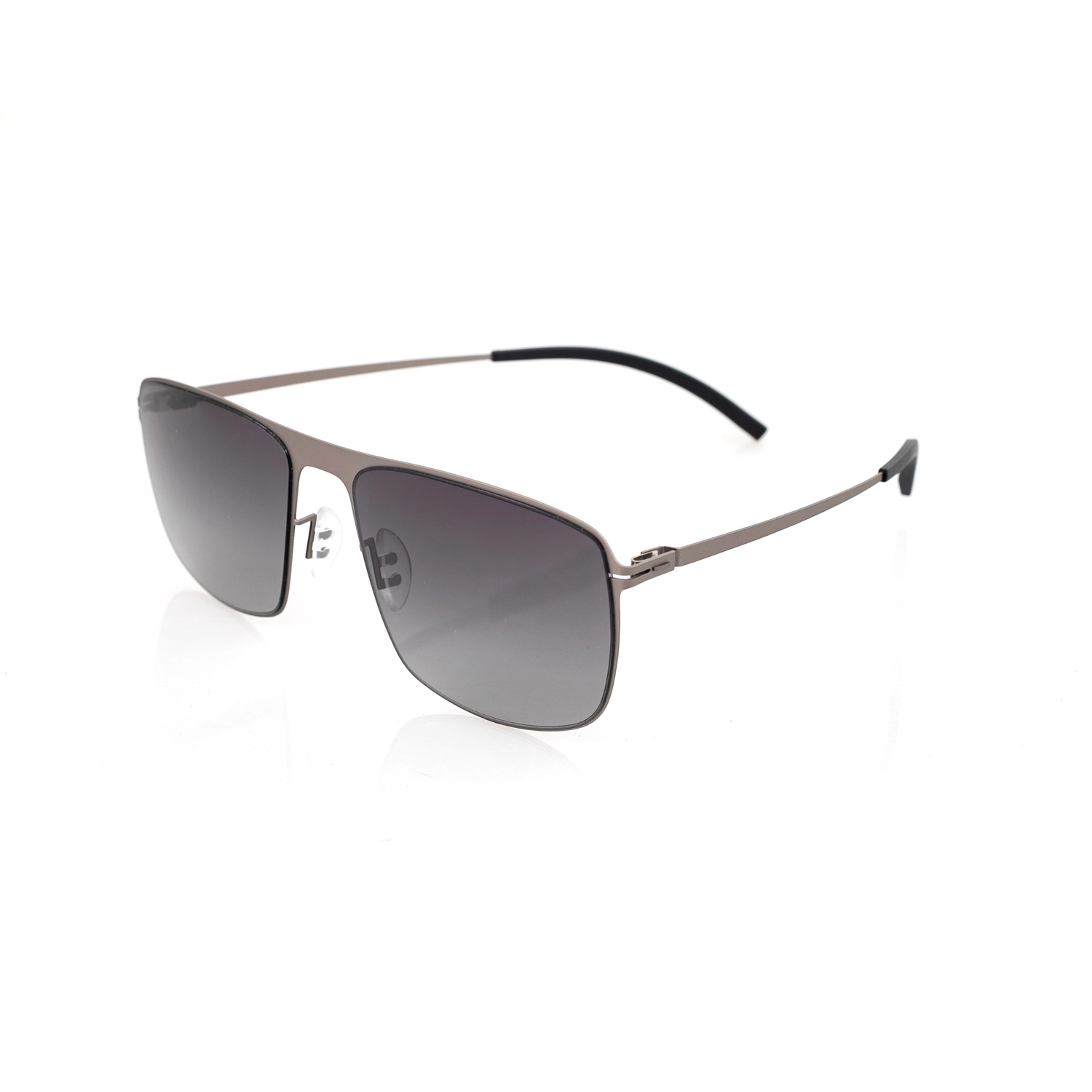
Sleek Brushed Metal Sunglasses with Gradient Lenses – Bespoke Solutions for Your Private Label Metal Sunglasses Line
Karuson introduces the Elite Square series, a standout addition to any high-end eyewear portfolio. These private label metal sunglasses are defined by their industrial gunmetal finish and sharp, architectural lines, offering a perfect balance of professional authority and modern style. Featuring high-grade gradient lenses, they provide a smooth transition of light that is ideal for both driving and urban navigation.
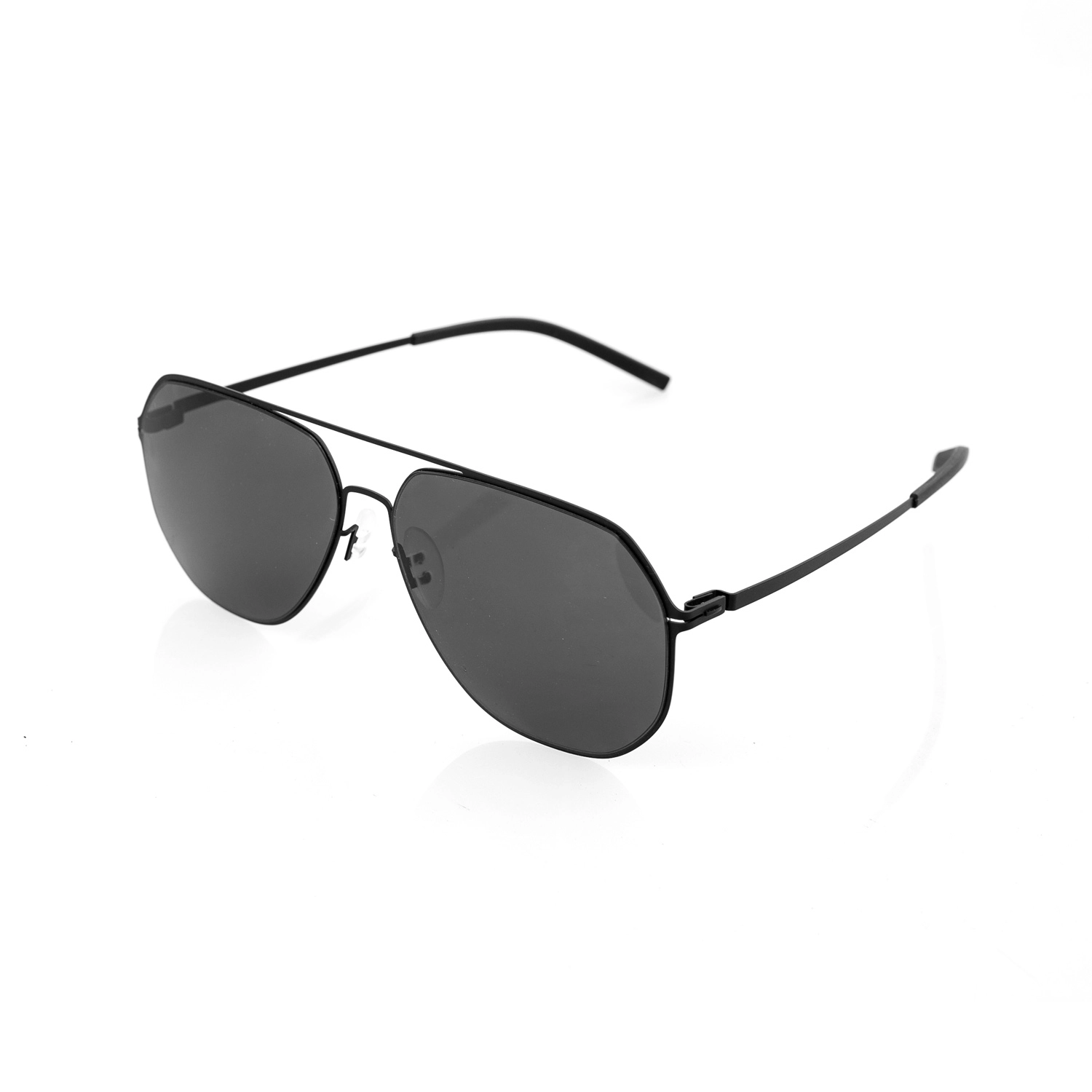
Matte Black Navigator Frames – Launch Your Collection via Private Label Sunglasses No Minimum Solutions
Karuson presents the ultimate Navigator series, designed for brands that demand a sophisticated, high-performance edge. These sunglasses feature a reinforced stainless steel double-bridge frame and high-definition smoke lenses, offering a timeless silhouette that appeals to both sports enthusiasts and luxury lifestyle markets.

Bespoke Two-Tone Lightweight Eyeglasses – Tailored Solutions for Global Brands via Custom Eyewear Manufacturing
As a specialist in custom eyewear manufacturing, Karuson presents this flagship series of ultra-lightweight metal optical frames. Blending a sophisticated geometric silhouette with a minimalist two-tone finish, these frames are designed to meet the aesthetic demands of the modern urban professional while providing the structural integrity required for high-index prescription lenses.
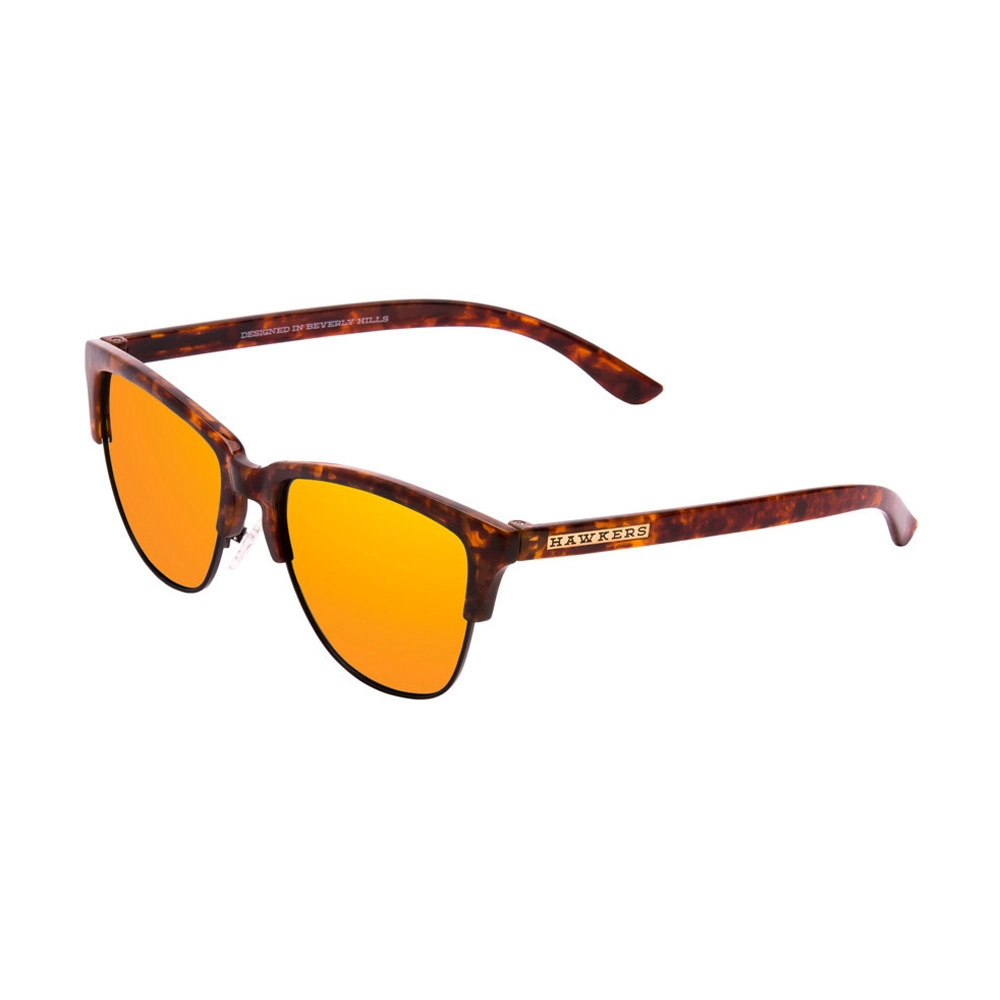
Vintage Browline Style Sunglasses with Polarized Lenses – Professional OEM Solutions by Sunglasses Wholesale Supplier
As a leading wholesale sunglasses supplier, Karuson presents these flagship Retro Half-Frame Sunglasses, blending mid-century vintage aesthetics with modern manufacturing precision. Designed for diverse fashion markets, these frames feature a high-quality tortoise-shell finish paired with a robust metal lower rim, ensuring a sophisticated look that transcends seasonal trends.
Get in touch with us
If you have any comments or good suggestions, please leave us a message; later our professional staff will contact you as soon as possible.
NEW DIMENSIONS IN EYEWEAR
Contact KARUSON
Email:
WhatsApp/Phone:
Address:
331 Section B, WanJia Creative Park , No. 1 BUXIA Road ,Tianhe District, Guangzhou City, Guangdong Province, China.

© 2026 KARUSON. All Rights Reserved.
Facebook
Instagram
YouTube
TikTok
Linkedin