


How does a lenses manufacturer ensure consistent prescription accuracy?
- 1) How does a lenses manufacturer ensure consistent prescription accuracy across high-volume orders for progressive and customized lenses?
- 2) What specific QC checkpoints should I require from an eyewear factory to prevent refractive errors in delivered finished lenses?
- 3) How do manufacturers validate AR (anti-reflective) and multi-coating processes so coatings don’t shift prescription or introduce wavefront errors?
- 4) What traceability and documentation should an eyewear factory provide to prove prescription accuracy for regulatory audits and customer disputes?
- 5) How can I verify that a supplier’s surfacing (free-form) technology truly reproduces the digital lens design I purchased?
- 6) What are realistic lead times, first-pass yield expectations, and practical ways to reduce remakes and returns when working with an eyewear factory?
- Concluding summary: Advantages of partnering with a certified, process-driven eyewear factory
1) How does a lenses manufacturer ensure consistent prescription accuracy across high-volume orders for progressive and customized lenses?
Maintaining consistent prescription accuracy at scale combines process control, technology, and statistical verification. A modern optical lab integrates these elements into a reproducible workflow:
Digital Rx and order management: The factory requires standardized digital Rx files (preferably in lab-friendly formats or via secure EDI) that include sphere/cylinder/axis, add, PD, fitting height and frame shape data. Eliminating manual data re-entry reduces transcription errors.
Free‑form surfacing and validated design files: For progressives and customized single-vision free‑form lenses, the factory uses CNC free‑form generators driven by verified design files. Critical is maintaining a direct digital chain from the lens design (surface sag/profile) to the surfacing tool path — with file checksums or versioning — so what was Designed = what is Generated.
Precision blocking and centering: Accurate centration (optical center, prism reference) relies on repeatable blocking fixtures and automated block‑and‑check stations (digital tracers). For large volumes, custom jigs for common frame families reduce manual variance.
Inline metrology and automated verification: Finished lenses should pass an automated lensmeter (digital lensometer) and surface metrology step that compares measured power maps and astigmatism vectors to the ordered Rx. Many factories use 2D/3D power maps (point-by-point power) and automatic pass/fail algorithms to catch first-pass deviations.
SPC and feedback loops: Statistical Process Control (SPC) dashboards track key metrics (first-pass yield, average power deviation, coating shift). When trending indicates drift, the lab triggers recalibration and root-cause analysis to prevent batch-level issues.
Skilled intervention for edge cases: For extreme prescriptions, high adds, or specialty progressive designs, a senior lens engineer reviews NC (non-conforming) reports and signs off on adjustments before shipping.
Embedded terms: eyewear factory, optical lab, free-form surfacing, digital surfacing, prescription accuracy, lens fabrication.
2) What specific QC checkpoints should I require from an eyewear factory to prevent refractive errors in delivered finished lenses?
Ask your supplier for a documented QC plan that includes the following checkpoints with associated measurement evidence:
Incoming blanks inspection: Verify material batch, refractive index, base curve, and visual defects. Ask for batch certificates and incoming material photos.
Surfacing verification: After generating the surface but before coating, measure the point-by-point power map and axis to ensure the raw surfaced lens matches the digital design. Request a copy of the power map.
Coating validation: Coating processes can alter surface geometry through stress. Require pre- and post-coating power checks and a spectrophotometer report for AR coatings.
Centering/PD and prism check: Ensure the lens is blocked and edged to the specified optical center and prism. Automated edgers and tracer alignment verification reduce human error.
Final lensmeter reading: A final digital lensometer (or equivalent metrology) report that confirms sphere/cylinder/axis and add (for progressives) should be attached per order.
Visual inspection and cosmetic criteria: Scratch/dig specs, tint uniformity, and edge polish standards.
Pack-and-ship verification: A final label or QC sticker with the lot number, measurement report reference, and operator ID provides traceability.
Request example reports and a factory QC checklist during supplier qualification. These documents are practical evidence of prescription accuracy controls.
3) How do manufacturers validate AR (anti-reflective) and multi-coating processes so coatings don’t shift prescription or introduce wavefront errors?
Coating can introduce mechanical stress and microscopic surface changes. Reputable lens fabrication facilities mitigate this through engineering controls and measurement:
Pre/post coating metrology: Measure the lens power map and wavefront/topography before and after coating application. A negligible delta indicates coating processes are stable. Many factories use interferometry or profilometry to detect changes in surface figure.
Process qualification and control: Coating chambers run documented recipes (temperature, vacuum, deposition rates). Any recipe change must go through controlled qualifications with signed-off test runs.
Environmental and adhesion testing: Thermal cycling, humidity soak, and cross-hatch adhesion tests on representative panels ensure coatings won’t delaminate or induce distortion under real-world stresses.
Spectral performance reports: AR stacks are verified with spectrophotometry to confirm expected reflectance curves and layer thicknesses. If you see high surface stress correlating with wavelength shifts, ask for the stack design and deposition parameters.
Batch traceability: Coatings are performed in batches; good factories provide per-batch coating reports and link which lenses were coated in each batch so any anomalies can be isolated.
These technical checks ensure coatings preserve optical performance and prescription accuracy rather than degrade it.
4) What traceability and documentation should an eyewear factory provide to prove prescription accuracy for regulatory audits and customer disputes?
For regulatory and commercial confidence, require a minimum documentation package for every order and be explicit in the purchase agreement:
Order file and digital Rx copy: The original Rx and any changes must be stored and linked to the finished product lot number.
Production batch record: Includes machine IDs, operator IDs, timestamps for surfacing, coating, edging, and final inspection.
Calibration and maintenance logs: Up-to-date calibration certificates for surfacing generators, tracers, edgers, and lensmeters. Calibrations should be traceable to a national/international standard where applicable.
Measurement certificates: Power maps, lensometer printouts (digital), coating spectral data, and pass/fail reports for each lens or sample lenses from a batch.
Non-conformance reports: For any remakes or reworks, provide root cause analysis and corrective/preventive actions (CAPA).
Quality management compliance: Evidence of a functioning QMS (ISO 13485 or ISO 9001 where applicable), and conformity to regional device regulations (CE marking, FDA guidance if relevant) if requested.
Having this documentation reduces disputes and enables efficient audits. If a supplier cannot furnish these items, consider them a red flag.
5) How can I verify that a supplier’s surfacing (free-form) technology truly reproduces the digital lens design I purchased?
Verification steps you can require during supplier evaluation and initial production runs:
Ask for a one-off verification sample: A single lens surfaced to your design and returned with full measurement artifacts (point-by-point power map, surface topography, interferogram, and final lensometer reading).
Surface comparison reports: Request a delta map — a measured surface minus the intended design surface — so you can see where deviations occur and their magnitude.
MTF or visual performance evidence for high-end or progressive designs: Manufacturers that invest in optical bench testing can provide MTF curves or subjective visual performance tests under standardized conditions for reference frames.
File integrity and chain-of-custody: Confirm they maintain the original design file, version history, and a direct digital transfer mechanism to the surfacing machine to avoid manual re-keying.
Process capability (Cp/Cpk) data: For high-volume customers, request capability indices for critical dimensions and power — this demonstrates the factory’s statistical ability to reproduce the design consistently.
These verification artifacts give you technical proof that free‑form surfacing matches intent, and reduce surprises when scaling orders.
6) What are realistic lead times, first-pass yield expectations, and practical ways to reduce remakes and returns when working with an eyewear factory?
Lead times and yields vary by product complexity and factory maturity, but you can manage them proactively:
Lead time drivers: Complex progressive/custom free‑form lenses, specialty coatings, and custom tinting extend lead times. Standard single-vision, stock designs are fastest. Negotiate lead-time SLAs in the contract with penalties or expedited options for time-sensitive orders.
First-pass yield expectations: A mature optical lab focused on prescription accuracy reports higher first-pass yield on standard SKUs; yields for complex progressives or high-index specialty materials may be lower without initial process tuning. Rather than fixating on a single percentage, require the supplier to provide historical yield data for the specific SKUs you will order.
Ways to reduce remakes and returns:
- Standardize frame lists and blocking templates for repeatable fit.
- Provide precise PD and fitting heights using consistent measurement tools to your retail partners.
- Run pilot batches and approve measurement artifacts before volume ramp.
- Implement a clear defect-feedback loop with agreed turnaround for corrective action and root-cause analysis.
- Use digital prescriptions and avoid ambiguous notations.
Reducing remakes is a collaborative activity: you as the buyer should provide consistent input data and approve sample verification, and the eyewear factory should give measurable evidence and continuous improvement.
Concluding summary: Advantages of partnering with a certified, process-driven eyewear factory
Working with a certified, quality-driven eyewear factory that uses modern lens fabrication (free-form surfacing, automated metrology, and controlled coating processes) gives you predictable prescription accuracy, faster issue resolution, and better scalability. The right partner provides traceable documentation (incoming material certificates, calibration logs, power maps, coating reports), transparent SPC data, and a willingness to run verification samples and capability studies. Those strengths reduce remakes and customer returns, protect brand reputation, and simplify regulatory compliance.
For a quote or to request validation samples, contact us at www.karusonco.com or email nicole@karusonco.com. We can provide QC checklists, sample measurement packages, and supplier audits tailored to your SKU mix.
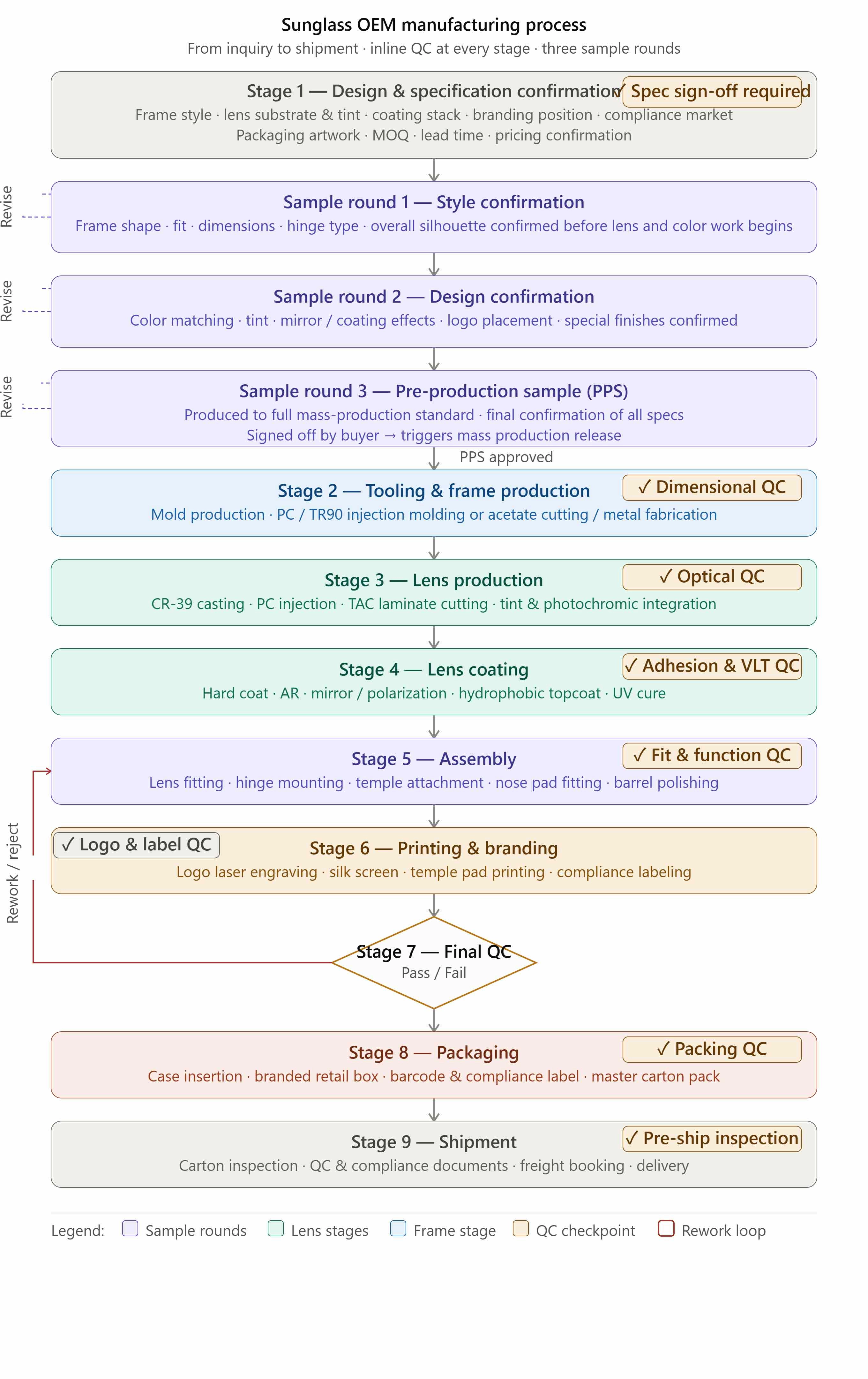
How Sunglasses Are Made: A Complete OEM Manufacturing Process Guide

Sunglass Lens Materials Compared: CR-39, PC, TAC, Nylon and Mineral Glass

Sunglass Lens Tint Categories Explained: A Complete Guide to Visible Light Transmittance for OEM Eyewear Brands

OEM Photochromic Lenses: Technology, Custom Options & B2B Sourcing Guide

Prescription Myopia Sunglass Lenses: Complete Guide on Optics, Production Process & Material Selection

Polarized Sunglasses with Anti-Seawater Coating: Technical OEM Specification Guide for Marine & Watersports Eyewear
You May Also Like

Ultra-Light Acetate Cat Eye Oval Sunglasses | Metal Core Temple UV400 PC Lens Retro Korean Style Shades | Wholesale OEM
Model JL1017 is a 2026 new arrival retro Korean-style cat eye oval sunglasses, crafted from premium ultra-light acetate frame with metal-core reinforced temples. Weighing only 23.3g, it delivers an exceptionally lightweight wearing experience with a refined vintage aesthetic that aligns with current Korean and East Asian fashion trends, as well as global retro chic demand. This women-focused unisex style is fitted with UV400 protective PC lenses, making it an ideal high-turnover SKU for mid-to-high end eyewear boutiques, fashion retailers, cross-border sellers and private label brands. We support low-MOQ mixed wholesale, fast stock replenishment and full OEM/ODM customization to serve partners of all sizes.

Ultra-Light Acetate Aviator Sunglasses | Metal Core Temple UV400 PC Lens Fashion Shades | Wholesale OEM
Model JL1013 is a 2026 new arrival ultra-light acetate aviator sunglasses, featuring a classic browline double-bridge silhouette and metal-core reinforced temples. Weighing only 30.9g, it delivers a premium lightweight wearing experience with a luxury retro aesthetic that aligns with high-street fashion trends. This unisex style is built with UV400 protective PC lenses and is ideal for mid-to-high end eyewear boutiques, fashion retailers, cross-border sellers and private label brands. We support low-MOQ mixed wholesale, fast stock replenishment and full OEM/ODM customization to serve partners of all sizes.
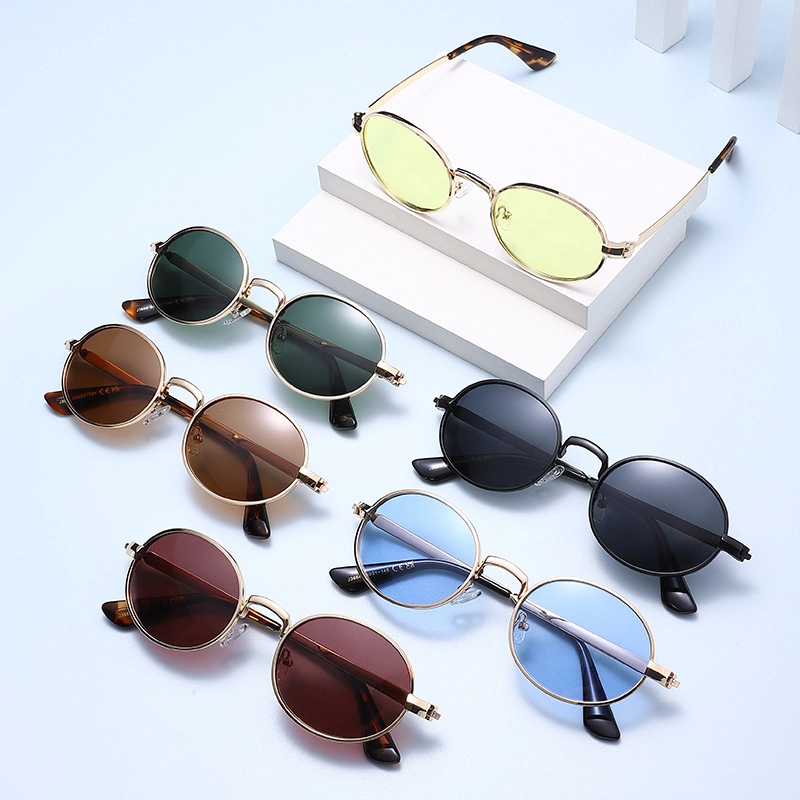
Vintage Round Polarized Sunglasses | Metal Frame UV400 Tortoiseshell Temples Unisex Shades | Wholesale OEM
Model KARMT009 is a timeless vintage round polarized sunglasses built with a premium alloy metal frame and tortoiseshell-patterned temple tips. Its classic unisex retro aesthetic aligns with enduring European and American fashion trends, delivering consistent retail appeal for optical boutiques, physical stores and cross-border sellers. Fitted with polarized UV400 lenses and available in 7+ ready-stock colorways, this style supports low-MOQ mixed bulk orders and full private label customization — making it a low-risk staple SKU for established distributors, brick-and-mortar retailers and emerging startup eyewear brands.
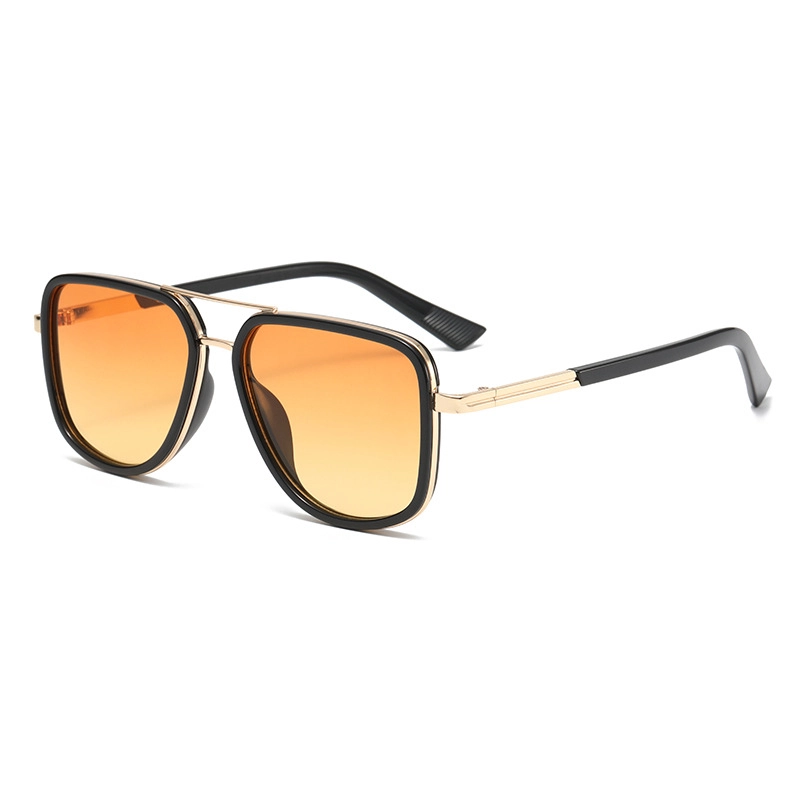
Double Bridge Square Aviator Sunglasses | PC Frame UV400 Polarized Optional Unisex Shades | Wholesale
Get in touch with us
If you have any comments or good suggestions, please leave us a message; later our professional staff will contact you as soon as possible.
NEW DIMENSIONS IN EYEWEAR
Contact KARUSON
Email:
WhatsApp/Phone:
Address:
331 Section B, WanJia Creative Park , No. 1 BUXIA Road ,Tianhe District, Guangzhou City, Guangdong Province, China.

© 2026 KARUSON. All Rights Reserved.
Facebook
Instagram
YouTube
TikTok
Linkedin