



Why is tolerance control vital in lenses manufacturing?
- 1) Why is tolerance control vital in lenses manufacturing, and how do small diopter deviations impact user comfort and returns?
- 2) What measurable tolerance ranges should I demand from an eyewear factory for sphere, cylinder, axis, prism and centration for single-vision and progressive lenses?
- 3) How do eyewear factories validate tolerance control across surfacing, edging, coating and assembly—what inspection equipment and SPC metrics should I require?
- 4) When ordering OEM/ODM from an eyewear factory, what contractual tolerance clauses and sample approval steps prevent batch quality drift?
- 5) How do material choices (CR-39, polycarbonate, Trivex, high-index) and coatings change acceptable manufacturing tolerances and rejection criteria?
- 6) What are realistic turnaround time vs tolerance trade-offs when scaling production—can tighter tolerances be achieved without large cost or time penalties?
- Concluding summary: advantages of strict tolerance control when sourcing from an eyewear factory
Eyewear Factory Guide: Why Tolerance Control Is Vital in Lens Manufacturing
This article answers six specific, often-misunderstood buyer questions about tolerance control when sourcing lenses from an eyewear factory. It explains measurable tolerance ranges, inspection equipment, contractual protections (AQL / FAI / PPAP), material-dependent acceptance criteria, and realistic production trade-offs so you can make informed procurement decisions and reduce costly returns.
1) Why is tolerance control vital in lenses manufacturing, and how do small diopter deviations impact user comfort and returns?
Tolerance control is the backbone of repeatable optical performance. Small deviations in sphere, cylinder, axis, prism, or centration—even on the order of a few hundredths of a diopter or a degree of axis—can produce blurred vision, headaches, blurred near/far transitions (especially in progressives), and an elevated return rate. From a business perspective, poor tolerance control increases customer complaints, warranty costs, and brand damage.
Mechanisms of impact:
- Optical power error (sphere/cylinder): small diopter shifts move the eye away from the corrective focal point; for high prescriptions, the user's tolerance is lower and discomfort appears sooner.
- Axis misalignment: for moderate-to-high cylinder, a few degrees of axis error noticeably degrade image quality and can induce astigmatic blur.
- Centration and monocular distance (PD) error: miscentration in progressive or PAL lenses creates swim, distortions, and incorrect near-to-distance transition zones.
- Prism/tilt errors: unintended prism from manufacturing or improper drilling/assembly induces diplopia and eye strain.
Bottom line for buyers: insist on documented tolerance control—measurements traceable to recognized standards (ANSI/ISO where applicable)—because small, repeatable deviations aggregate into returns, rework, and lower lifetime customer satisfaction.
2) What measurable tolerance ranges should I demand from an eyewear factory for sphere, cylinder, axis, prism and centration for single-vision and progressive lenses?
Tolerances vary with lens type, the target market, and applicable standards (for example, ANSI Z80.1 and the ISO 8980 series). Rather than a one-size-fits-all number, specify separate acceptance criteria per SKU (material, index, lens type). Typical factory practices for quality-tier production are:
- Sphere (single vision): many quality labs target ±0.12–0.25 D as an internal control band for finished power. Tighter tolerances (±0.12 D or better) are common for High Quality optics and high-prescription work.
- Cylinder: commonly ±0.25–0.50 D depending on grade and lens type.
- Axis: acceptable axis variation often sits between ±1° (high-precision progressive work) and ±5° (low cylinder or non-critical products); tighter axis control is essential above 1.00 D cylinder.
- Prism: finished prism is usually controlled within ±0.25–0.5 prism diopters for general eyewear; medical or specialty lenses may require tighter control.
- Centration/PD: centration errors are typically held to ±0.5 mm for High Quality progressives and ±1.0 mm for standard single vision, because small shifts strongly affect progressive corridor function.
How to use these ranges: include them in the technical purchase specifications and sample approvals. Call out separate tolerance bands for acceptance, rework, and rejection so the factory's QA and production teams apply consistent decisions.
3) How do eyewear factories validate tolerance control across surfacing, edging, coating and assembly—what inspection equipment and SPC metrics should I require?
Validation is a chain of measurements across every process step, using calibrated instruments and Statistical Process Control (SPC). Key inspection equipment and practices buyers should specify:
- Lensometers and automated lens analyzers: verify sphere, cylinder, axis, and prism on finished lenses. Ensure calibration records and traceability.
- Interferometers and wavefront analyzers: assess surface figure, power distribution and high-precision wavefront errors—important for High Quality or free-form surfacing.
- Non-contact profilometers / optical metrology: confirm surface roughness and curvature (base curve) after surfacing and before coating.
- Spectrophotometers: quantify AR and mirror coating spectral performance and transmission targets; measure AR residual reflectance and color balance.
- Video centration/PD systems and digital edging verification: confirm centration, mounting positions, and bevel geometry to ensure PD and optical center placement within spec.
- Coordinate Measuring Machines (CMM) or AOI for frame-assembly critical dimensions: especially for drill/tint positions and rimless designs.
- Environmental and stress birefringence testing for certain materials (polycarbonate, high-index) to detect internal stress causing optical distortion.
SPC and metrics to demand:
- Process capability indexes (Cp, Cpk): aim for Cpk > 1.33 for key dimensions/power where feasible; for mission-critical optics, target Cpk > 1.67.
- Control charts (X̄-R or I-MR) for power, axis, centration and coating reflectance to detect drift early.
- First Article Inspection (FAI) and periodic production verification with documented measurement methods and calibration schedules (ISO/IEC 17025-compliant labs where required).
- Sampling plans per ISO 2859-1 (AQL) or bespoke 100% inspection for critical SKUs—as agreed contractually.
Ask suppliers for measurement device certificates, calibration intervals, equipment make/model, and SOPs for measurement so you can audit the QA chain.
4) When ordering OEM/ODM from an eyewear factory, what contractual tolerance clauses and sample approval steps prevent batch quality drift?
Contract language and an approved sample regime are your strongest protections against drift. Include these elements in Purchase Orders, Technical Data Packages (TDP) and Quality Agreements:
- Explicit tolerances by parameter and SKU (sphere, cylinder, axis, PD, prism, coating metrics) with acceptance/rework/reject bands.
- FAI / First Sample Approval: require production-ready tooling and a documented first article set (including certificates and test reports) before full production.
- Production Part Approval Process (PPAP) or equivalent: documented process flow, FMEA, control plans, measurement system analysis (MSA), and initial capability studies.
- Sampling & inspection plan referencing ISO 2859-1 or agreed 100% inspection for critical items, plus right-to-audit clauses and factory corrective action timelines.
- Rework rules and re-inspection criteria: define who bears costs for rework or rejected lots and acceptable rework methods (e.g., re-edge vs. scrap).
- Traceability instructions: batch/lot coding, retained samples, and measurement records retention period.
- Service-level agreements (SLAs) for non-conforming product rates and warranty; include penalties or rebates for repeated deviations.
Operational steps: approve a pilot run, validate measurements on a statistically significant sample, then define periodic verification. Maintain a documented non-conformance handling procedure with root-cause analysis and CAPA (Corrective and Preventive Actions) cadence.
5) How do material choices (CR-39, polycarbonate, Trivex, high-index) and coatings change acceptable manufacturing tolerances and rejection criteria?
Different lens materials exhibit distinct behaviors that affect tolerances and QA acceptance criteria:
- CR-39 (organic glass): typically dimensionally stable with predictable surfacing behavior; tolerances for finished optics are easier to achieve, but coatings must adhere properly—watch for solvent sensitivity during AR application.
- Polycarbonate: lighter and more impact-resistant but prone to higher birefringence/stress from molding, leading to localized astigmatism. Acceptable optical tolerances may be looser for non-critical SKUs, but High Quality polycarbonate work requires additional stress-relief processes and birefringence inspection.
- Trivex: combines impact resistance with lower birefringence than polycarbonate; tolerances can often match CR-39 for many parameters but still demand careful coating processes due to material chemistry differences.
- High-index plastics (1.67, 1.74): tighter surface control is needed because a small surface deviation has larger optical impact in high-index materials. AR coating layers and thickness can also shift effective power slightly; factories should include post-coat power checks for High Quality high-index lenses.
Coating effects: multi-layer AR and hard coatings introduce thickness and stress. Require factories to perform post-coat power verification and spectrophotometric checks. For rimless or drill-mounted frames, define drilling tolerances and heat/tempering steps that avoid micro-cracks and stress lines.
Buyer action: specify material-specific acceptance criteria in the TDP and require the factory to provide per-material process capability data and post-coating verification results before scaling.
6) What are realistic turnaround time vs tolerance trade-offs when scaling production—can tighter tolerances be achieved without large cost or time penalties?
Tighter tolerances usually imply greater cost and time, but smart process design and automation can mitigate these penalties. Reality-based considerations:
- Inspection vs. throughput: 100% inspection or higher-resolution testing increases cycle time. Instead, implement targeted 100% checks for critical SKUs and SPC for high-volume, well-characterized processes.
- Automation and process control: investing in automated surfacing, in-line metrology and robotic handling reduces human variability and can maintain tighter tolerances at scale—there is an upfront CapEx but per-unit cost can be competitive once volumes are high.
- Secondary operations: tighter optical bands often require additional polishing, refigure, or post-coat correction steps, increasing lead-time and scrap. Agree on allowable rework steps and associated cost-sharing in contracts.
- Batch sizing and scheduling: smaller batch runs enable higher quality control but increase per-unit setup cost. Balance SKU frequency and batch size for SKUs requiring tight tolerances.
- Supplier capability: choosing a factory with documented capability (Cp/Cpk), calibrated high-end inspection gear, and demonstrated low non-conformance rates reduces the marginal cost of tighter tolerances compared with an under-equipped shop.
Practical buyer approach: define three service tiers in procurement—standard (economical tolerances, fast lead times), High Quality (tight tolerances, moderate lead times), and express (rush processing for urgent needs). Require the factory to provide cost and lead-time deltas between tiers so you can make informed trade-offs.
Concluding summary: advantages of strict tolerance control when sourcing from an eyewear factory
Implementing and enforcing strict tolerance control delivers clear, measurable advantages: lower return and warranty rates, consistent wearer comfort, predictable production yields, and stronger brand reputation. By embedding detailed tolerances in contracts, demanding calibrated inspection equipment and SPC metrics (Cp/Cpk, control charts), and tailoring acceptance criteria to material and lens type, buyers reduce risk and total cost of ownership. Strategic investments in automation and proper sampling plans (ISO 2859-1 / AQL, FAI/PPAP) let you scale without sacrificing quality.
If you need help defining tolerance tables, sample approval templates, or factory QA checklists tailored to your SKUs, contact us for a quote and technical consultation.
Website: www.karusonco.com | Email: nicole@karusonco.com
Why Sourcing from a China Eyewear Factory is the Strategic Choice for Global Brands

OEM vs. ODM: Which Partnership Model is Best for Your Eyewear Business?
2026 Eyewear Trend Forecast: Colors, Shapes, and Textures to Watch
About OEM&ODM
Do you support OEM and ODM?
Yes—we offer both contract manufacturing (OEM) and full product development services (ODM).
Can you help with packaging and logo branding?
Absolutely—we provide branded packaging bags, boxes, logo applications, and display solutions.
About Products
What is the lead time?
Mass production takes [25-35]days; samples take [7-10] days.
Do you support OEM/ODM?
Yes, our R&D and design teams support full customization.
What is the MOQ?
Usually ≥100, depending on the model.
You May Also Like
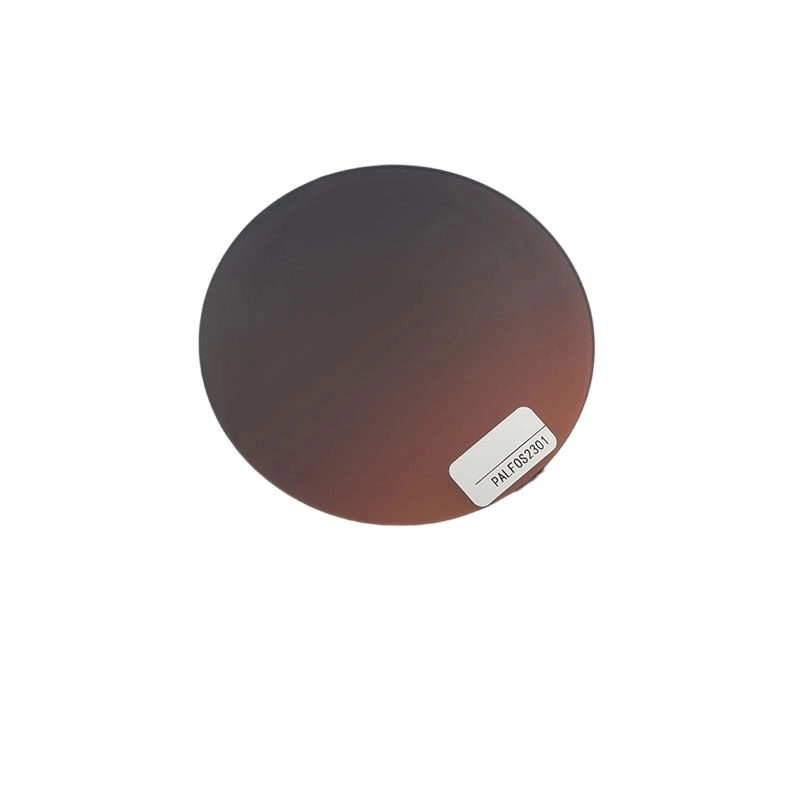
Advanced Sunglasses Solutions: Polarized Lenses with Anti-Seawater Coating
As a versatile photochromic lenses manufacturer and high-performance optics expert, Karuson crafts high-quality Polycarbonate (PC) Gradient Tinted Lenses that perfectly balance aesthetics with advanced protection. By fusing the ultra-lightweight and impact-resistant properties of PC material with precision gradient tinting technology, we deliver a durable visual solution that enhances clarity and comfort for urban lifestyles and outdoor sports. These lenses not only optimize visibility across varying light conditions by reducing glare but also offer a sleek, customizable design—allowing global brands to blend practical eye protection with a modern, fashion-forward accessory.
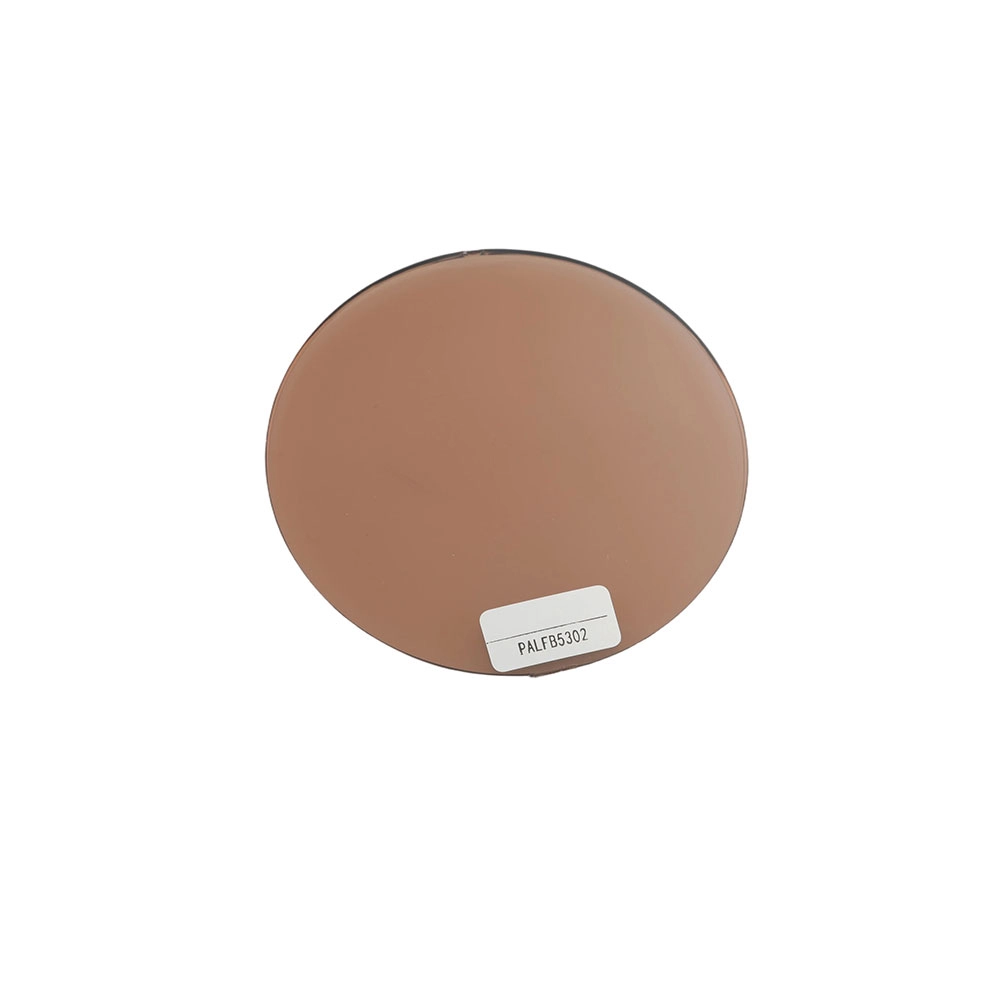
Why Quality Lenses are the Core of Your Eyewear Brand’s Reputation
As a premier high-definition glasses lenses manufacturer, Karuson crafts high-quality Polyamide (PA) Nylon Tinted Lenses that represent the perfect synergy of ultra-lightweight performance and high-toughness durability. By integrating professional-grade tinting technology with advanced material science, we offer a lens solution that delivers exceptional optical clarity alongside vibrant, fashionable color expression. Designed for both daily commutes and trendy lifestyle matching, these lenses provide a comfortable and aesthetic visual experience, serving as a high-performance fashion accessory for the modern, style-conscious consumer.
Dynamic Adaptation: Next-Gen Photochromic Lenses for Indoor & Outdoor Use
As premier eyeglass lenses manufacturers, Karuson crafts high-performance PC polarized coated lenses that seamlessly integrate lightweight, impact-resistant polycarbonate with advanced optical film technology. These lenses are engineered to achieve superior glare reduction and enhanced visual definition while offering a spectrum of stylish, customizable tints. Optimized for professional driving, outdoor sports, and urban lifestyles, our manufacturing process ensures that harmful reflections from water, roads, and snow are effectively filtered out. The result is a durable, fashion-forward visual solution that perfectly balances essential eye protection with high-end aesthetic appeal—making them the ideal choice for brands seeking to merge practicality with a modern fashion statement.
Innovative Lens Technologies: Setting Your Brand Apart in a Competitive Market
Setting a new standard in high-end lenses manufacturing, Karuson’s flagship-grade Polyamide (PA) Nylon polarized lenses seamlessly combine ultra-lightweight material with exceptional, high-toughness durability. By integrating precision polarizing technology, we have created a high-definition visual solution that excels in clarity and comfort for professional driving, outdoor adventures, and competitive sports. This innovation does more than meet expectations—it redefines the performance benchmark for professional polarized optics in the global market.
Get in touch with us
If you have any comments or good suggestions, please leave us a message; later our professional staff will contact you as soon as possible.
NEW DIMENSIONS IN EYEWEAR
Contact KARUSON
Email:
WhatsApp/Phone:
Address:
331 Section B, WanJia Creative Park , No. 1 BUXIA Road ,Tianhe District, Guangzhou City, Guangdong Province, China.

© 2026 KARUSON. All Rights Reserved.
Facebook
Instagram
YouTube
TikTok
Linkedin