


How Are Progressive Lenses Customized for Sunglasses?
- 1) How does an eyewear factory convert a standard progressive prescription into a polarized sunglass without losing corridor performance?
- 2) What measurements beyond PD and add must buyers provide to correctly center progressive corridors in wraparound sunglass frames?
- 3) How do free-form surfacing and corridor-length selection change for low-frame-height sunglass designs, and what trade-offs should purchasers expect?
- 4) When ordering prescription progressive polarized sunglasses in low MOQs, how do factories manage lens-blank inventory, tints, and coatings to keep lead times predictable?
- 5) What quality-control tests should reputable eyewear factories run on progressive sunglass lenses to ensure AR durability, polarization efficiency, and optical center accuracy?
- 6) How are photochromic and mirror coatings integrated with progressive free-form surfaces for sunglasses, and what limitations should buyers expect?
- Concluding summary: Advantages of choosing a qualified eyewear factory for progressive sunglass purchases
How Are Progressive Lenses Customized for Sunglasses? An Eyewear Factory Guide
Beginners and purchasing professionals often find fragmented or outdated information when they search about progressive lens customization for sunglasses. Below are six specific, practical questions asked by buyers and lab managers, followed by detailed factory-level answers grounded in current manufacturing practice for free-form surfacing, polarized lenses, coatings, and supply logistics.
1) How does an eyewear factory convert a standard progressive prescription into a polarized sunglass without losing corridor performance?
Converting a standard progressive prescription into a prescription polarized sunglass is more than adding a polarizer and a dark tint. The two biggest technical risks are corridor misalignment (centring errors) and increased off-axis aberrations because of higher base curves or tinting. A typical factory workflow to avoid performance loss:
- Prescription validation and target specification: confirm monocular PD, add power, fitting heights and the wearer’s usual working distances. For sunglasses, confirm the planned frame’s vertical height and wrap (base curve).
- Select lens blanks and polarizer method: choose a lens blank material compatible with high-base-curve free-form surfacing and polarization—cast polarized polycarbonate, polarized laminated TAC, or embedded polarized films. For high-precision free-form surfacing, high-index optical blanks (1.59–1.74) or Trivex are frequently used when thinner profiles are needed for sunglasses.
- Free-form surfacing and digital design: use free-form algorithms to re-optimize the progressive corridor for the sunglass frame geometry (base curve, pantoscopic tilt, fitting height). The free-form generator compensates for wrap-induced oblique astigmatism by altering surface power maps and corridor length so the near and distance zones maintain usable fields.
- Polarizer alignment: when laminating a polarized film, orient the film axis relative to the wearer’s horizontal reference (often horizontal at the pupil plane). For wrap frames, the film may need pre-rotated axis or segmented lamination to preserve polarization efficiency across the visual field.
- Final coating and tinting: dyeing (for solid color) or vacuum tinting is applied after surfacing (for front-surface or full-surface dyed blanks) or to the finished lens depending on material. Mirror coatings are typically added last.
- Monocular fitting height (distance reference to the pupil center to the frame’s lower eyewire): measured in millimeters per eye—this directly locates the progressive fitting point and center of the corridor.
- Pantoscopic tilt: angle (degrees) between frame plane and vertical when the wearer normally looks. Typical tilt ranges are 6°–12°; wrap or sports frames can change effective tilt and require compensation in the design.
- Vertex distance: the distance (mm) between the back surface of the lens and the cornea (typical 10–16 mm). Larger differences from the standard impact effective power and must be compensated in surfacing calculations.
- Wrap/base curve (frame wrap angle): affects oblique astigmatism and the perceived horizontal alignment of the corridor. Record the optical base curve or the frame’s curvature in degrees; many labs accept the frame front base curve number (e.g., 4, 6, 8) or measured wrap angle.
- Reference point for measurement: indicate whether fitting height is measured to the pupil center, lower limbus, or top of eyewire; consistent methodology is critical.
- Short corridor options: factories offer specialized short- or ultra-short-corridor progressive designs (typical short corridors ~12–14 mm, ultra-short can be 8–10 mm). The precise available lengths depend on the free-form design library and the chosen lens blank diameter.
- Trade-offs: shorter corridors concentrate power change over smaller vertical distance, increasing peripheral astigmatism and reducing intermediate visual width. This can make adaptation harder, especially for first-time progressive wearers or high-add prescriptions.
- Design mitigations: digital smoothing of the transition zone, customizing corridor asymmetry to the wearer’s posture, and optimizing surface astigmatism distribution using ray-tracing can improve usable visual zones despite short corridors.
- Practical advice: if the frame height is under ~28–30 mm, discuss an ultra-short corridor design and consider trials—request a proof or sample and confirm the wearer’s visual priorities (driving distance vs. close work) to balance corridor length and intermediate width.
- Standardized SKUs and core inventories: many factories maintain a core set of polarized blanks, common tint transmittance levels (cat 2 and cat 3), and popular index materials (polycarbonate, 1.59, 1.67). This reduces lead time for many orders.
- Small-batch production and on-demand processing: modern labs with in-house free-form surfacing and AR/vacuum coat lines can process lower MOQs (50–200 pairs) but at a higher per-unit cost. Expect lead times of 7–21 working days for stocked blanks; fully custom blanks or exotic mirror colors can add 1–2 weeks.
- Shared-color batching: tint and mirror colors are often batched to reduce machinery setup time. Buyers should negotiate predictable color palettes to allow the factory to anticipate demand and shorten dye or vacuum-coating cycles.
- Supply-chain risk management: ask the factory about their blank sourcing, backup suppliers, and stock levels for polarizer films. Lead-time guarantees should be documented in purchase agreements for launch planning.
- Power and cylinder mapping: use a lensometer and/or optical bench to verify sphere, cylinder, and axis; employ a high-resolution lens scanner or wavefront mapper to generate a power map to compare against the free-form target map. Typical central-zone tolerances are ±0.05–0.12 D depending on factory grade.
- Centration/fitting height verification: digital centering rigs or video centration tools check monocular fitting heights and prism—High Quality labs hold monocular fitting height to ±0.3–0.5 mm.
- Polarization efficiency test: polarimeter or spectrophotometer measurement to ensure >90–98% efficiency and correct axis orientation. For wrap frames, check at multiple points across the lens surface to confirm consistent performance.
- Coating adhesion and durability: adhesion (cross-hatch/tape tests per internal standards), abrasion resistance (Taber test or equivalent), and environmental cycling (temperature/humidity) to simulate real-world wear. AR reflectance curves and durability should be logged.
- UV and visible light transmittance: spectrophotometric verification to confirm category (0–4) of sunglass darkness and UV blocking—many factories guarantee UV400 protection and compliance with ISO 12312-1 or regional standards.
- Final inspection and frame fit: ensure edge finishing, slotting (if rimless), and blocking are correct; inspect for internal delamination, bubbles, and tint uniformity.
- Integration sequence: if the lens blank is a photochromic material (e.g., photochromic doped high-index or polycarbonate), free-form surfacing occurs first, followed by AR on the back surface and mirror coatings on the front. If blank is neutral and dyeing is used, tinting may occur before or after surfacing depending on material compatibility.
- Activation limits: photochromic activation depends on UV reaching the photochromic molecules. Heavily mirrored or densely polarized laminated constructions can reduce activation speed and final darkness. Buyers should be warned that behind some mirror systems or in-car use (windshields block UVA), activation will be slower and possibly less deep.
- Coating adhesion and compatibility: mirror coatings are vacuum-deposited and require the underlying hardcoat and any AR to be compatible. Some mirror colors and flash coatings can interfere with AR performance if not applied in factory-controlled sequences. Confirm the factory’s process for adhesion testing after mirror deposition.
- Color shift & tint uniformity: photochromic dyes can shift color under different temperatures—cooler temps typically produce darker activation. Mirrored finishes may slightly change apparent hue. Factories should provide sample pairs or spectral transmission curves for intended combinations.
Outcome metrics factories monitor: polarization efficiency (high-quality polarizers >95–98%), corridor alignment tolerance (monocular fitting height placement within ±0.3–0.5 mm for High Quality production), and power accuracy across the corridor (central zone +/-0.05–0.12 D depending on lab capability). If these steps are implemented, corridor performance is preserved while providing polarized glare control.
2) What measurements beyond PD and add must buyers provide to correctly center progressive corridors in wraparound sunglass frames?
PD and add are necessary but insufficient for sunglass progressives. The following additional metrics are essential for factories to place the corridor and optimize optics for wrap and low-height frames:
Best practice: supply the factory with the actual frame on a blocker or a 3D scan/photo of the frame on the wearer wearing the frame, plus the monocular measurements. This enables the lab to generate a personalized free-form map that accounts for wrap and tilt to maintain corridor usability.
3) How do free-form surfacing and corridor-length selection change for low-frame-height sunglass designs, and what trade-offs should purchasers expect?
Low-frame-height sunglasses (short B-vertical) force progressive designers to shorten corridor length. Shorter corridors are achievable with modern free-form surfacing but come with trade-offs:
4) When ordering prescription progressive polarized sunglasses in low MOQs, how do factories manage lens-blank inventory, tints, and coatings to keep lead times predictable?
Managing customized progressive sunglasses at low MOQs is a logistics challenge related to stock keeping, dyeing runs, and coating capacity. Here are factory strategies and what buyers should expect:
In short: low-MOQ progressive polarized sunglasses are feasible, but price, lead-time and color/capacity constraints depend on how vertically integrated the eyewear factory is (injection molding, surfacing, lamination, coating) and their inventory strategy.
5) What quality-control tests should reputable eyewear factories run on progressive sunglass lenses to ensure AR durability, polarization efficiency, and optical center accuracy?
Robust QC is critical for progressive sunglasses because any misplacement or coating failure has an outsized effect on wearer comfort. Key QC steps and tolerance guidelines used by reputable factories:
Request QC certificates and copies of the measurement plots from your supplier (power maps, AR reflectance, polarization axis plots). Factories with transparent QA often provide batch-level QC reports as part of each shipment.
6) How are photochromic and mirror coatings integrated with progressive free-form surfaces for sunglasses, and what limitations should buyers expect?
Combining photochromic chemistry, mirrors and AR with free-form progressive surfaces is common but has technical caveats:
Recommendation: for critical end-user needs, request trial lens samples in the exact material/tint/mirror/AR combination and have the factory supply transmission curves and activation speed metrics under standard test conditions.
Concluding summary: Advantages of choosing a qualified eyewear factory for progressive sunglass purchases
Working with an experienced, vertically integrated eyewear factory provides clear advantages: control over free-form surfacing and digital design to optimize corridors for wrap frames; in-house lamination or cast polarized blank capability to assure polarization efficiency; coordinated tinting, AR and mirror application to reduce adhesion and color-shift risks; predictable MOQ and inventory strategies that shorten lead times; and documented QC (power maps, polarization measurements, transmittance curves) to ensure optical accuracy. These capabilities reduce adaptation issues for wearers and minimize returns during new product launches.
For a tailored quote or to discuss low-MOQ production, custom corridor design, or factory QC reporting for progressive polarized sunglasses, contact us at www.karusonco.com or email nicole@karusonco.com — we can provide production lead times, sample policies, and QC report templates.
TR90 vs Carbon Fiber vs Titanium Sports Sunglasses | OEM Frame Guide
Why Sourcing from a China Eyewear Factory is the Strategic Choice for Global Brands
OEM vs. ODM: Which Partnership Model is Best for Your Eyewear Business?
2026 Eyewear Trend Forecast: Colors, Shapes, and Textures to Watch
About OEM&ODM
Do you support OEM and ODM?
Yes—we offer both contract manufacturing (OEM) and full product development services (ODM).
How do we start a project with Karuson?
Send us your product idea or requirements—our team will review, advise, and provide the best solution and quotation.
What is your minimum order quantity (MOQ)?
MOQ is flexible and varies by product type. Small trial orders are welcome.
Can you help with packaging and logo branding?
Absolutely—we provide branded packaging bags, boxes, logo applications, and display solutions.
About Products
Do you offer samples?
Yes, paid samples or refundable samples are available.
You May Also Like
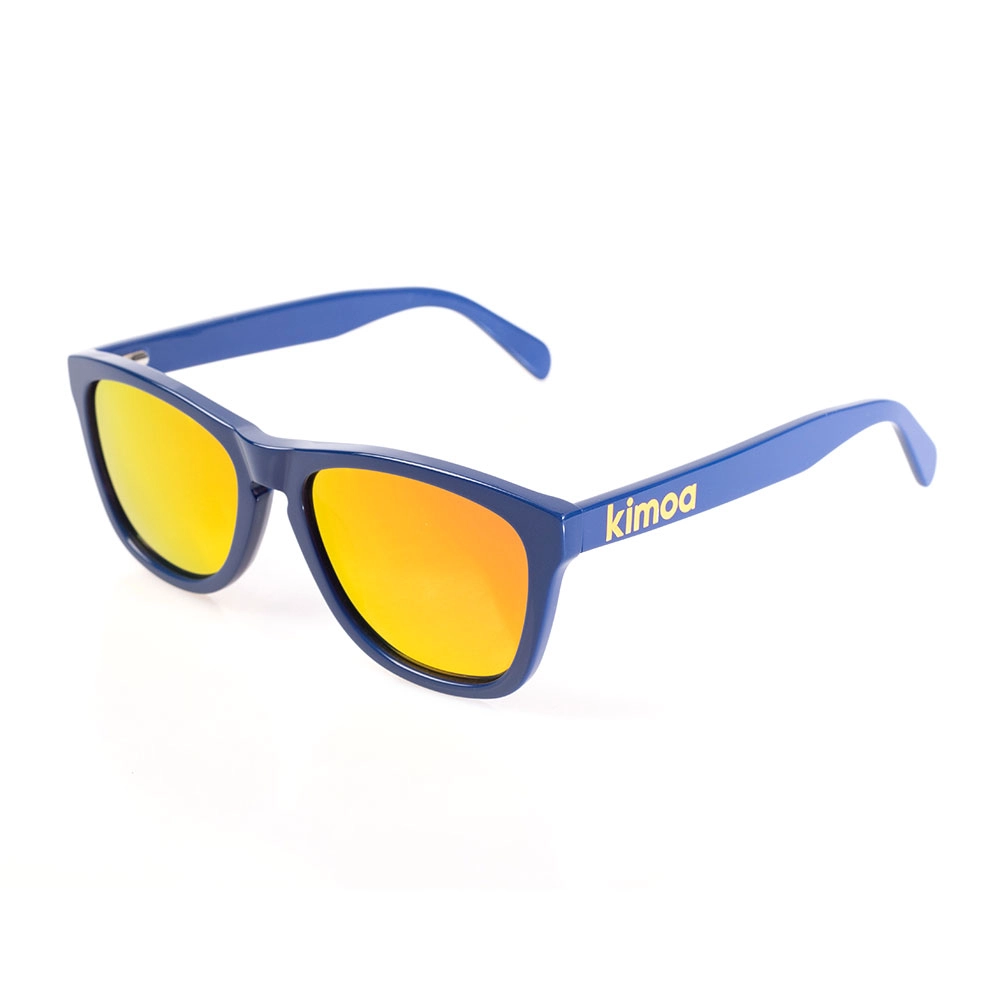
Trendy Blue Frame Sunglasses | Customizable OEM Performance Eyewear
These eco-friendly bio-acetate sunglasses combine high-performance durability with sustainable innovation, making them the perfect centerpiece for your private label eyewear collection. Engineered for longevity, the frames offer superior impact and scratch resistance, while the UV400 lenses provide essential protection against harmful rays and glare. Available in a spectrum of vibrant, customizable colors, this collection allows eco-conscious brands to offer a premium, lightweight, and stylish choice that refuses to compromise on safety or aesthetics.

Classic Square Polarized Sunglasses | High-Performance OEM Eyewear
As a premier oem sunglasses manufacturer, Karuson presents this essential Square Frame series—a staple for any eyewear brand’s core collection. These sunglasses feature a timeless matte black finish and are equipped with vibrant green REVO mirrored lenses, offering a perfect blend of modern tech aesthetics and professional-grade eye protection.
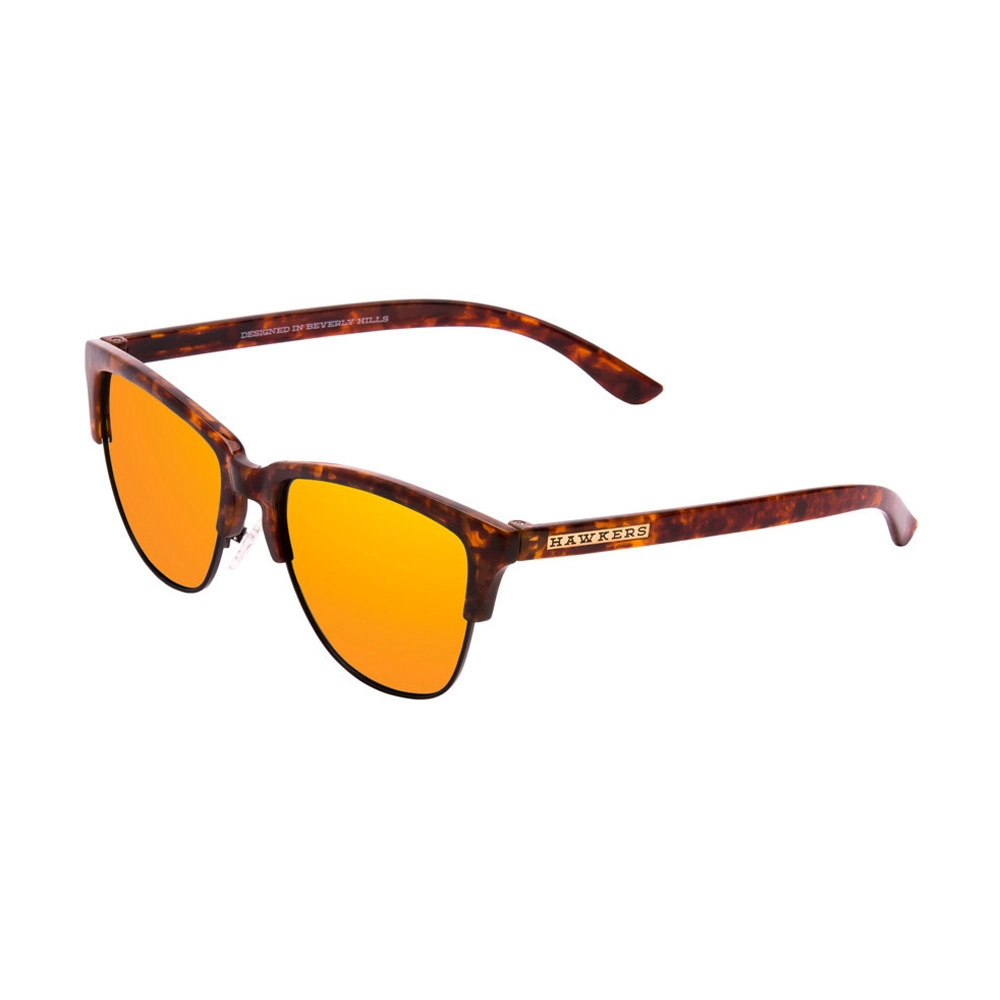
Vintage Browline Polarized Sunglasses | Wholesale OEM Custom Frames
As a leading wholesale sunglasses supplier, Karuson presents these flagship Retro Half-Frame Sunglasses, blending mid-century vintage aesthetics with modern manufacturing precision. Designed for diverse fashion markets, these frames feature a high-quality tortoise-shell finish paired with a robust metal lower rim, ensuring a sophisticated look that transcends seasonal trends.

Two-Tone Lightweight Eyeglasses | Custom Optical Frames for Brands
As a specialist in custom eyewear manufacturing, Karuson presents this flagship series of ultra-lightweight metal optical frames. Blending a sophisticated geometric silhouette with a minimalist two-tone finish, these frames are designed to meet the aesthetic demands of the modern urban professional while providing the structural integrity required for high-index prescription lenses.
Get in touch with us
If you have any comments or good suggestions, please leave us a message; later our professional staff will contact you as soon as possible.
NEW DIMENSIONS IN EYEWEAR
Contact KARUSON
Email:
WhatsApp/Phone:
Address:
331 Section B, WanJia Creative Park , No. 1 BUXIA Road ,Tianhe District, Guangzhou City, Guangdong Province, China.

© 2026 KARUSON. All Rights Reserved.
Facebook
Instagram
YouTube
TikTok
Linkedin