


Why are TR sunglasses favored for sports and active wear?
TR (thermoplastic) frames combine lightweight resilience, high elastic memory, and chemical/UV stability, delivering impact resistance, consistent fit, and low-cost tooling advantages essential for sunglasses wholesale and sports eyewear production—key reasons manufacturers and brands choose TR for active use.
TR frames are the industry standard in many sports-focused supply chains because they balance performance, manufacturing scalability, and regulatory compliance. For wholesalers and retail brands sourcing from an eyewear factory, TR offers predictable molding behavior, reliable chemical and UV stabilization options, and design flexibility across lens geometries and integrated gaskets—helping optimize unit cost without sacrificing ANSI or ISO test performance. This article’s FAQs have been extracted for structured syndication; see the faq_list for full questions and expert answers.
Frequently Asked Questions
Conclusion: KARUSON is an experienced eyewear factory partner that understands how material science, mold design, and test-driven validation translate into reliable production lines for sports sunglasses. Our teams integrate engineering change control, incoming-material traceability, and pre-production verification to minimize common pain points—color migration, warpage, variable hinge life, and noncompliant samples—so wholesalers get consistent batches that pass ANSI/ISO requirements and scale to retail demands.
Contact KARUSON for a production quote at www.karusonco.com or by email at nicole@karusonco.com.
Frequently Asked Questions
What makes TR90 frames superior for high-impact sports performance?
TR90 is a flexible thermoplastic polyamide used widely because it combines elastic memory with impact resilience, which directly benefits sports eyewear. Unlike brittle materials, TR90 absorbs and redistributes blunt forces without catastrophic fracture, lowering the likelihood of sharp fragments on impact. For compliance, sports eyewear is commonly tested to standards such as ASTM F803 (sports eye protectors) and ANSI Z87.1 (impact resistance for occupational eyewear); TR-based frames paired with appropriate lens materials routinely meet the dynamic impact tests required for many non-ballistic sports applications. Practical guidance for buyers: request impact-test reports from your eyewear factory on representative frame-and-lens assemblies rather than material-only certificates, and require batch traceability so post-production deviations are detectable. For wholesalers, this reduces the commercial risk of large recalls and strengthens product claims to retailers.
How do TR sunglasses compare to polycarbonate lenses in safety?
This question mixes frame and lens roles: TR90 is commonly a frame material, while polycarbonate is a lens material. Polycarbonate lenses are inherently high-impact and optically acceptable for many sports; they satisfy impact resistance far better than standard CR-39 lenses. TR frames paired with polycarbonate lenses make a practical combination: the frame provides flexible retention and energy dispersion, while the lens material resists penetration and fracture. From a sourcing perspective in sunglasses wholesale, ensure the eyewear factory supplies assembly-level test certificates showing the integrated product passed relevant standards (ISO 12312-1 for general sunglasses performance; ANSI Z87.1/ASTM F803 for protective eyewear depending on use case). Don’t accept material-only statements—insist on final-assembly testing and certificate traceability tied to the production lot.
Can eyewear factories reliably mass-produce TR frames cost-effectively?
Yes—TR is specifically selected by many eyewear factories because it supports high-volume injection molding with short cycle times, low scrap rates, and minimal secondary finishing compared to acetate. Cost-effectiveness derives from predictable shrinkage behavior and lower tooling wear; however, realizing these savings requires disciplined process setup: correct mold thermal management, gate design to avoid weld lines at high-stress zones, and consistent resin drying or moisture control. For wholesalers evaluating vendors, ask about: 1) demonstrated cycle-time stability records, 2) in-line dimensional SPC data for critical surfaces, 3) tooling maintenance schedules, and 4) pilot-run samples with the intended surface finish and color. Also confirm minimum order quantities (MOQs) and changeover costs—true cost savings emerge only when an eyewear factory can sustain steady production without repeated retooling.
What manufacturing tolerances are critical when producing TR sports frames?
Critical tolerances concentrate on hinge interfaces, lens-seat geometry, and pantoscopic/temple alignment—dimensions that govern fit, retention, and perceived optical alignment. Industry practice targets tight tolerances on mating features; for example, lens-seat clearance and hinge-pin bores are typically controlled within a few hundredths of a millimeter to ensure repeatable assembly and consistent temple motion. Poorly controlled tolerances lead to lens stress (optical distortion), premature hinge wear, and inconsistent seal performance for gasketed sport models. Actionable advice: require suppliers to provide a drawing-level tolerance table and first-article inspection (FAI) reports; include coordinate-measuring-machine (CMM) checks on critical datum features and specify acceptable SPC (statistical process control) capability indices for high-volume runs to avoid lot-to-lot drift.
How does TR material behavior under UV and temperature affect durability?
TR resins are engineered for good UV resistance when properly formulated with UV absorbers and hindered amine light stabilizers (HALS). However, unprotected TR can experience surface embrittlement, color fading, or minor changes in dimensional stability after extended UV and heat exposure. For sports applications—where exposure to sun, sweat, and temperature swings is routine—manufacturers use UV-stable color masterbatches, surface hardcoats, and accelerated-weathering protocols (for example, xenon-arc testing per ISO 4892-2) to validate long-term performance. Procurement steps wholesalers should require: supplier-provided accelerated-weathering test data, confirmation of UV stabilizer types (to ensure regulatory compatibility with REACH/RoHS where applicable), and production samples that have undergone thermal cycling to check hinge torque retention and optical seating. These precautions avoid mid-season complaints about discoloration or fit loss.
Which coatings and treatments optimize TR sunglasses for active wear?
Effective treatments address three failure modes: scratch abrasion, fogging, and liquid ingress (sweat/salt). Standard practice is: 1) Apply a hard coat to the lens to improve scratch resistance; 2) Add anti-fog (hydrophilic or superhydrophilic) layers for high-exertion use; 3) Use hydrophobic/oleophobic face coatings on external surfaces to reduce salt and sweat staining. For TR frames specifically, surface treatments include UV-stable painting, pad-printing or laser engraving for durable graphics, and hydrophobic additives in soft-touch overmolds for grip. From a manufacturing-control standpoint, ensure all coatings are validated for adhesion to TR via cross-hatch and tape tests, and specify cure schedules and surface-energy parameters to avoid delamination in the field. When sourcing at scale for sunglasses wholesale, require coating-process control data and perform tape/immersion spot tests on pilot samples to confirm long-term adhesion before full production runs.
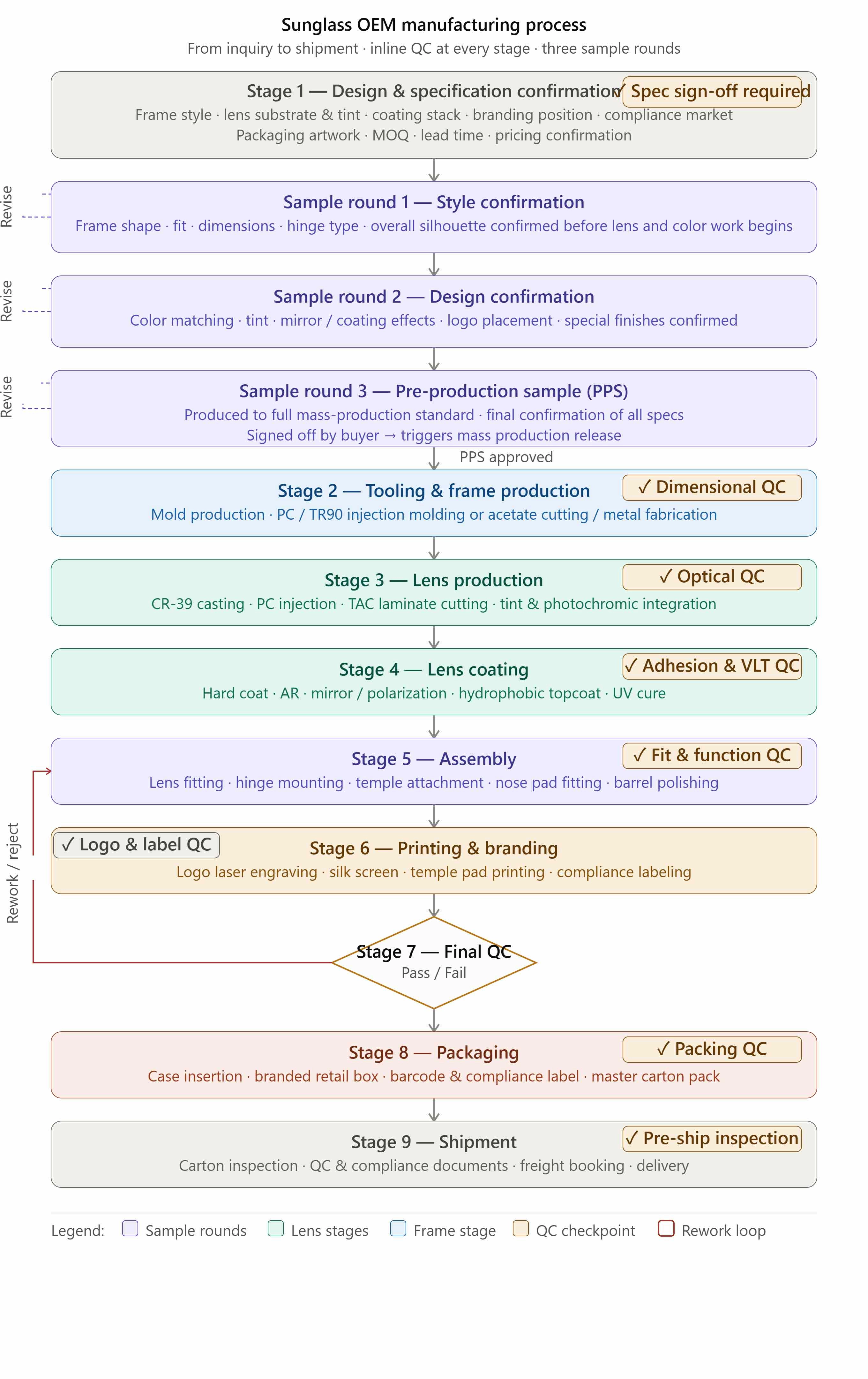
How Sunglasses Are Made: A Complete OEM Manufacturing Process Guide

Sunglass Lens Materials Compared: CR-39, PC, TAC, Nylon and Mineral Glass

Sunglass Lens Tint Categories Explained: A Complete Guide to Visible Light Transmittance for OEM Eyewear Brands

OEM Photochromic Lenses: Technology, Custom Options & B2B Sourcing Guide

Prescription Myopia Sunglass Lenses: Complete Guide on Optics, Production Process & Material Selection

Polarized Sunglasses with Anti-Seawater Coating: Technical OEM Specification Guide for Marine & Watersports Eyewear
You May Also Like

Ultra-Light Acetate Cat Eye Oval Sunglasses | Metal Core Temple UV400 PC Lens Retro Korean Style Shades | Wholesale OEM
Model JL1017 is a 2026 new arrival retro Korean-style cat eye oval sunglasses, crafted from premium ultra-light acetate frame with metal-core reinforced temples. Weighing only 23.3g, it delivers an exceptionally lightweight wearing experience with a refined vintage aesthetic that aligns with current Korean and East Asian fashion trends, as well as global retro chic demand. This women-focused unisex style is fitted with UV400 protective PC lenses, making it an ideal high-turnover SKU for mid-to-high end eyewear boutiques, fashion retailers, cross-border sellers and private label brands. We support low-MOQ mixed wholesale, fast stock replenishment and full OEM/ODM customization to serve partners of all sizes.

Ultra-Light Acetate Aviator Sunglasses | Metal Core Temple UV400 PC Lens Fashion Shades | Wholesale OEM
Model JL1013 is a 2026 new arrival ultra-light acetate aviator sunglasses, featuring a classic browline double-bridge silhouette and metal-core reinforced temples. Weighing only 30.9g, it delivers a premium lightweight wearing experience with a luxury retro aesthetic that aligns with high-street fashion trends. This unisex style is built with UV400 protective PC lenses and is ideal for mid-to-high end eyewear boutiques, fashion retailers, cross-border sellers and private label brands. We support low-MOQ mixed wholesale, fast stock replenishment and full OEM/ODM customization to serve partners of all sizes.
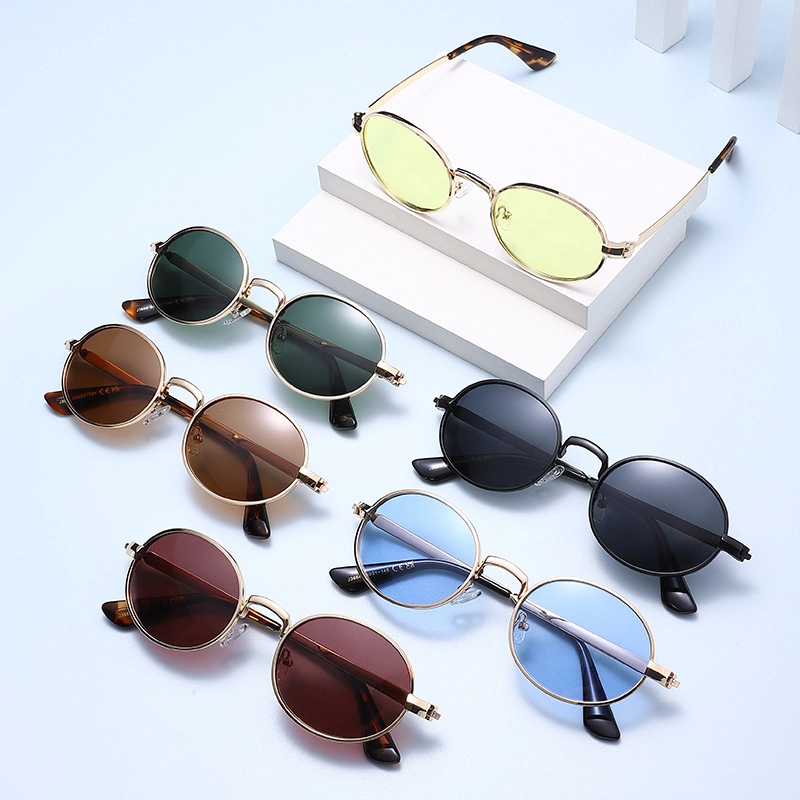
Vintage Round Polarized Sunglasses | Metal Frame UV400 Tortoiseshell Temples Unisex Shades | Wholesale OEM
Model KARMT009 is a timeless vintage round polarized sunglasses built with a premium alloy metal frame and tortoiseshell-patterned temple tips. Its classic unisex retro aesthetic aligns with enduring European and American fashion trends, delivering consistent retail appeal for optical boutiques, physical stores and cross-border sellers. Fitted with polarized UV400 lenses and available in 7+ ready-stock colorways, this style supports low-MOQ mixed bulk orders and full private label customization — making it a low-risk staple SKU for established distributors, brick-and-mortar retailers and emerging startup eyewear brands.
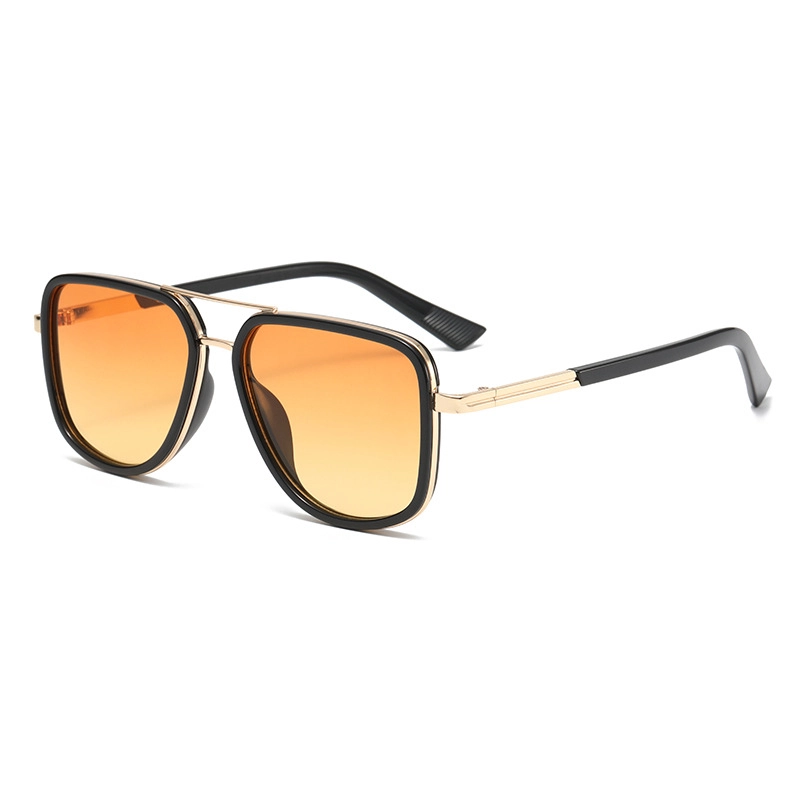
Double Bridge Square Aviator Sunglasses | PC Frame UV400 Polarized Optional Unisex Shades | Wholesale
Get in touch with us
If you have any comments or good suggestions, please leave us a message; later our professional staff will contact you as soon as possible.
NEW DIMENSIONS IN EYEWEAR
Contact KARUSON
Email:
WhatsApp/Phone:
Address:
331 Section B, WanJia Creative Park , No. 1 BUXIA Road ,Tianhe District, Guangzhou City, Guangdong Province, China.

© 2026 KARUSON. All Rights Reserved.
Facebook
Instagram
YouTube
TikTok
Linkedin