


How are progressive lenses manufactured step by step?
- 1) How do progressive lens corridor length and add power selection impact patient adaptation, and how does an eyewear factory control them during production?
- 2) What are the precise measurement tolerances (PD, fitting height, pantoscopic tilt, vertex distance) an eyewear factory must meet to avoid adaptation problems?
- 3) Step-by-step: How are progressive lenses manufactured using freeform surfacing—from digital design to AR coating?
- 4) For high-prescription / high-ADD patients, which lens materials and index choices minimize thickness and peripheral aberrations, and how does the factory optimize surfacing?
- 5) What in-line quality control tests and instruments should an eyewear factory use to validate progressive lens power maps with actionable pass/fail criteria?
- 6) What are realistic OEM ordering constraints—minimum order quantities, lead times, and customization limits—when working with an eyewear factory for progressive lenses?
1) How do progressive lens corridor length and add power selection impact patient adaptation, and how does an eyewear factory control them during production?
Answer:
- Why it matters: Corridor length and ADD define how quickly power changes from distance to near. Short corridors (e.g., 10–14 mm) concentrate power change, increasing peripheral astigmatism and adaptation difficulty; long corridors (16–22 mm) spread power change, easing intermediate vision but increasing lens height requirements. Improper corridor/ADD combinations are a top cause of patient complaints.
- How modern eyewear factories control it:
- Prescription & frame assessment: Capture accurate Rx (including ADD), monocular PD, fitting heights, vertex distance, pantoscopic tilt and frame geometry. These capture real-world gaze behavior.
- Design selection software: Use freeform design software that allows corridor-length selection matched to the frame’s vertical clearance. The software produces a power map (vergence-based ray tracing) optimized for specified corridor length and ADD.
- Simulated ray tracing verification: Run optical simulations (ray trace/wavefront) to predict intermediate field blur and peripheral astigmatism for the chosen corridor; iterate if simulation predicts excessive swim or blur.
- Production parameters: Implement surfacing strategy (front-surface single vision vs. back-surface freeform progressive) to place progressive surface where it minimizes unwanted astigmatism. Back-surface freeform is common because it preserves front surface coatings and aesthetics.
- Lab marking and fitting verification: Provide marked fitting lines and recommended fitting heights to dispensers. If frame vertical space is insufficient for the chosen corridor, recommend either a shorter corridor design or a different frame.
- Practical takeaway: For first-time wearers or narrow frames, choose a slightly longer corridor or a design optimized for narrow heights. A responsible eyewear factory will simulate, validate and flag design-frame mismatches before production.
2) What are the precise measurement tolerances (PD, fitting height, pantoscopic tilt, vertex distance) an eyewear factory must meet to avoid adaptation problems?
Answer:
- Typical industry tolerance targets (industry practice; confirm factory QA spec):
- monocular PD: ±0.5 mm (accept ±1.0 mm in some mass production flows) — tighter centration reduces swim and anisometropic complaints.
- fitting height: ±0.5 mm (critical for progressive corridor alignment).
- pantoscopic tilt: ±2° (typical fitting 8°–12°; deviations change effective power and cylinder orientation).
- vertex distance: ±1 mm from expected (typical VD 12–14 mm for adult spectacles).
- How these tolerances affect adaptation:
- PD and fitting height errors shift the progressive power map relative to the wearer’s eye, causing blur, double vision or “swim.”
- Excessive pantoscopic tilt errors rotate power zones and alter effective add power at gaze angles; small tilt changes produce measurable prismatic effects near the top/bottom of the lens.
- How eyewear factories ensure these tolerances:
- Accurate order capture: Require dispensers to supply monocular PD, fitting height, pantoscopic tilt, frame shape and vertex distance.
- CNC centering: Use motorized blocking and centering stations with vision systems to center lens blanks within ±0.2–0.5 mm.
- Digital marking and proofing: Provide printable fitting diagrams for verification before surfacing.
- Post-production measurement: Measure actual lens power map and centration using automated lens analyzers and log results to batch QC records.
- Practical advice for buyers: Require the factory’s measured PD/fitting height report and ask for deviation statistics (mean and standard deviation) on PD and height for recent orders to evaluate process capability.
3) Step-by-step: How are progressive lenses manufactured using freeform surfacing—from digital design to AR coating?
Answer:Step 0 — Order intake & verification:
- Capture Rx, ADD, monocular PD, fitting height, frame measurements, pantoscopic tilt and vertex distance. Validate Rx consistency (e.g., lensometer verification if replacing existing lenses).Step 1 — Optical design & CAD generation:
- Use CAD/CAM lens design software to generate a progressive power map (freeform CAD surface) using ray-tracing algorithms that account for wrap, tilt and vertex distance. Select corridor length and peripheral optimization (astigmatism control) per patient.Step 2 — CAM programming:
- Convert CAD surface to machine toolpaths (G-code) for a 5-axis CNC generator or diamond-turning lathe. Include allowances for polishing and coating thickness.Step 3 — Blocking and centering:
- Attach the lens blank to a block aligned to the intended optical center/near-center using automated centering stations; accuracy target ±0.5 mm or better.Step 4 — Generating / diamond turning / CNC surfacing:
- Machine the freeform surface on the chosen side (commonly back-surface for progressives) using precise diamond or synthetic tooling under coolant to remove bulk material and generate the polished geometry.Step 5 — Fine polishing & verification:
- Polish to final surface finish; measure surface form with profilometry or interferometry to confirm surface error within specified RMS or peak-to-valley tolerances.Step 6 — Despace, edging & blocking removal:
- Remove block, edge the lens to frame shape (or final lens blank shape), verify fitting curve and bead integrity.Step 7 — Coatings application:
- Apply hardcoat (scratch-resistant) and then deposit anti-reflective (AR) coatings by vacuum deposition/sputtering. Follow with hydrophobic/oleophobic topcoat. Bake/UV cure as required. Verify coating adhesion with tape or pull tests and abrasion rating per factory specs.Step 8 — Power mapping & QC:
- Use 2D/3D power mapping (lens analyzers/wavefront mapping) to verify power distribution, add value on-axis, centration, and surface defects. Compare measured power map against CAD specification.Step 9 — Final edging, beveling and inspection:
- Final edge polishing for rimless designs, verify bevel dimensions, inspect for cosmetic defects, and run final lensometer checks.Step 10 — Packaging & traceability:
- Record batch/serial numbers, attach sticker with measured add and fitting data, and pack with protective film. Maintain traceability records tied to QC measurements.
- Notes on materials: This flow applies to cast and injected thermoset blanks and to cast-freeform surfacing of CR-39, high-index, and some polyurethane-based materials; polycarbonate often uses specific tooling and coating pre-treatments due to lower glass transition temperature.
4) For high-prescription / high-ADD patients, which lens materials and index choices minimize thickness and peripheral aberrations, and how does the factory optimize surfacing?
Answer:Material/index tradeoffs:
- High-index plastics (1.67, 1.74) reduce center and edge thickness for high myopes and high plus prescriptions but increase reflectivity and may slightly increase chromatic aberration versus lower-index CR-39 (1.498).
- Polycarbonate is impact-resistant and thin but has higher Abbe value (lower optical quality) and more chromatic dispersion; not ideal if optical clarity is the top priority.
- High-index plus aspheric/front/real freeform designs: Combining high-index material with aspheric or fully freeform back-surface designs minimizes oblique aberrations by tailoring surface geometry to the prescription.Factory optimization strategies:
- Use a back-surface freeform progressive to keep front surface optimized for aesthetics and minimize induced spherical aberration.
- Implement index-specific design compensation in the CAD model (refractive index affects ray bending and effective power). Modern design software inputs material Abbe and index data.
- For strong plus prescriptions, avoid excessive base curves; a flatter base curve reduces edge thickness but can increase off-axis aberrations — balance with personalized surfacing.
- Recommend high-index only when thickness or weight is unacceptable; simulate the point spread function and peripheral blur with different indices to show tradeoffs.
- Practical buyer tip: Ask an eyewear factory for simulated thickness maps and a predicted peripheral aberration map for candidate materials and pick the best compromise for comfort and optical clarity.
5) What in-line quality control tests and instruments should an eyewear factory use to validate progressive lens power maps with actionable pass/fail criteria?
Answer:Essential QC instruments and what they measure:
- Automated lens analyzer / power mapper (2D/3D): Produces a power map and verifies on-axis sphere/cylinder, add power at the designated fitting height and power distribution across the progressive corridor. Pass criteria: on-axis add within ±0.12 D from spec; power map RMS difference below factory threshold.
- Lensometer (manual/digital): Verifies sphere/cylinder and axis at the lens center and designated gaze points.
- Interferometer / profilometer: Measures surface form error (peak-to-valley and RMS) after surfacing/polishing. Pass criteria tied to design spec (e.g., surface form error < X nm RMS depending on factory standards).
- Visual inspection stations (100–300 lux) and cosmetic defect scanners: Check for inclusions, scratches, coating defects.
- Adhesion and abrasion testers for coatings: Validate AR adhesion after deposition and abrasion resistance for hardcoats.
- Centration & blocking verification cameras: Confirm block placement and final centration within ±0.5 mm.Recommended pass/fail strategy:
- Define critical-to-quality (CTQ) metrics: on-axis power error, add accuracy, centration, and surface error.
- Log each lens measurement to a traceable database; run SPC (statistical process control) charts on mean and sigma for these CTQs.
- Reject and rework lenses that fail CTQs. For progressive lenses, even small systematic shifts are unacceptable—rework rather than ship borderline parts.
- Practical advice for buyers: Request the factory’s QC spec sheet and recent SPC charts for CTQ metrics; this reveals process stability and maturity.
6) What are realistic OEM ordering constraints—minimum order quantities, lead times, and customization limits—when working with an eyewear factory for progressive lenses?
Answer:Typical constraints (varies by factory scale):
- Minimum order quantities (MOQ): For standard stock progressive designs and materials, factories often accept small batches (1–10 dozen), but fully customized freeform OEM runs may require higher MOQs (e.g., 100–500 pairs) to justify CAM setup and tooling. Many factories offer low-volume digital freeform on demand with no MOQ for standard coatings, but custom coatings or branded printing typically require MOQ.
- Lead times:
- Stock or semi-finished blanks with common designs: 3–7 working days.
- Full freeform progressive with standard coatings: 5–12 working days.
- Large OEM runs with custom branding/coating/process: 3–6 weeks depending on coating batch schedules and tooling.
- Customization limits:
- Freeform surfacing allows almost unlimited optical customization (personalized corridors, personalized gaze maps). Physical customizations like lens printing, multi-color AR, or special hydrophobic chemistries may add MOQ and lead time.
- Frame-specific edge treatments or rimless drilling patterns are commonly supported but require exact frame templates.How to negotiate and confirm:
- Ask for a clear OEM capability matrix: MOQ per product type, lead time ranges, supported materials, and coating cycles.
- Request a sample pilot run (pay-per-sample) to validate fit and optical performance before committing to large MOQ.
- Confirm return/rework policy and acceptance criteria for customer-reported fitting failures.
- Buyer tip: Prioritize a factory that publishes realistic lead times and is willing to run small pilot batches with clear QC acceptance criteria.
Conclusion — Advantages of partnering with an experienced eyewear factory like KarusonWorking with a professional eyewear factory that combines freeform CAD/CAM surfacing, rigorous QC (power mapping, interferometry), ISO/ANSI-aligned processes and transparent OEM terms reduces adaptation risk, improves first-fit rates and speeds time-to-market. An experienced partner will pre-validate corridor/frame compatibility, supply measured PD/fitting-height reports, and provide simulation-backed material recommendations to balance thickness, weight and optical clarity. For custom or white-label progressive lenses, this capability minimizes returns and protects end-user satisfaction.
To request a quote or discuss a pilot order, contact us at nicole@karusonco.com or visit www.karusonco.com.
Why Sourcing from a China Eyewear Factory is the Strategic Choice for Global Brands
OEM vs. ODM: Which Partnership Model is Best for Your Eyewear Business?
2026 Eyewear Trend Forecast: Colors, Shapes, and Textures to Watch
About Products
Do you offer samples?
Yes, paid samples or refundable samples are available.
What is the lead time?
Mass production takes [25-35]days; samples take [7-10] days.
About OEM&ODM
How do we start a project with Karuson?
Send us your product idea or requirements—our team will review, advise, and provide the best solution and quotation.
What is your production lead time?
Mass production generally takes 30–45 days after sample approval.
Can you help with packaging and logo branding?
Absolutely—we provide branded packaging bags, boxes, logo applications, and display solutions.
You May Also Like
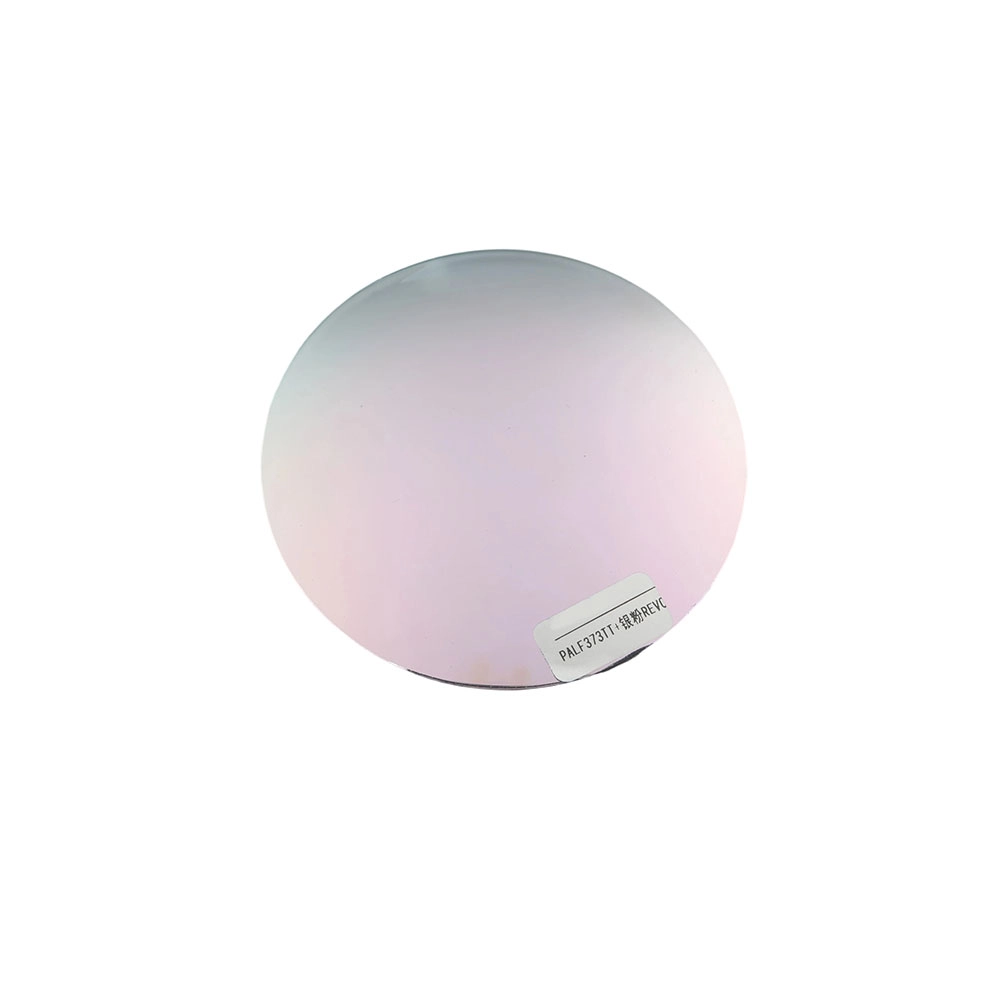
Dynamic Adaptation: Next-Gen Photochromic Lenses for Indoor & Outdoor Use
As premier eyeglass lenses manufacturers, Karuson crafts high-performance PC polarized coated lenses that seamlessly integrate lightweight, impact-resistant polycarbonate with advanced optical film technology. These lenses are engineered to achieve superior glare reduction and enhanced visual definition while offering a spectrum of stylish, customizable tints. Optimized for professional driving, outdoor sports, and urban lifestyles, our manufacturing process ensures that harmful reflections from water, roads, and snow are effectively filtered out. The result is a durable, fashion-forward visual solution that perfectly balances essential eye protection with high-end aesthetic appeal—making them the ideal choice for brands seeking to merge practicality with a modern fashion statement.
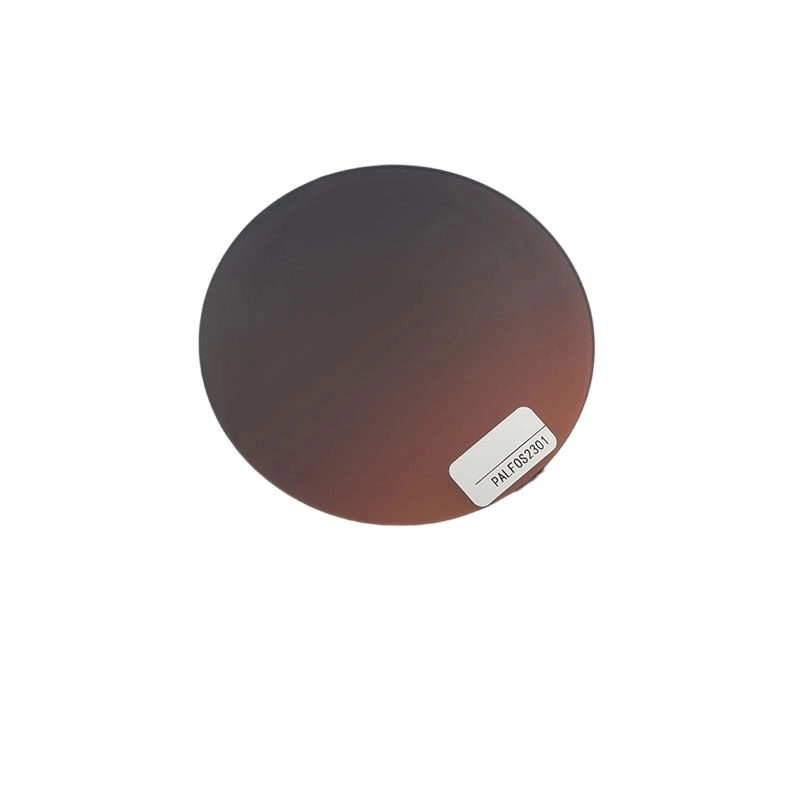
Advanced Sunglasses Solutions: Polarized Lenses with Anti-Seawater Coating
As a versatile photochromic lenses manufacturer and high-performance optics expert, Karuson crafts high-quality Polycarbonate (PC) Gradient Tinted Lenses that perfectly balance aesthetics with advanced protection. By fusing the ultra-lightweight and impact-resistant properties of PC material with precision gradient tinting technology, we deliver a durable visual solution that enhances clarity and comfort for urban lifestyles and outdoor sports. These lenses not only optimize visibility across varying light conditions by reducing glare but also offer a sleek, customizable design—allowing global brands to blend practical eye protection with a modern, fashion-forward accessory.
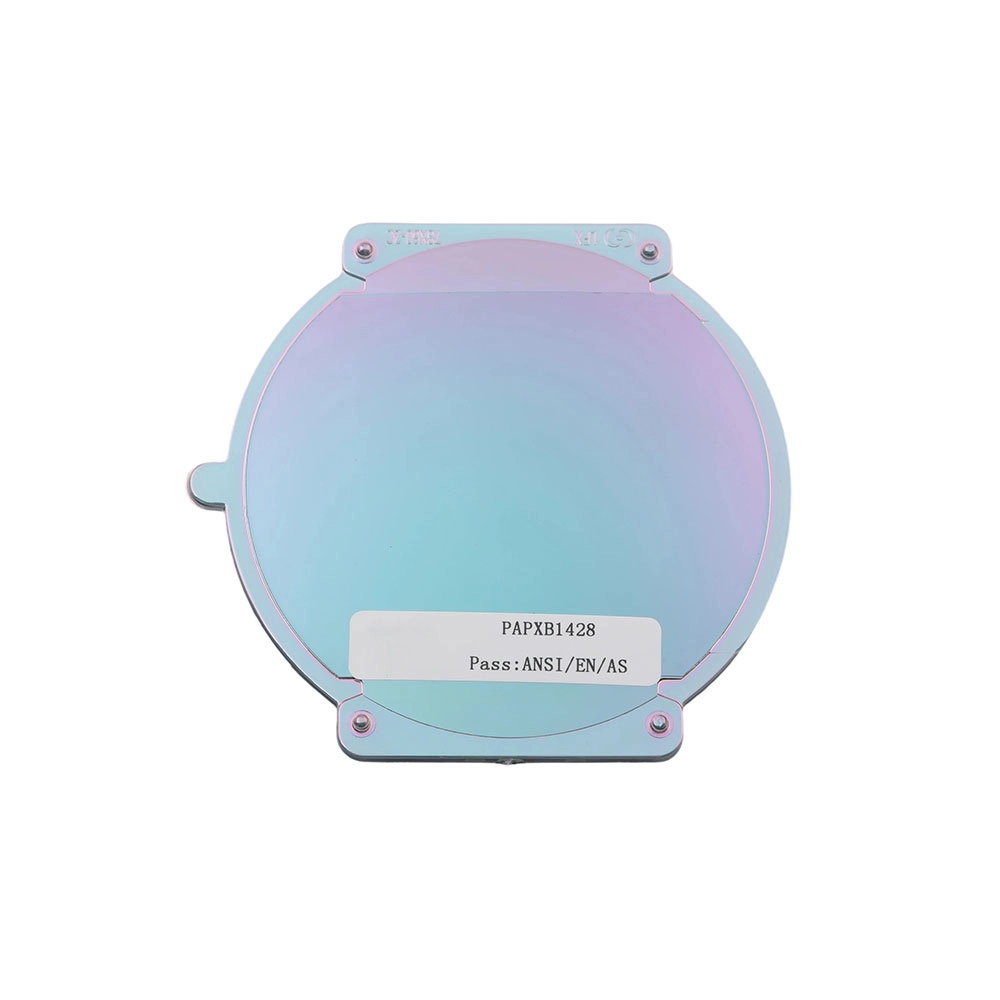
Innovative Lens Technologies: Setting Your Brand Apart in a Competitive Market
Setting a new standard in high-end lenses manufacturing, Karuson’s flagship-grade Polyamide (PA) Nylon polarized lenses seamlessly combine ultra-lightweight material with exceptional, high-toughness durability. By integrating precision polarizing technology, we have created a high-definition visual solution that excels in clarity and comfort for professional driving, outdoor adventures, and competitive sports. This innovation does more than meet expectations—it redefines the performance benchmark for professional polarized optics in the global market.
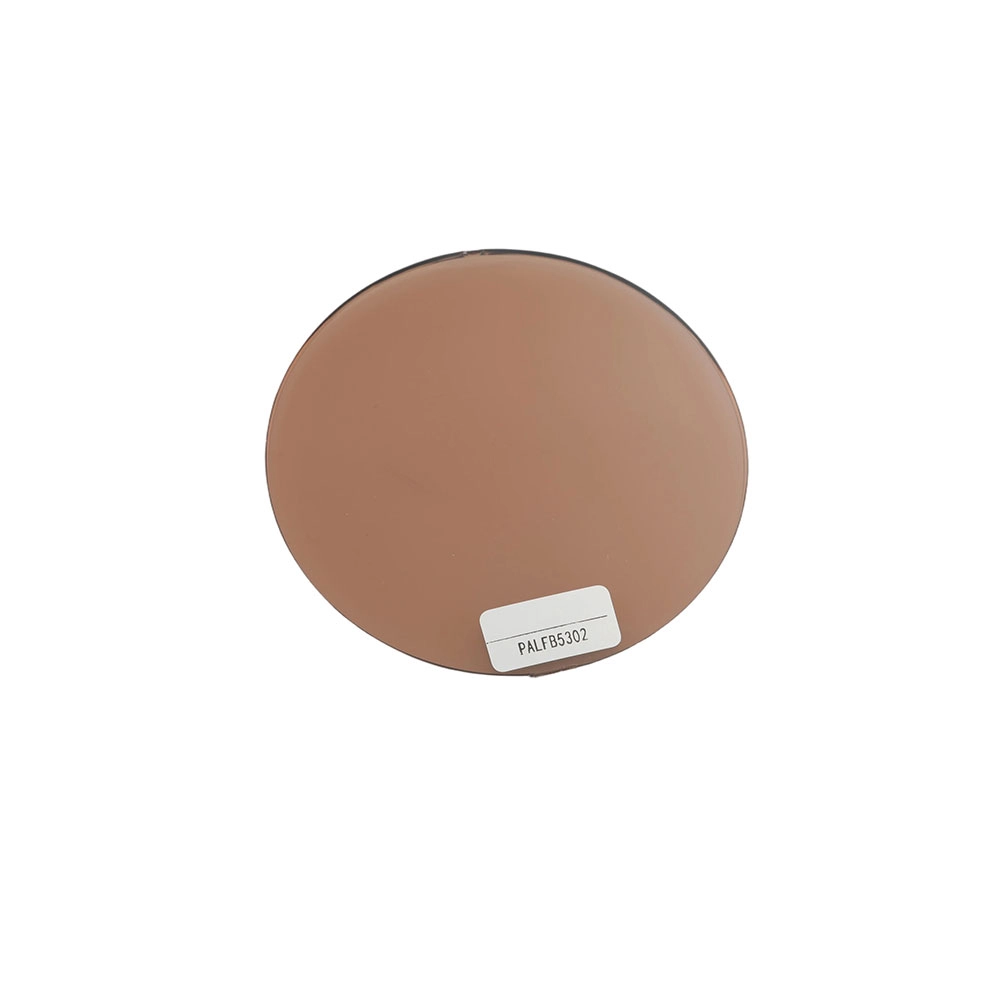
Why Quality Lenses are the Core of Your Eyewear Brand’s Reputation
As a premier high-definition glasses lenses manufacturer, Karuson crafts high-quality Polyamide (PA) Nylon Tinted Lenses that represent the perfect synergy of ultra-lightweight performance and high-toughness durability. By integrating professional-grade tinting technology with advanced material science, we offer a lens solution that delivers exceptional optical clarity alongside vibrant, fashionable color expression. Designed for both daily commutes and trendy lifestyle matching, these lenses provide a comfortable and aesthetic visual experience, serving as a high-performance fashion accessory for the modern, style-conscious consumer.
Get in touch with us
If you have any comments or good suggestions, please leave us a message; later our professional staff will contact you as soon as possible.
NEW DIMENSIONS IN EYEWEAR
Contact KARUSON
Email:
WhatsApp/Phone:
Address:
331 Section B, WanJia Creative Park , No. 1 BUXIA Road ,Tianhe District, Guangzhou City, Guangdong Province, China.

© 2026 KARUSON. All Rights Reserved.
Facebook
Instagram
YouTube
TikTok
Linkedin